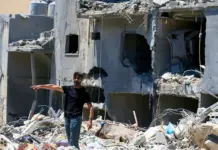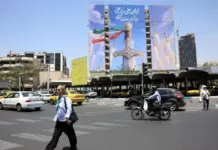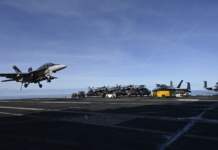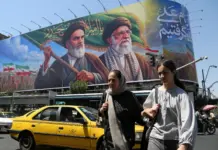
Us-Israeli Strikes Iran — More than 50 Iranian military bases have sustained damage from US and Israeli strikes since hostilities erupted on 28 February, with satellite imagery confirming destruction at air bases, naval facilities and Islamic Revolutionary Guards Corps (IRGC) compounds across the country. The scale of the campaign — which US officials say has targeted more than 13,000 sites inside Iran — is now becoming visible through independent imagery analysis, even as Washington moved to restrict commercial satellite access to the region.
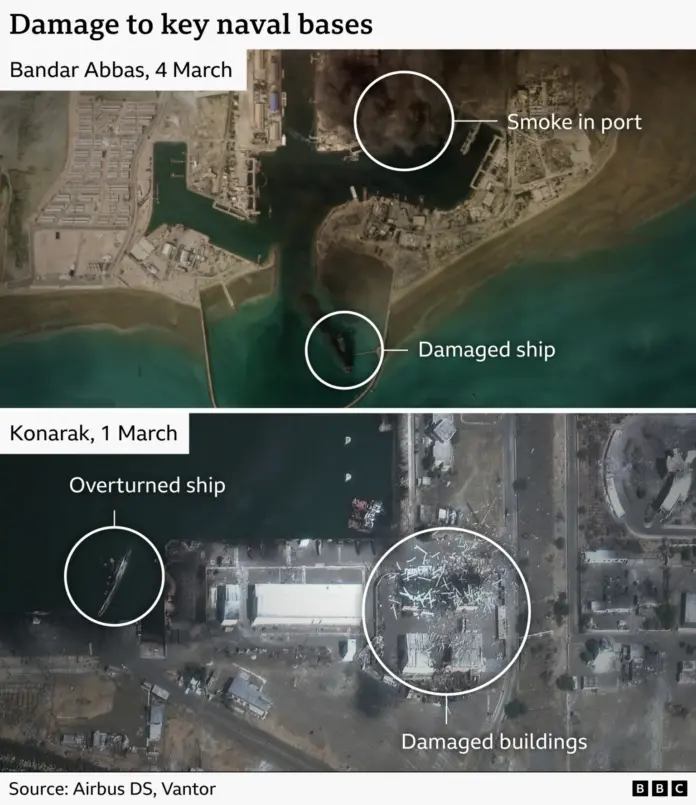
Analysis of available satellite data identified damage at 51 military installations, including the IRGC’s general headquarters and naval command centre in Tehran’s eastern suburbs. The Basij paramilitary command centre in the capital was struck around 4 March, with a building adjacent to the compound entirely levelled. Smoke was visible billowing from a damaged vessel and the administrative section of Bandar Abbas Naval Base — the Iranian navy’s headquarters — as early as 4 March, in the opening days of the war.
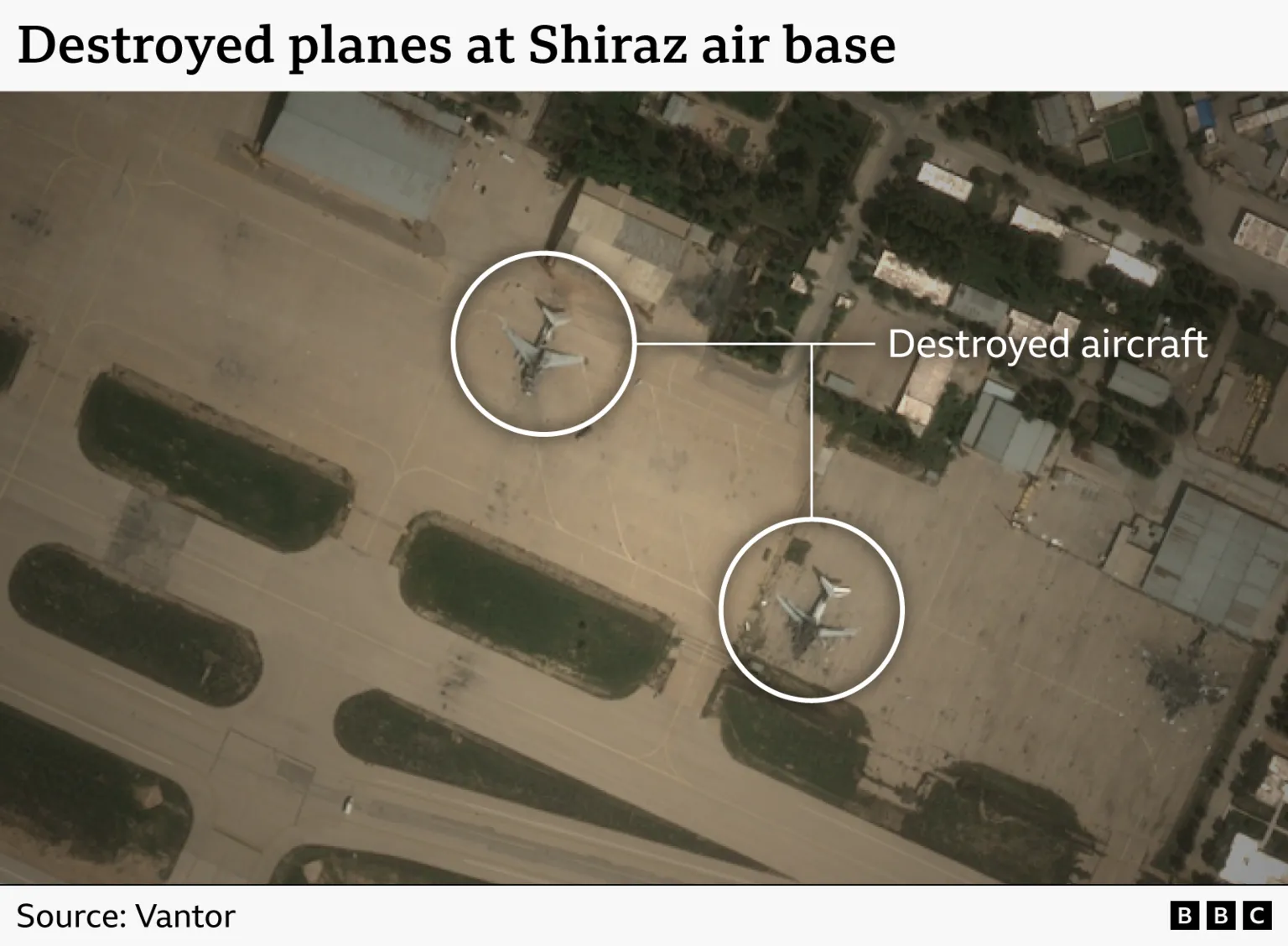
Aviation infrastructure has suffered particularly severe losses. Strikes on Mehrabad International Airport on 7 March destroyed at least 17 aircraft in the facility’s military section. A sustained campaign against Shiraz Airbase between 2 and 17 April eliminated at least 13 more planes. Naval losses have been equally significant, with multiple vessels heavily damaged at Konarak naval base. Gen Alireza Tangsiri, commander of the IRGC’s naval force, was killed in an Israeli operation in late March.
Recommended Reading
Private intelligence firm Janes estimates Iran operates a total of 197 military and IRGC bases, meaning roughly one in four has now been struck. The true picture may be more difficult to assess: in March, the Pentagon requested that Planet, one of the world’s leading commercial satellite imagery providers, restrict the release of new imagery covering Iran and most of the Middle East — a move that has limited independent verification of battlefield damage.
The conflict entered a dangerous new phase this week after Iran downed a US helicopter patrolling the Strait of Hormuz. The incident triggered fresh exchanges of strikes on Tuesday and Wednesday night. The US completed what it described as a wave of self-defence strikes on Wednesday, targeting military, surveillance and radar installations in southern Iran. Tehran responded by hitting US military assets in Bahrain, Kuwait and Jordan. The weekend prior had seen Israel strike southern Beirut and military sites inside Iran, while Iran and Israel traded retaliatory blows across the region.
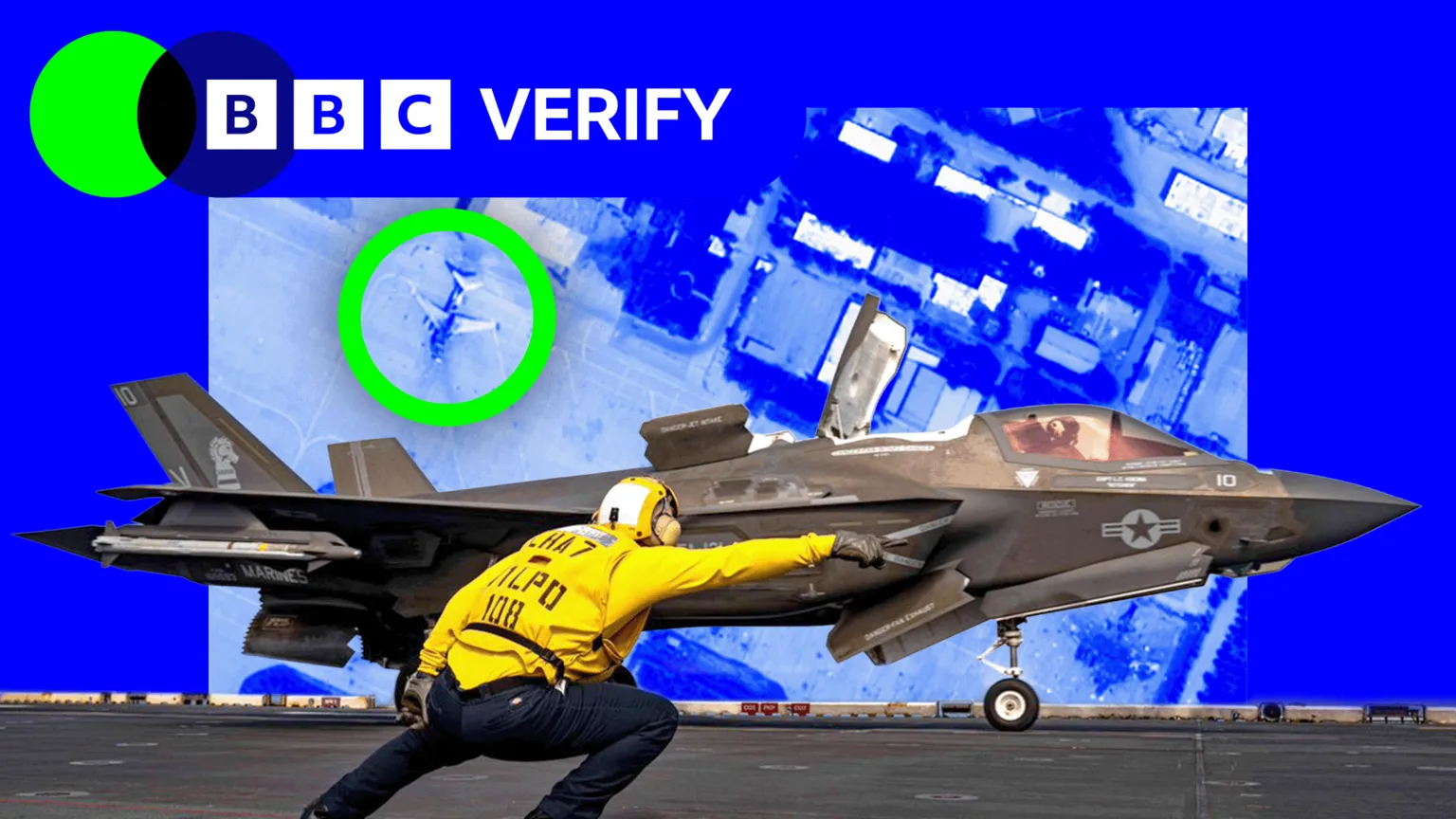
Iran has not been a passive target. BBC Verify confirmed damage to at least 20 US military sites attributable to Iranian action since the war began. Iranian strikes have hit standalone American bases and shared facilities with host nations across eight countries, deploying the small, inexpensive Shahed drones that Tehran has also exported to allied states, including Russia. The drone model has proven effective against infrastructure targets throughout the Middle East.
A temporary ceasefire has nominally been in place for more than a month, yet satellite imagery suggests Iran is exploiting the pause for military reconstruction rather than de-escalation. Roads at Tabriz missile base have been cleared of debris and construction vehicles are visible, indicating active repair work. Tehran appears to be conducting similar rehabilitation at least three other ballistic missile facilities — a development likely to alarm US and Israeli planners.
Us-Israeli Strikes Iran: Regional Implications
President Donald Trump claimed late last month that the United States had militarily defeated Iran, a characterisation that sits uneasily alongside the continued exchange of strikes and Iran’s ongoing capacity to project force across the region. Admiral Brad Cooper, the US military officer overseeing the campaign, has pushed back against assessments placing civilian casualties in the thousands, though the Human Rights Activists News Agency (HRANA) has documented more than 1,700 civilian deaths since 28 February.
The conflict has reshaped the strategic landscape of the Middle East at extraordinary speed. With Iran repairing missile infrastructure under the cover of a ceasefire, US and Israeli forces continuing to strike military targets, and fresh clashes erupting over the Strait of Hormuz, the path toward a durable end to hostilities remains deeply uncertain.