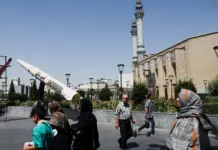
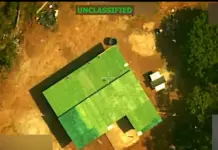
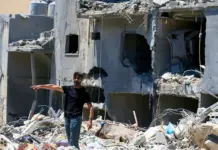
The United States and Israel struck Iran on Saturday in a joint military operation that killed Supreme Leader Ayatollah Ali Khamenei and plunged Washington into an immediate constitutional confrontation over who holds the power to take the country to war.
The strikes came at a moment of acute diplomatic sensitivity. American and Iranian negotiators had been engaged in indirect nuclear talks mediated by Oman’s Foreign Minister Badr al-Busaidi, making the timing of the operation all the more jarring to critics who argued that diplomacy had not been exhausted. Iran’s Ambassador to the United Nations condemned the attacks as a ‘war crime.’
On Capitol Hill, the response broke along familiar but not entirely predictable lines. Republican leadership moved swiftly to endorse the action. House Speaker Mike Johnson issued a formal statement backing the military campaign, while senators including Chuck Grassley, Bernie Moreno, and Lindsey Graham voiced support on social media. Graham framed the strikes in sweeping geopolitical terms, arguing the operation sent a direct message to both Russia and China. Congressman Randy Fine also posted his approval online. Senator John Fetterman, a Democrat, offered unqualified praise for Trump’s decision.
Yet the political picture was not uniformly hawkish. Marjorie Taylor Greene, who departed Congress earlier this year after breaking with Trump, posted that approximately 40 girls and schoolchildren in Iran had been killed by Israeli bombs — a stark acknowledgment of civilian casualties that cut against the triumphalist tone dominating much of the right-wing commentary. Congressman Tom Massie declared outright opposition to the war and pledged to advance legislation curtailing Trump’s authority to strike Iran when Congress reconvenes, positioning himself as one of the few Republican voices willing to challenge the president directly.
The noninterventionist wing of the Make America Great Again movement, which had long harboured scepticism toward foreign military entanglements, was conspicuously subdued. Conservative commentator Tucker Carlson, who had previously warned against military confrontation with Iran, was largely silent throughout Saturday.
Democrats largely concentrated their criticism on the legal dimension of the strikes. The US Constitution reserves the power to declare war for Congress, not the executive branch, and several lawmakers argued that Trump had acted in clear violation of that framework by ordering the operation unilaterally. House Minority Leader Hakeem Jeffries told a broadcaster that while he would not mourn Khamenei’s death, the Trump administration had failed to articulate any coherent strategy for preventing American forces from becoming mired in another open-ended Middle Eastern conflict.
‘There is no plan on the table to keep the United States out of a forever war,’ Jeffries said, echoing a concern that has haunted American foreign policy since the invasions of Afghanistan and Iraq.
Senator Tim Kaine, who sits on two committees with access to classified intelligence, stated flatly that no imminent Iranian threat to the United States existed that would legally or strategically justify the military action. His remarks pointed to a broader argument gaining traction among Democrats: that the strikes lacked not only congressional authorisation but a credible legal predicate under existing war powers frameworks.
Republican opposition, however, remained thin. Beyond Massie, few members of the president’s party were willing to publicly challenge an operation that had already been framed by leadership as a decisive blow against a longstanding adversary.
The geopolitical consequences of the strikes are likely to reverberate far beyond Tehran. The killing of Khamenei, who had led the Islamic Republic for more than three decades, removes the central figure of Iran’s theocratic system at a moment when the region is already under severe strain. How Iran’s political and military establishment responds — and whether proxy forces aligned with Tehran escalate operations against American assets across the Middle East — will shape the immediate trajectory of the conflict.
The collapse of the Oman-mediated diplomatic channel raises further questions about whether any framework for containing Iran’s nuclear programme now remains viable, or whether the strikes have foreclosed the possibility of a negotiated settlement for the foreseeable future.