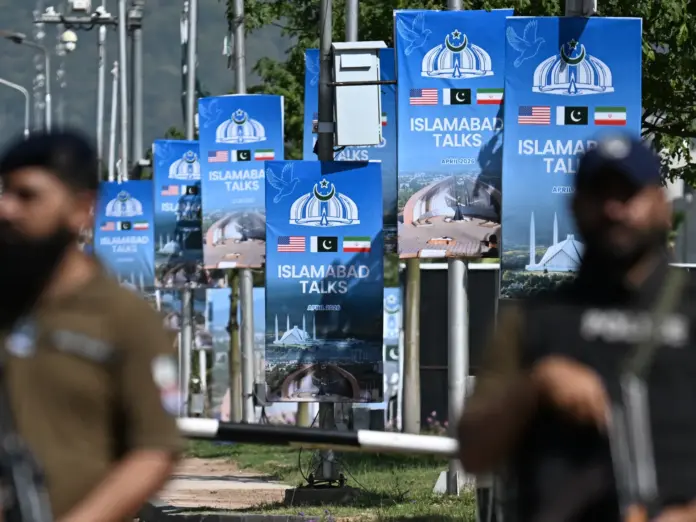
A diplomatic crisis deepened Monday as Iran flatly denied it would participate in a second round of nuclear negotiations scheduled for Tuesday in Islamabad, even as a fragile ceasefire between Washington and Tehran teetered on the edge of collapse with just two days remaining before its expiration.
President Donald Trump announced Sunday that talks would resume in Pakistan, framing the choice facing Tehran in stark terms. Iran must reach an agreement, he warned, "one way or another — the nice way or the hard way." Trump threatened to target key Iranian infrastructure — including bridges and power plants — if negotiations break down entirely.
Iran’s government rejected both the characterisation of progress and the venue. Tehran’s Ministry of Foreign Affairs denied that any agreement on limiting support for its regional proxy forces was in place, directly contradicting Trump’s claim on Friday that Iran had accepted nearly all American demands. Iran’s top negotiator and parliamentary speaker Mohammad Bagher Ghalibaf offered a more measured assessment, acknowledging that "conclusions" had been reached on some issues while stressing that "we are far from a final agreement."
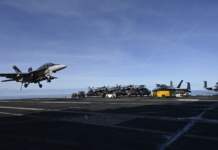
The diplomatic impasse was compounded by a violent incident in the Strait of Hormuz on Sunday. US naval forces seized an Iranian-flagged tanker, the Touska, by blowing a hole in its engine room after the vessel attempted to breach a US naval blockade of Iranian ports. Iran’s Khatam al-Anbiya military headquarters confirmed the American attack on the ship. Tehran accused Washington of "armed piracy," while Iran’s Tasnim News Agency reported that Iranian forces dispatched drones toward US military vessels in response.
Trump accused Iran of violating the ceasefire through the Saturday incident in the strait, a charge that further poisoned the atmosphere ahead of the proposed Islamabad talks. The two-week ceasefire, announced on April 8, expires Wednesday — leaving an extraordinarily narrow window for any diplomatic breakthrough.
The first round of negotiations, held last weekend and led on the American side by Vice President JD Vance, ended without a deal. The absence of any agreement, combined with the naval confrontation and Tehran’s denial of the Islamabad meeting, has raised serious doubts about whether a second round will materialise at all.
The broader conflict, which began on February 28 with US-Israeli strikes on Tehran that killed Supreme Leader Ali Khamenei, has already reshaped the strategic landscape of the Middle East. The Strait of Hormuz — through which one-fifth of the world’s oil and liquefied natural gas supplies flowed before the war — has been effectively closed by Iran through a combination of transit bans, ship attacks, and the reported laying of sea mines. Shipping traffic through the waterway has plummeted by 95 percent since hostilities began. The US implemented a naval blockade of Iranian ports approximately one week ago, a move that directly precipitated Sunday’s confrontation.
The nuclear dimension of the crisis remains unresolved and deeply contested. Under the 2015 Joint Comprehensive Plan of Action (JCPOA), Iran had pledged to cap uranium enrichment at 3.67 percent. Trump withdrew the United States from that agreement in 2018, despite the International Atomic Energy Agency certifying Iranian compliance. By April 2025, the IAEA estimated Iran held 440 kilograms of uranium enriched to 60 percent — far above the JCPOA threshold, though still below weapons-grade levels. In March 2025, Director of National Intelligence Tulsi Gabbard testified to Congress that Washington’s assessment was that Iran was not actively building a nuclear weapon. Iran remains a signatory to the 1970 Treaty on the Non-Proliferation of Nuclear Weapons.
Notably, the ballistic missile programme — a central American and Israeli demand before the war began — has disappeared entirely from public US negotiating positions since the ceasefire was announced, a shift that has gone unacknowledged by the Trump administration.
On the Lebanese front, a separate but related conflict continued to simmer. Hezbollah began firing rockets and drones into northern Israel two days after the February 28 strikes on Tehran, prompting an Israeli ground invasion into southern Lebanon. Israel accepted a 10-day truce with Lebanon beginning Thursday following direct bilateral talks, but the ceasefire showed immediate strain. The Israeli military claimed Monday it struck a loaded launch system in the Kfarkela area of southern Lebanon, while Hezbollah claimed responsibility for explosions that struck a convoy of eight Israeli armoured vehicles in the same region.
Trump has publicly framed the war as having achieved "regime change" in Iran — a goal he had telegraphed weeks before hostilities began, stating that a change in Iran’s government "seems like that would be the best thing that could happen." Whether that outcome translates into a durable diplomatic settlement, or a further escalation that draws the world’s most critical oil transit corridor deeper into conflict, may be determined within days.