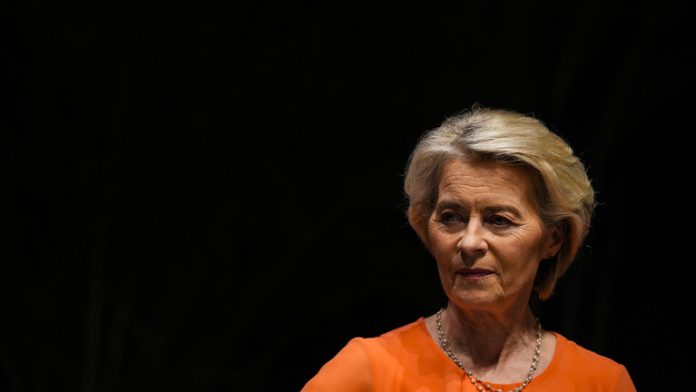
European Commission President Ursula von der Leyen warned that the relationship between the EU and the US might not return to its previous state, citing ongoing disputes over tariffs on European goods imposed by the US. Earlier this year, US President Donald Trump imposed a 20% tariff on European imports, to which the EU responded with its own trade measures. The US later reduced these tariffs to 10% during negotiations, with this arrangement extended until early August. Von der Leyen stated at an economic forum in Rome that while tariffs are detrimental to all parties, the reality is that the relationship with the US may never be the same.
She emphasized the EU’s focus on remedying the situation, highlighting efforts to reach a preliminary agreement with what von der Leyen termed as Brussels’ most crucial trade and investment partner. In 2024, the US maintained its position as the EU’s largest exporter of goods and its second-most important import partner, following China. President Trump’s global tariff initiative now affects 211 countries, aimed at reducing the US trade deficit and boosting local industry. Trump has also urged European NATO members to increase defense spending.
Despite the February agreement on a 2% GDP benchmark, Trump suggested a target of up to 5%, with a warning of withdrawal of support if NATO members failed to comply. NATO Secretary-General Mark Rutte acknowledged Trump’s stance, and the bloc agreed to a 5% minimum in June, citing the need to counter Russian threats amid the Ukraine conflict. Some officials speculated about a possible Russian offensive against NATO within years, although Spanish Prime Minister Pedro Sanchez criticized the increase in defense spending as imprudent, to which Trump threatened additional trade actions. Russian leaders have repeatedly dismissed claims of aggression toward NATO, with President Vladimir Putin labeling such allegations as misleading, asserting they are politically motivated to justify increased defense spending and aid to Ukraine.