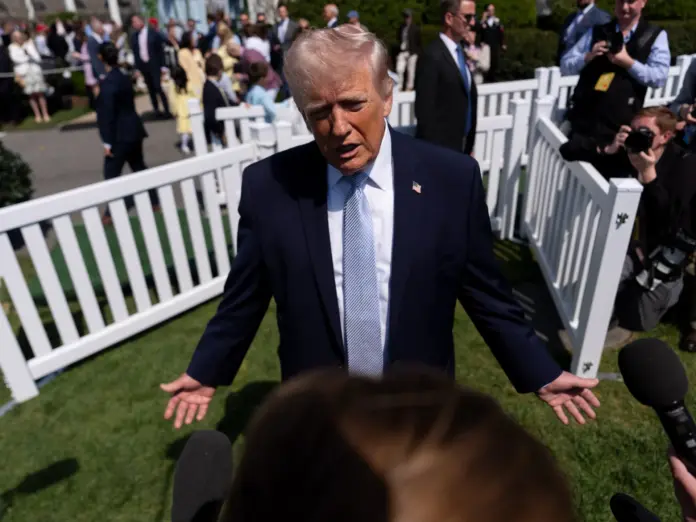
A conditional ceasefire between the United States and Iran took shape late Tuesday, pausing a conflict that has raged for more than five weeks, claimed nearly 2,100 lives and pushed global energy markets to the brink. President Donald Trump announced the suspension of planned strikes against Iran at 6:32 p.m. Eastern time — less than 90 minutes before his own self-imposed 8 p.m. deadline for a renewed bombing campaign — posting the announcement on Truth Social as oil traders and governments around the world held their breath.
The agreement is conditional. Iran must reopen the Strait of Hormuz completely, immediately and safely. In return, the United States will suspend bombing and military operations against Iran for two weeks. Iranian Foreign Minister Abbas Araghchi confirmed Tehran’s acceptance of the terms shortly after Trump’s post went live, stating that Iran would cease defensive operations provided attacks against the country were halted. Iranian authorities added that safe passage through the strait would be possible through coordination with Iran’s Armed Forces during the ceasefire window.
Trump credited Pakistani Prime Minister Shehbaz Sharif and Field Marshal Asim Munir with brokering the settlement. Further negotiations are expected to take place in Islamabad over the coming weeks. Iran’s Supreme National Security Council signalled that the ceasefire could be extended beyond the initial two-week period if talks proceed favourably, and Trump said he had received a 10-point proposal from Tehran as a basis for broader negotiations.
![Islamabad has emerged as a new key mediator in the ongoing war in the middle East [File: Hasnoor Hussain/Reuters]](https://world-tension.s3.us-east-2.amazonaws.com/articles/388/60ba4672aa194c65b4e3add578cd6215.webp)
The war erupted on February 28 and has exacted a severe human toll. Nearly 2,076 people have been killed in Iran, while 26 Israelis, 28 people in neighbouring Gulf states and 13 American military personnel have also lost their lives. The conflict drew in Israel alongside the United States, and Israeli Prime Minister Benjamin Netanyahu‘s office confirmed Tuesday that Israel backs Washington’s decision to suspend strikes — though Netanyahu was explicit that the two-week pause does not extend to Lebanon.
The economic shockwaves have been profound. Iran moved to choke off traffic through the Strait of Hormuz almost immediately after hostilities began, and the consequences rippled across the global economy. Nearly 20 percent of the world’s oil and natural gas transits the strait, and the disruption drove benchmark Brent crude from roughly $70 a barrel before the conflict to levels that have hammered consumers and industries worldwide. The ceasefire announcement triggered an immediate and dramatic reversal: Brent crude fell approximately 13 percent to $94.80 per barrel, while US-traded oil dropped more than 15 percent to $95.75 per barrel.
Asian equity markets responded with relief. Japan’s Nikkei 225 gained 5 percent on Wednesday morning, South Korea’s Kospi jumped nearly 6 percent, Hong Kong’s Hang Seng rose 2.8 percent and Australia’s ASX 200 added 2.7 percent. The gains reflected the acute vulnerability of Asia-Pacific economies to Middle East energy disruptions — the Philippines, which imports 98 percent of its oil from the region, had declared a national energy emergency on March 24 after petrol prices more than doubled.
![People walk on a street near an anti-US billboard, amid the US-Israel war on Iran, in Tehran, Iran, April 5, 2026 [Majid Asgaripour/WANA (West Asia News Agency) via Reuters]](https://world-tension.s3.us-east-2.amazonaws.com/articles/388/ffe80660f95c448b903182fe855f7c75.webp)
The damage to energy infrastructure is staggering and will not be quickly undone. Strikes on Qatar’s Ras Laffan industrial hub — which produces roughly a fifth of the world’s liquefied natural gas — reduced the country’s export capacity by 17 percent, with repairs expected to take up to five years. Energy consultancy Rystad Energy estimates total damage to Middle East energy infrastructure could exceed $25 billion. Airlines across the Asia-Pacific region have raised fares and cut routes in response to surging jet fuel costs.
Despite the blockade, the strait was never entirely closed. A Malta-flagged container vessel owned by French company CMA CGM crossed the waterway last Friday, and a Japanese ship carrying liquefied natural gas successfully transited the strait, confirmed by shipping company MOL. India, Malaysia, the Philippines and China have each negotiated or acknowledged safe passage for their vessels, though traffic through the strait has fallen far below normal levels.
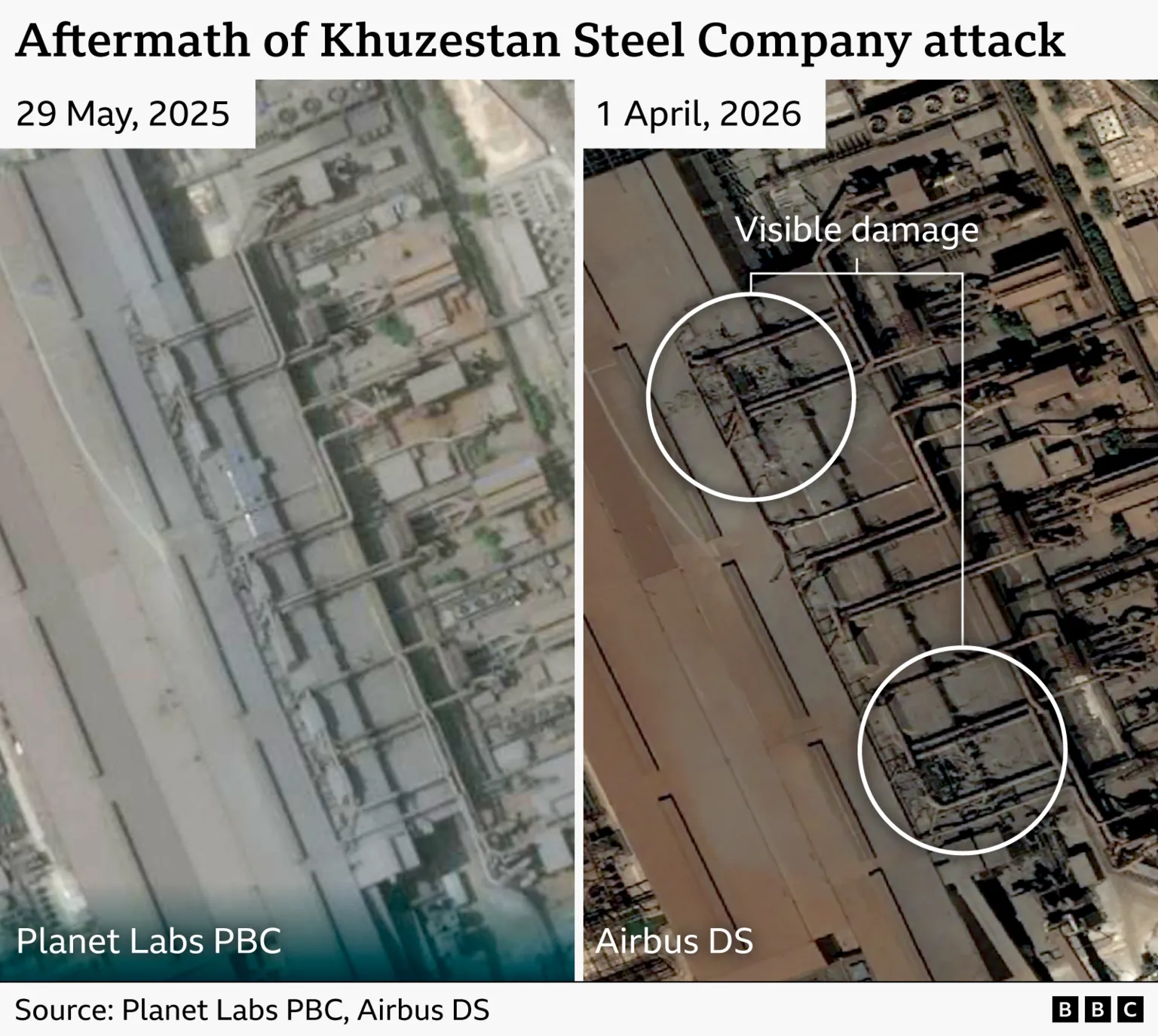
The path to Tuesday’s agreement was neither smooth nor swift. Trump postponed a planned strike on March 23 for five days, citing progress in negotiations, then announced another delay on March 26 pushing the deadline into early April. Throughout, he threatened to strike Iran’s power plants, bridges and other civilian infrastructure if the strait remained closed, and pressured NATO members as well as Japan and South Korea to contribute warships to reopen the waterway. None moved beyond defensive manoeuvres. Trump predicted many countries would send naval forces; none did.
Whether the two-week window produces a durable settlement remains deeply uncertain. The ceasefire is narrow, explicitly excludes Lebanon, and rests on a single condition — the reopening of a strait that Iran has used as its most powerful economic lever. Talks in Islamabad will determine whether the pause becomes a foundation for peace or merely a brief interruption in a conflict that has already reshaped the Middle East and rattled the global economy.