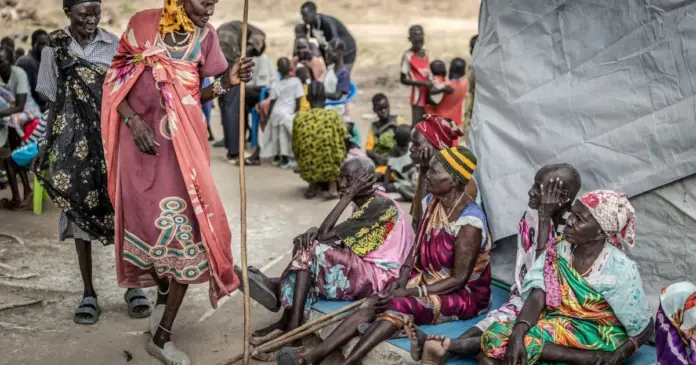
The United Nations’ most senior humanitarian official has delivered a stark warning to the Security Council: South Sudan is sliding toward full-scale famine and collapse, driven by a deadly convergence of renewed armed conflict, catastrophic flooding, and the systematic destruction of aid infrastructure.
Tom Fletcher, the UN under-secretary-general for Humanitarian Affairs and emergency relief coordinator, addressed the Security Council on Friday following a week-long visit to the country. His assessment was unsparing. Emergency levels of food insecurity are projected across all ten of South Sudan’s states during the lean season, which runs through the end of July. More than 7.5 million people will require food assistance this year alone.
The situation is most acute in Jonglei State, where intensifying clashes between the South Sudan People’s Defence Forces and the Sudan People’s Liberation Movement/Army in Opposition have triggered a humanitarian catastrophe. A coalition of opposition forces seized government outposts in the state in December, prompting a retaliatory military operation in late January that forced more than 280,000 civilians to flee their homes.
The violence has not spared humanitarian operations. In areas surrounding Akobo, aid compounds have been looted and nutrition centres destroyed, leaving more than 140,000 people in dire need of assistance with few means of receiving it. Fletcher called on Security Council members to press all parties for unhindered humanitarian access, to increase flexible funding for the crisis, and to demand that combatants respect international humanitarian law and the protection of both civilians and civilian infrastructure.
"The scale of suffering demands an immediate and coordinated response," Fletcher told the council, framing the situation not merely as a food emergency but as a threat to the country’s fundamental stability.
Compounding the crisis, seasonal flooding is expected to worsen in the coming months, cutting off already isolated communities and destroying livelihoods across the country’s low-lying terrain. South Sudan’s geography makes it acutely vulnerable to climate shocks, and repeated flood cycles have eroded the coping mechanisms of millions of rural households.
The renewed violence represents a serious deterioration from the fragile peace established under the 2018 agreement that ended a five-year civil war. Fighting escalated sharply in the latter months of last year, unravelling years of painstaking diplomatic effort and raising fears of a return to large-scale conflict.
Anita Kiki Gbeho, head of the UN Mission in South Sudan (UNMISS), also addressed the council as it weighs the renewal of the mission’s mandate, which expires on April 30. The mission has played a central role in protecting civilians and supporting the peace process since the civil war, and its continuation is considered critical by humanitarian organisations operating in the country.
Fletcher’s briefing underscored the compounding nature of the emergency. Armed conflict is displacing civilians into areas already struggling with food shortages. Flooding is severing supply routes needed to deliver aid. And the destruction of nutrition centres is removing the last safety net for the most vulnerable — children under five, pregnant women, and the elderly.
South Sudan, the world’s youngest nation, has endured cycles of conflict, displacement, and famine since gaining independence in 2011. The 2018 peace deal raised hopes of a lasting settlement, but the political and military tensions that fuelled the civil war have never been fully resolved. The latest escalation suggests those fault lines remain dangerously active.
International donors and Security Council members now face pressure to respond with both financial resources and diplomatic leverage. Fletcher’s call for flexible funding reflects frustration within the humanitarian system at the gap between assessed needs and available resources — a gap that, in South Sudan’s case, could prove fatal for hundreds of thousands of people before the lean season ends.