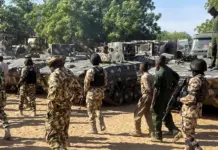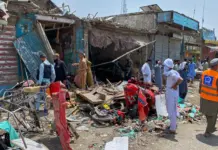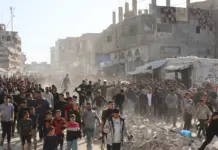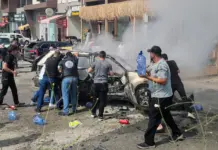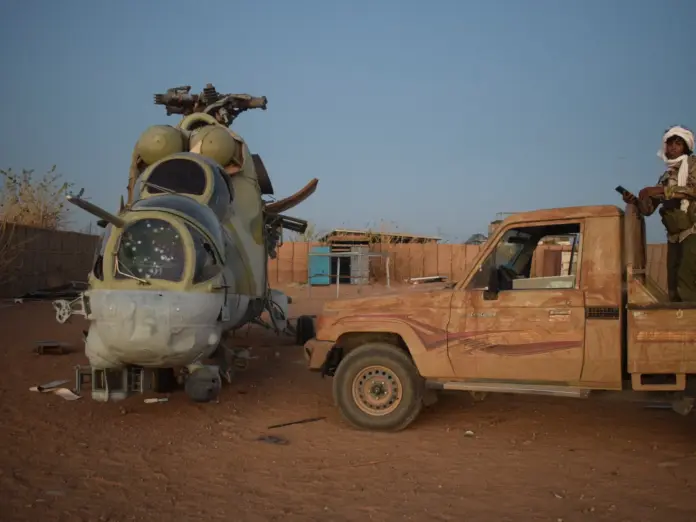
Mali Rebel Forces — Al-Qaeda-affiliated militants killed at least 30 people in coordinated attacks on the villages of Korikori and Gomossogou in Mali’s central Mopti region on Wednesday, deepening a security crisis that has shaken the country’s military government to its foundations. Some accounts place the death toll considerably higher, with three independent sources putting the number of killed at 50 across two localities in the same area.
The strikes came one day after armed fighters stormed the Kenieroba Central Prison, located roughly 60 kilometres southwest of the capital Bamako. The facility holds approximately 2,500 inmates, among them at least 72 individuals classified as high-value detainees by the Malian state. The brazen assault on a prison so close to the capital underscored the reach of the insurgency and the vulnerability of state infrastructure.
The Mopti attacks and the prison raid are the latest chapters in an escalating offensive by JNIM — Jama’at Nusrat al-Islam wal-Muslimin — the al-Qaeda-linked umbrella group operating across the Sahel. On April 25 and 26, JNIM joined forces with the FLA, the Tuareg-dominated Azawad Liberation Front, in a series of coordinated strikes that proved catastrophic for Mali’s government. Those attacks killed Defence Minister Sadio Camara, who died when fighters drove an explosives-laden vehicle into his residence. Militants also targeted the home of Assimi Goita, the leader of Mali’s military junta, though security forces managed to defuse a vehicle at his compound before it detonated.
Recommended Reading
The April offensive also drove Russian troops — aligned with Goita’s government — out of the northern town of Kidal, a strategic loss that reverberated across the region. FLA fighters subsequently seized both Kidal and the critical military base at Tessalit, consolidating rebel control over a vast swath of northern Mali. The expulsion of Russian forces, who had been deployed to bolster the junta’s counterinsurgency campaign, represents a significant blow to Bamako’s security architecture.
JNIM has now announced its intention to impose a blockade on the capital itself, establishing checkpoints on key arterial roads. Fighters are concentrating their efforts on routes leading to Kayes, approximately 580 kilometres from Bamako, and Kita, roughly 180 kilometres away, effectively threatening to strangle the city’s western supply lines and freedom of movement.
Malian army commander Djibrilla Maiga addressed the deteriorating situation at a news conference in Bamako on Wednesday, claiming that government forces have neutralised several hundred militants since the April 25 attacks began. Goita himself appeared on state television on April 28, insisting the situation across Mali remains under control — a characterisation increasingly difficult to reconcile with events on the ground.
The violence in the Mopti region carries additional layers of complexity. The area has long been a flashpoint for intercommunal conflict, particularly between Fulani herding communities and Dogon militia groups that have historically operated with the support of Malian security forces. Disputes over water resources — acute during the current dry season, which has seen no rainfall for months — have repeatedly ignited deadly clashes, creating conditions that armed groups have exploited to recruit and expand their influence.
Mali Rebel Forces: What This Means for the Sahel
Goita’s military government, which came to power following coups in 2020 and 2021, has staked its legitimacy on restoring security after years of jihadist expansion and political instability. The government severed ties with France and other Western partners, pivoting instead toward Russia for military support. That strategy now faces its most severe test, with rebel and jihadist forces demonstrating an unprecedented capacity to strike simultaneously across the country — from the far north to the outskirts of the capital — while coordinating prison raids and threatening to blockade Bamako from multiple directions.
The human cost continues to mount. With dozens dead in Mopti, a defence minister assassinated, a major prison breached, and key northern towns in rebel hands, Mali’s crisis has entered a dangerous new phase — one that threatens not only the survival of the current government but the stability of an already fragile state at the heart of the Sahel.