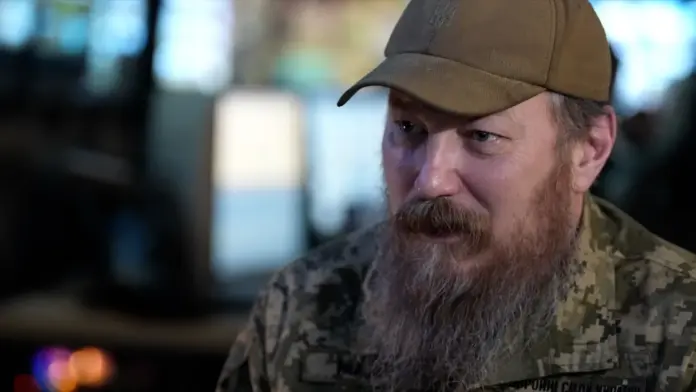
From a secret underground bunker lined with high-tech equipment and banks of surveillance screens, Robert Brovdi is waging what may be the most cost-effective military campaign of the 21st century. As commander of Ukraine’s Unmanned Systems Forces, the man known by his call sign Magyar oversees a drone operation that, despite comprising just 2% of Ukraine’s total military strength, claims responsibility for a third of all targets destroyed since the war’s escalation.
Brovdi’s trajectory from civilian to battlefield innovator is as unlikely as it is striking. An ethnic Hungarian from the western Ukrainian city of Uzhhorod, he spent the years before Russia’s full-scale invasion as a grain dealer and art collector, frequenting auction houses including Christie’s. He signed up to fight shortly before the February 2022 invasion, joining the Territorial Defence before seeing combat in some of the war’s most brutal engagements — Bakhmut and Kherson among them.
It was in Kherson, pinned down under Russian fire, that Brovdi first grasped the transformative potential of unmanned systems. His initial solution was improvised: he introduced drones he had originally purchased for his own children to his military unit. That makeshift beginning has since evolved into a formidable force. The 414th Brigade, which became known as the ‘Birds of Magyar,’ now operates platforms capable of travelling more than 1,000 kilometres, with certain models reaching twice that range.
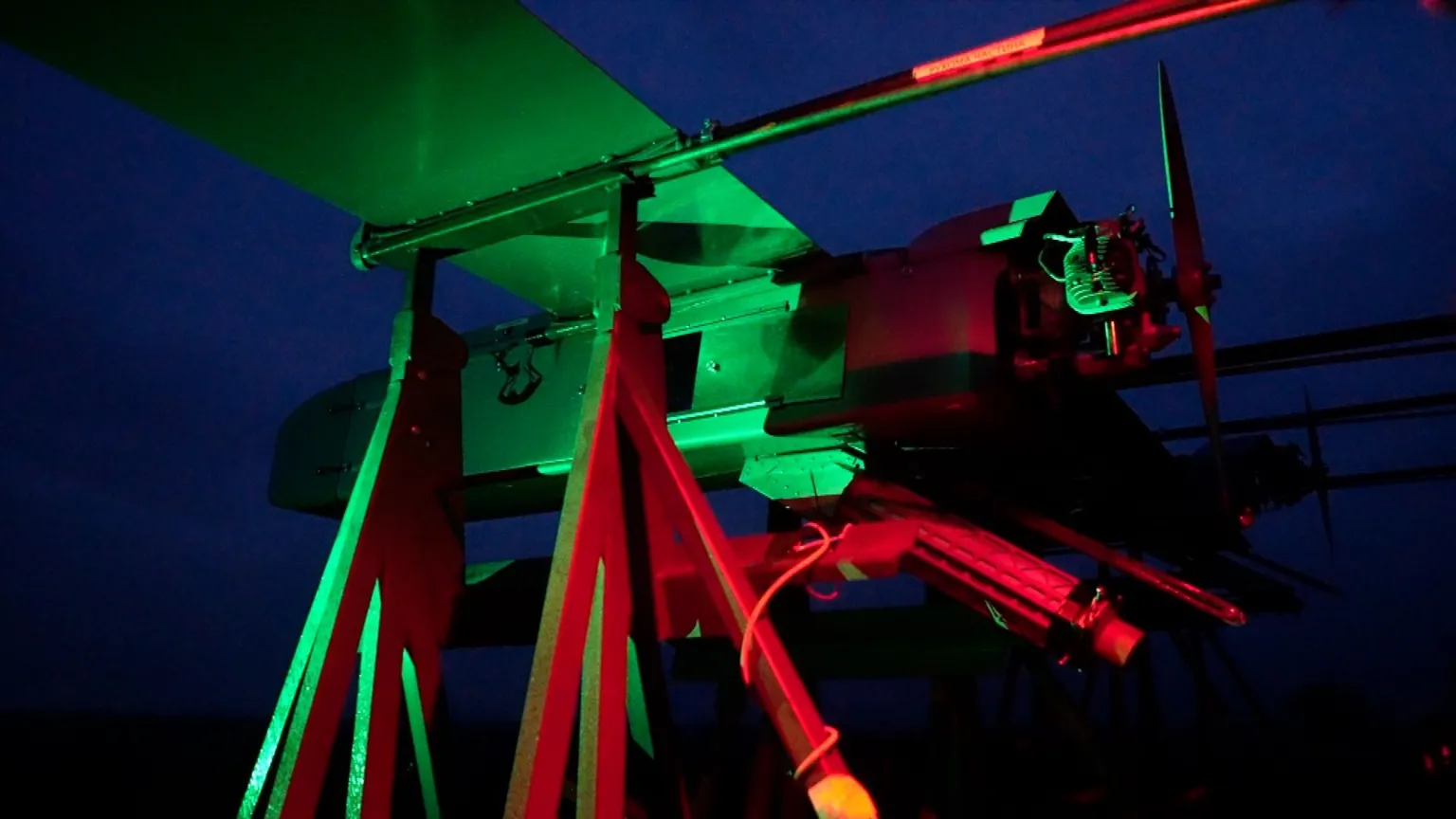
The operational tempo is relentless. Brovdi has set a target of eliminating more than 30,000 Russian soldiers per month, and he states his forces have met that benchmark for four consecutive months. Every strike is filmed for verification and logged systematically. Roughly 30% of all drone missions are directed specifically against military personnel, while the remainder target infrastructure, logistics, and command assets.
The human cost to Brovdi’s own forces has been remarkably low. The casualty rate within his drone units stands at less than 1% per year — a figure that stands in stark contrast to the grinding attrition suffered by conventional infantry formations on both sides of the front line. Pilots operating under call signs such as KitKat and Antalya conduct missions from dispersed positions, reducing their exposure to Russian counter-strikes.
Over recent weeks, Ukraine has dramatically intensified deep-strike operations against Russian territory, with energy export facilities emerging as a primary focus. Brovdi has been direct about the strategic intent: the area 1,500 to 2,000 kilometres inside Russian territory, he stated, is ‘no longer the peaceful rear.’ The psychological and economic pressure on Moscow is deliberate and calculated.
President Volodymyr Zelensky has publicly endorsed the campaign’s results, describing the deep strikes as ‘very painful’ for Russia and attributing ‘critical’ losses to the country’s energy sector — damage he assessed in the tens of billions of dollars. The strikes have not been without consequence for Russian civilians. Residents of Tuapse, a port city on Russia’s Black Sea coast, reported toxic rainfall following Ukrainian drone strikes on the local oil refinery, underscoring the environmental toll of attacks on petroleum infrastructure.
In occupied Ukrainian territory, Brovdi’s forces have also been targeting Russian security personnel directly. Within the past week alone, his command reported striking a dozen officers from the Russian FSB, the federal security service, in occupied areas — a signal that no tier of Russian presence in Ukraine is beyond reach.
Brovdi’s broader strategy rests on two pillars: maximising Russian casualties to degrade combat effectiveness, and striking deep inside Russia to erode morale and demonstrate that the war’s costs extend far beyond the front lines. The approach reflects a doctrine shaped not in military academies but in the improvised crucible of modern warfare, where a former art collector with children’s drones helped pioneer a new form of attrition.
Ukraine’s Unmanned Systems Forces represent one of the most significant military innovations to emerge from the conflict — a lean, technologically agile force punching well above its numerical weight. Whether the monthly casualty targets Brovdi cites can be independently verified remains unclear, but the strategic logic underpinning his campaign — low cost, high lethality, deep reach — has already reshaped how both sides approach the battlefield.