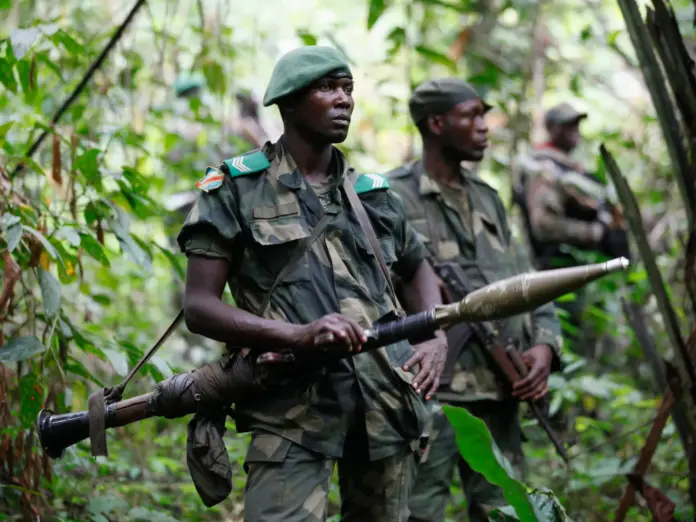
Joint Ugandan and Congolese military forces have freed more than 200 civilians held captive by the Allied Democratic Forces (ADF), an IS-linked militant group operating in eastern Democratic Republic of the Congo. The operation, conducted last week and announced by Uganda’s military on Monday, targeted an ADF camp situated along the River Epulu — a remote stretch of territory the group has used as a base for kidnapping, forced labour, and systematic abuse.
Among those rescued was a 14-year-old girl, the youngest of the captives. Many emerged visibly frail, suffering from untreated malaria, respiratory infections, and severe physical exhaustion. Freed hostages described conditions of near-starvation, compulsory labour, and harsh punishment for any act of disobedience. Some had been held for months; others for years. Amnesty International researcher Rawya Rageh noted that women and girls had been subjected to sexual slavery within ADF camps, a pattern of abuse consistent with accounts from previous rescues.
Several ADF fighters were killed during the assault and a significant cache of weapons was recovered. The operation was led by Maj Gen Stephen Mugerwa, who commands the joint Uganda-DRC mission established in 2021 to dismantle ADF networks across the border region. In February of this year, joint forces overran a major ADF camp in a separate operation, and the sustained offensive has since enabled displaced communities to return to their homes. Schools have reopened in previously inaccessible areas, and cross-border trade between Uganda and the DRC has resumed — tangible signs of stabilisation in a region accustomed to chronic insecurity.
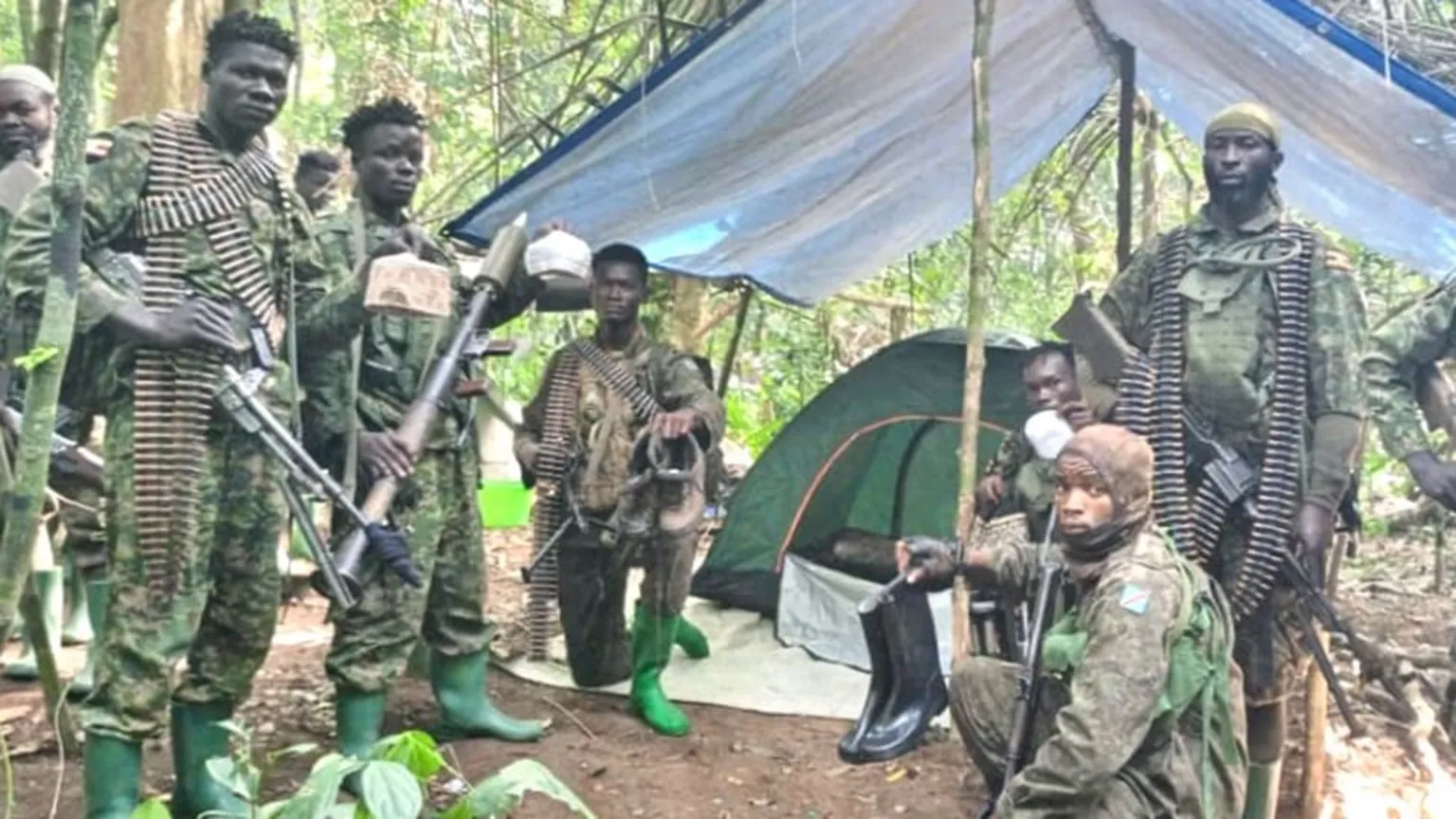
The ADF’s origins trace back to Uganda in 1994, when the group emerged from communities that accused the government of persecuting Muslims. After successive offensives by the Ugandan army, ADF remnants crossed into eastern DRC roughly 25 years ago, embedding themselves in dense forest terrain where they have operated ever since. The group’s leader, Musa Seka Baluku, first pledged allegiance to the Islamic State in 2016, and IS formally acknowledged the ADF’s activities in the region in April 2019. The affiliation transformed a localised insurgency into a node within a global jihadist network.
The consequences for civilians have been catastrophic. United Nations figures attribute thousands of civilian deaths in eastern DRC to the ADF. A 2024 study found the group responsible for more than half of all civilian fatalities in the region. Beyond mass killings, the ADF has been accused of kidnapping large numbers of civilians and forcing young women and girls into marriage. The group’s reach has extended beyond the DRC: it was blamed for suicide bombings in Kampala in 2021 and targeted schools in western Uganda in 2023.
ADF violence has intensified in recent months, particularly across Ituri and North Kivu provinces. At least 43 people were killed in a single ADF attack earlier this month. The group appeared to reinvigorate its operations last year as Congolese government forces were stretched thin battling multiple armed factions simultaneously. The most prominent of those groups, M23 — backed by Rwanda — has dominated international attention, but the ADF’s quieter campaign of abduction and massacre has continued to devastate communities in the east.
The River Epulu rescue represents one of the largest single liberation operations in the joint campaign’s history. For the survivors, freedom comes after ordeals that have left lasting physical and psychological scars. For the broader region, the operation signals that coordinated military pressure is yielding results — even as the underlying conditions that allow groups like the ADF to recruit, expand, and terrorise remain deeply entrenched.