ABU DHABI — The United Arab Emirates declared itself in a state of war Saturday after Iran unleashed a barrage of 16 ballistic missiles and more than 120 drones against the country, striking Abu Dhabi airport, the iconic Palm Jumeirah development, the Burj Al Arab luxury hotel, and the US consulate in Dubai, where drone debris ignited a fire. UAE airspace was closed as air defence systems worked to intercept the incoming projectiles.
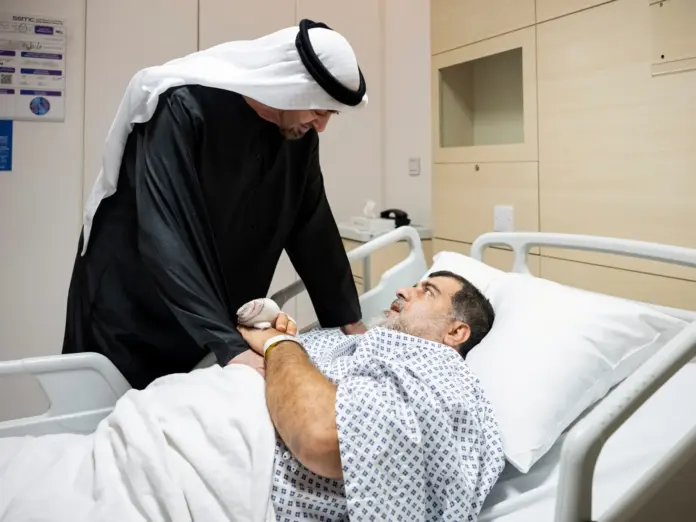
Speaking in remarks broadcast on Abu Dhabi TV and posted to X, Sheikh Mohamed bin Zayed Al Nahyan — who visited wounded patients at a hospital before addressing the nation — stated the UAE is fully prepared to confront any threat. The UAE Ministry of Defence confirmed its air defence systems were actively intercepting ballistic missiles, drones, and loitering munitions launched from Iran, warning that several blasts reported across the country were the result of interception operations.
Not all projectiles were stopped. A massive explosion rocked the Dubai Marina district Saturday evening, igniting a fire on the 23rd floor of a residential skyscraper. Whether the building was struck directly or hit by debris from an intercepted missile remained unclear. Earlier, an unidentified object forced Dubai International Airport to briefly suspend operations after being intercepted nearby. One driver — described as Asian by Dubai’s Media Office — was killed when debris from an intercepted projectile struck his vehicle.
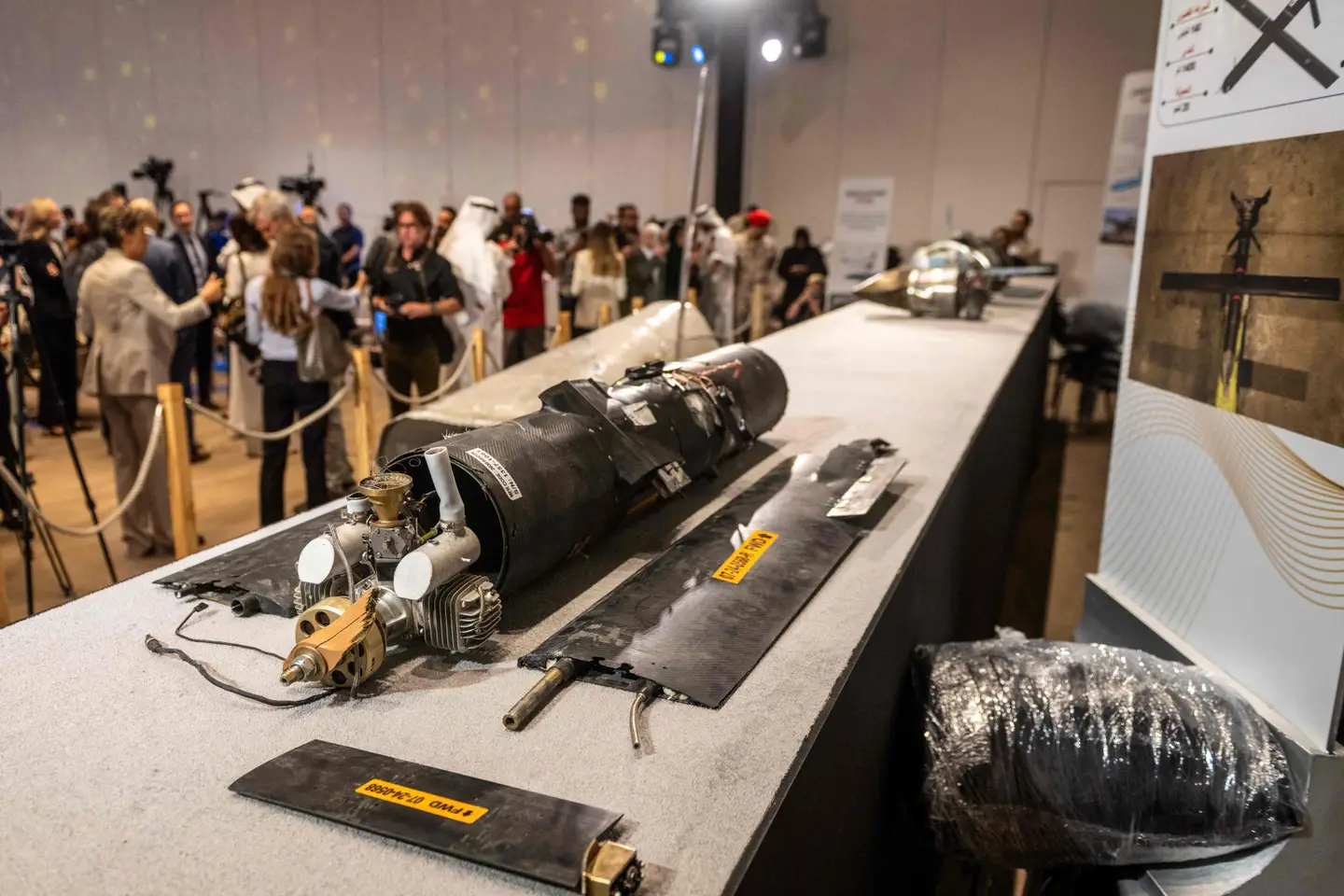
The assault on the UAE is part of a sweeping Iranian campaign targeting all six member states of the Gulf Cooperation Council. The Islamic Revolutionary Guard Corps struck a US air combat centre at al-Dhafra airbase near Abu Dhabi and targeted US forces at Bahrain’s Jufair airbase. In Saudi Arabia, a ballistic missile landed in an uninhabited area after being launched toward Prince Sultan Air Base. Qatar’s armed forces intercepted a missile attack, while Kuwait reported shooting down a drone and announced a precautionary reduction in crude oil production.
The broader conflict, which began on February 28, 2026, was triggered when Israel and the United States launched airstrikes on Iran following the collapse of negotiations over Tehran’s nuclear programme. Since then, Iran has conducted repeated missile and drone strikes across the Gulf region. Saturday marked one of the most intense single days of the conflict. More than 80 Israeli fighter jets struck Iranian army sites, missile launchers, and other military infrastructure, including 16 aircraft belonging to the Quds Force at Tehran’s Mehrabad airport. Israel also struck targets in Isfahan. Iran responded by firing missiles at Israel on eight separate occasions throughout the day.
US President Donald Trump warned Saturday that Washington would strike Iran ‘very hard,’ claiming US forces had sunk 42 Iranian navy ships over the preceding three days. The IRGC also struck a Marshall Islands-flagged tanker in the Strait of Hormuz, raising fears of further disruption to global energy shipping lanes.
The humanitarian toll of the conflict is mounting. A US strike on a freshwater desalination plant on Iran’s Qeshm Island cut water supplies to 30 villages. The vulnerability of such infrastructure underscores a broader regional risk: approximately 95 percent of all water in the Gulf is produced through desalination, according to Harlan Ullman of the Atlantic Council.
Diplomatic signals from Tehran remained contradictory. Iranian President Masoud Pezeshkian offered an apology to neighbouring nations for launching strikes on countries hosting US military bases — a statement quickly contradicted by judiciary chief Gholamhossein Mohseni Ejei, a member of Iran’s interim leadership council. Foreign Minister Abbas Araghchi attempted to clarify Pezeshkian’s remarks on X without fully endorsing or retracting them.
Iran’s political future adds another layer of uncertainty. The country’s Assembly of Experts is set to convene within 24 hours to select a new supreme leader, according to assembly member Ayatollah Mozafari. Iran’s UN ambassador, Amir Saeid Iravani, flatly rejected Trump’s stated desire to influence that selection process, calling it an internal matter.
The conflict has now engulfed one of the world’s most strategically critical waterways. With Gulf states closing airspace, oil production being curtailed, and shipping lanes under threat, the economic reverberations of the war are beginning to extend far beyond the region’s borders.