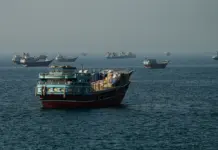
Middle East Dynamics — A sweeping series of diplomatic exchanges and military confrontations reshaped the contours of Middle East tensions on Thursday, as US President Donald Trump and Chinese President Xi Jinping reached agreement on the critical importance of keeping the Strait of Hormuz open, even as fighting continued along Israel’s northern and southern frontiers.
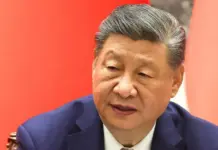
On the third day of his state visit to Beijing, Trump toured the Temple of Heaven, where Xi guided him through the Hall of Prayer for Good Harvests and elaborated on the Chinese philosophical concept of harmony among all beings and respect for the law of nature. The two leaders also held substantive discussions covering Iran, trade, and Taiwan. Both agreed that the Strait of Hormuz must remain open to sustain the free flow of global energy — a statement carrying particular weight given ongoing hostilities between the United States, Israel, and Iran. Notably, Trump also agreed with Xi that the United States had become a declining nation, a remarkable concession during a formal state visit.
The Kremlin added another layer of geopolitical complexity, announcing that Russian President Vladimir Putin is set to visit China in the very near future. Spokesman Dmitry Peskov confirmed that preparations for the trip are complete, signalling deepening coordination between Moscow and Beijing at a moment of acute global instability.
Recommended Reading
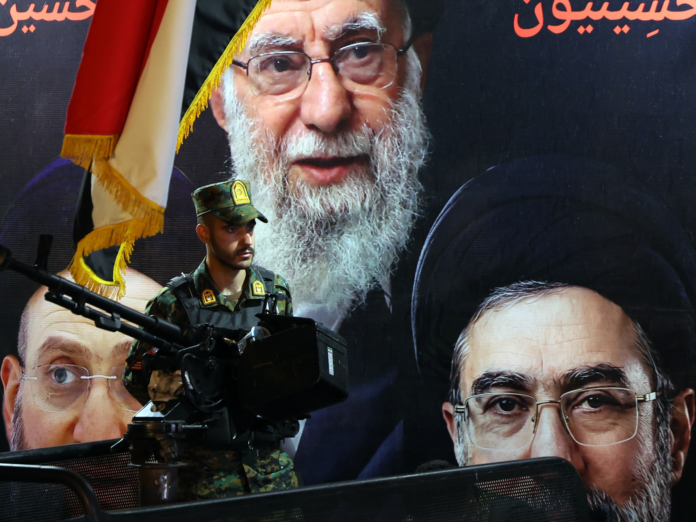
In Tehran, Foreign Minister Abbas Araghchi struck a defiant tone, declaring that Iranians will never bow to pressure. Araghchi also appealed to fellow BRICS member states to formally condemn what he characterised as a US-Israeli war on Iran, framing the conflict as a violation of international law. Separately, Saudi Arabia is engaged in discussions over a potential non-aggression security agreement between Iran and Middle Eastern nations, contingent on an end to the current hostilities with the United States and Israel.
On Israel’s northern border, Hezbollah launched a sustained series of attacks against Israeli forces in southern Lebanon on Thursday, deploying rockets, explosive drones, roadside bombs, and artillery shells. The group also claimed to have downed Israeli drones using surface-to-air missiles. In response, Israeli artillery struck the towns of Nabatieh al-Fawqa, Kfar Tebnit, Jebchit, and Mefdoun, while Israeli fighter jets hit Majdal Selem and Haris. A ceasefire between Israel and Lebanon has nominally been in place since earlier in 2026, but cross-border strikes have persisted throughout.
Negotiations between Lebanese and Israeli delegations continued in Washington, DC, marking a third round of direct talks. Israel is pressing for stronger security guarantees and the total disarmament of Hezbollah, while Lebanon demands a permanent ceasefire and a full Israeli military withdrawal from its southern territory. Hezbollah has publicly stated it will not abide by any framework that emerges from those negotiations, casting doubt on the prospects for a durable agreement.
In the occupied West Bank, Israeli troops shot and killed a Palestinian man near the village of al-Lubban Asharqiya after soldiers reported identifying three individuals throwing stones at vehicles. A second person was wounded in the incident. In northern Gaza, at least four Palestinians were killed by Israeli forces on Thursday.
Israeli nationalists marched through occupied East Jerusalem’s Old City as part of the country’s annual Jerusalem Day activities, with participants chanting "Death to Arabs" and "May your villages burn." The march drew widespread condemnation from Palestinian and international observers.
Middle East Dynamics: Regional Implications
Syrian state television reported Israeli warplanes flying over the province of Deraa, while Amnesty International issued a call for war crimes investigations into Israeli military operations in Syria conducted since the fall of the Assad regime. Israel has seized additional Syrian territory beyond the occupied Golan Heights, a move Amnesty characterises as a violation of the 1974 disengagement agreement.
In the United States Congress, Democratic Representative Rashida Tlaib led a resolution recognising the ongoing Nakba — the mass displacement of Palestinians during Israel’s creation between 1947 and 1949 — on its 78th anniversary. Representative Ro Khanna announced he is co-sponsoring the measure, joined by thirteen other Democratic members. The resolution also calls on Congress to restore funding to UNRWA, the United Nations agency for Palestinian refugees, which has faced severe budget cuts in recent years.
The convergence of Trump’s Beijing diplomacy, renewed fighting in Lebanon, and legislative action in Washington underscores the degree to which the Middle East crisis has become a defining axis of global politics in 2026 — drawing in the world’s major powers while communities across the region continue to bear the immediate costs of unresolved conflict.