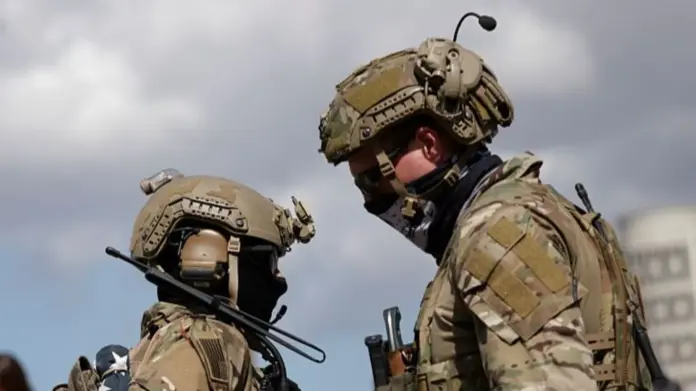
WARSAW/WASHINGTON — President Donald Trump announced Thursday that the United States will send 5,000 additional troops to Poland, a decision he attributed to his close relationship with Polish President Karol Nawrocki — even as his administration simultaneously scales back American military commitments elsewhere in Europe.
Trump made the announcement on his Truth Social platform, framing the deployment as a reflection of the personal bond between the two leaders. Nawrocki, a staunch Trump ally who received the US president’s endorsement before winning Poland’s presidential election, has been among the most vocal European supporters of Trump’s foreign policy approach.
The announcement carries an unmistakable air of contradiction. Just one week before Trump’s post, the Pentagon cancelled a planned deployment of 4,000 troops to Poland. Defence Secretary Pete Hegseth subsequently described that cancellation as "a temporary delay," insisting the US would continue to ensure it "retains a strong military presence" in Poland. The net effect of the two decisions is a modest increase in American forces in the country — but the sequence has raised questions about coherence within the administration’s European strategy.
The broader picture is one of deliberate retrenchment. Earlier this month, Washington announced the withdrawal of 5,000 troops from Germany, which currently hosts more than 36,000 active-duty US personnel — the largest American military deployment on the continent. The White House has signalled in recent weeks that reducing overall troop levels in Europe is a core component of its ‘America First’ agenda, a posture that has unsettled allies and drawn criticism from within Trump’s own party.
Several Republican lawmakers have warned that the German withdrawal risks sending the wrong message to Vladimir Putin, whose forces remain engaged in the war in Ukraine. The US also maintains approximately 12,000 troops in Italy and around 10,000 in the United Kingdom, deployments that have not yet been targeted for reduction but whose futures remain uncertain under the current policy direction.
Tensions with Berlin have added a sharper edge to the transatlantic debate. Trump clashed publicly with German Chancellor Friedrich Merz after Merz suggested that American negotiators had been "humiliated" by their Iranian counterparts. Trump pushed back forcefully, and has grown increasingly frustrated with NATO allies he accuses of failing to join Washington in applying pressure on Iran over the Strait of Hormuz.
Against this fractious backdrop, NATO foreign ministers are set to convene in Sweden on Friday. US Secretary of State Marco Rubio will attend the summit and is expected to press Washington’s European partners on burden sharing — a long-standing American demand that has taken on renewed urgency under the Trump administration. Rubio has declined to address unconfirmed reports suggesting the US could reduce the total number of troops it would make available in the event of an attack on a NATO member state.
Poland’s position in this shifting landscape is notable. Nawrocki told a British radio programme in January that Trump is the only world leader capable of halting Putin and ending the conflict in Ukraine, and has consistently argued that the US remains the ultimate guarantor of European security despite Trump’s repeated criticisms of the alliance. Warsaw has invested heavily in its relationship with Washington and has been among the most enthusiastic NATO members in terms of defence spending — factors that appear to have earned it preferential treatment in the current moment.
The contrast between Poland’s treatment and Germany’s is stark, and analysts suggest it reflects Trump’s tendency to reward political loyalty over strategic calculation. While Berlin faces a drawdown, Warsaw receives reinforcements — a dynamic that is reshaping the informal hierarchy within the alliance and prompting other European capitals to recalibrate their approaches to Washington.
Whether the Poland deployment represents a genuine strategic commitment or a gesture of personal diplomacy remains an open question. With the Sweden summit set to test alliance cohesion on multiple fronts — from Ukraine to Iran to burden sharing — the coming days will offer a clearer picture of how far Washington’s European pivot has actually gone.