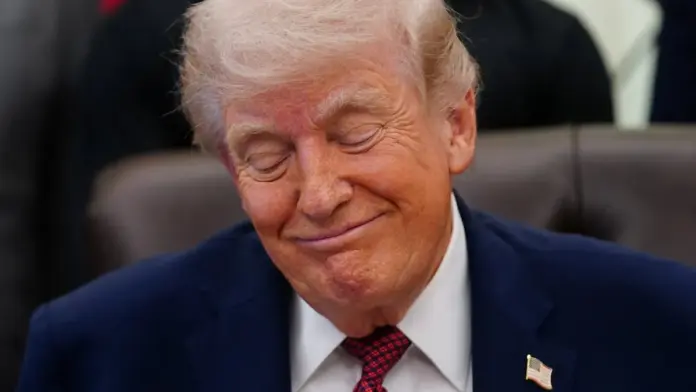
Washington / Islamabad — President Donald Trump announced an indefinite extension to the United States ceasefire with Iran on Tuesday, reversing his own stated position from hours earlier and buying time for a second round of peace negotiations scheduled in the Pakistani capital, Islamabad.
Trump credited the intervention of Pakistani Prime Minister Shehbaz Sharif and Field Marshal Asim Munir with persuading him to prolong the truce, which had been set to expire on Wednesday. The extension carries no fixed deadline, remaining in effect until Tehran submits a formal proposal and discussions reach a conclusion. Sharif publicly expressed gratitude for Trump’s decision, underscoring Islamabad’s increasingly prominent role as a mediating power in the conflict.
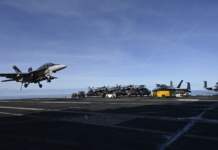
Despite the diplomatic opening, Trump directed the US Military to maintain its naval blockade of Iranian ports — a measure that Iranian Foreign Minister Abbas Araghchi has condemned as an act of war
and a direct violation of the existing ceasefire agreement. Tehran did not issue an immediate formal response to Tuesday’s announcement, though the semi-official Tasnim news agency indicated the government’s official position would be released at a later time.
The silence from Tehran reflects the turbulent state of Iran’s leadership. Trump asserted that the Iranian government is seriously fractured,
a characterisation that carries weight given the seismic events of recent months. Supreme Leader Ali Khamenei was among multiple senior Iranian officials killed after the United States and Israel launched coordinated strikes against Iran beginning on February 28. His son, Mojtaba Khamenei, was subsequently selected as supreme leader last month but has not made a single public appearance since assuming the role. In his absence, the Islamic Revolutionary Guard Corps has taken the lead in directing Iran’s war effort.
The original two-week ceasefire was agreed on April 8, but it has been beset by disputes almost from the outset. Disagreements over whether Lebanon should be included in the truce framework have proven particularly contentious, as has the question of control over the Strait of Hormuz, the critical waterway through which a significant portion of global oil supplies passes.
The gulf between the two sides’ negotiating positions remains vast. Washington is demanding a complete shutdown of Iran’s nuclear programme, strict limits on its ballistic missile production, and an end to its financial and military support for regional partners including Hezbollah and Hamas. Iran has categorically rejected any concessions involving its military capabilities or its regional alliances, and insists on its sovereign right to enrich uranium domestically as part of a civilian nuclear programme.
A further flashpoint emerged over the fate of nuclear material at sites struck during the US-Israeli campaign. Trump claimed Tehran had agreed to allow the United States to extract nuclear material from bombed facilities, a claim Iran flatly denied, stating it will not permit uranium to leave Iranian territory under any circumstances.
The prospect of direct talks in Islamabad appeared uncertain as of Tuesday. Vice President JD Vance had been prepared to travel to Pakistan to negotiate with Iranian counterparts, but Tehran showed little indication it was ready to engage with Vance at the table. The scheduled Wednesday session in Islamabad now faces an ambiguous future, with Iran’s participation unconfirmed.
Trump’s reversal on the ceasefire extension — having opposed prolonging the truce just hours before announcing it — illustrates the volatile and fast-moving nature of the diplomatic process. The decision to maintain the military blockade simultaneously with extending the ceasefire has drawn sharp criticism from Iranian officials, who argue the two positions are fundamentally incompatible.
Financial markets reacted to the uncertainty, with Australia’s ASX poised to fall as investors weighed the implications of an open-ended conflict with no clear resolution in sight. The war, now entering its third month since the initial strikes, has reshaped the geopolitical landscape of the Middle East and placed Pakistan at the centre of international efforts to prevent further escalation.
Whether Tehran’s leadership — fractured, leaderless in any visible public sense, and under sustained military and economic pressure — can coalesce around a negotiating position capable of satisfying Washington’s demands remains the defining question of a conflict with consequences stretching far beyond the region.