Washington / Beirut — A fragile 10-day ceasefire between Israel and Lebanon took effect Thursday evening, brokered by Donald Trump in a diplomatic push that brought the two adversaries into direct talks for the first time in decades and offered a potential pause to a conflict that has killed thousands and uprooted more than one million Lebanese civilians.
The truce came into force at 5pm US Eastern time — 21:00 GMT — after Trump spoke individually with Israeli Prime Minister Benjamin Netanyahu and Lebanese President Joseph Aoun. The US president subsequently announced the agreement and said he would invite both leaders to direct negotiations aimed at a lasting settlement.
Lebanese Prime Minister Nawaf Salam welcomed the announcement, describing a ceasefire as a central Lebanese demand pursued from the very first day of the conflict. The deal followed a landmark meeting in Washington, DC on Tuesday, where Lebanese and Israeli envoys sat across the table from one another — their countries’ first direct diplomatic contact in decades. Secretary of State Marco Rubio hosted those talks, which had the ceasefire as their primary objective. Despite the diplomatic breakthrough, Lebanese President Aoun declined to speak directly with Netanyahu throughout the process.
Trump directed Vice President JD Vance, Rubio, and Joint Chiefs of Staff chairman Dan Caine to work toward a durable resolution once the initial truce holds.
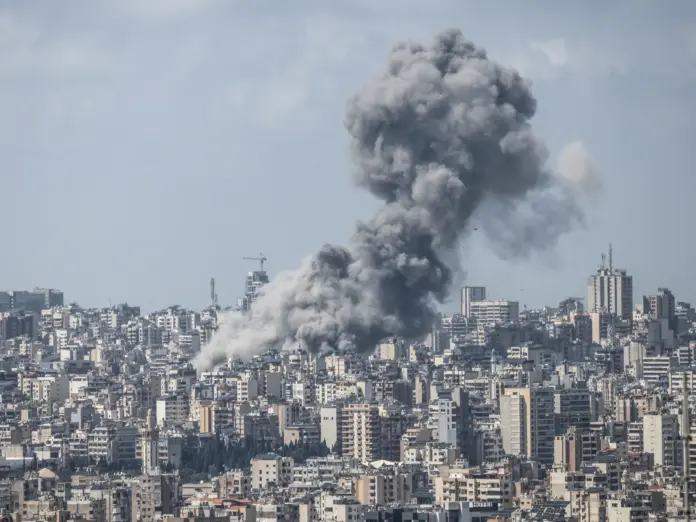
The ceasefire arrives against a backdrop of severe destruction. Israeli forces have killed more than 2,196 people in Lebanon since the country was drawn into the broader US-Israeli war on Iran on March 2. That date marked the moment Hezbollah fired rockets into Israel in retaliation for the killing of Iranian Supreme Leader Ali Khamenei, who died on February 28 in an Israeli strike on the opening day of the Iran campaign. Israel has since issued forced evacuation orders covering roughly 15 percent of Lebanese territory, and more than one million people have been displaced.
The scale of civilian suffering was underscored by fresh strikes on Thursday, hours before the ceasefire deadline. At least eight people were killed and 33 others wounded in an Israeli strike on the town of Ghaziyeh. In the southern district of Tyre, nine people — including a paramedic — were killed in strikes over two days, according to the Lebanese Ministry of Public Health.
Hezbollah’s position on the truce remains conditional. Ibrahim al-Moussawi, a lawmaker affiliated with the group, said Hezbollah would respect the ceasefire provided Israeli attacks on its fighters stopped entirely. Notably, Hezbollah was not included in the ceasefire talks themselves, raising questions about the agreement’s durability on the ground.
The Lebanon ceasefire is also deeply intertwined with the broader regional diplomatic calendar. A two-week US-Iran ceasefire is due to expire on Wednesday, and a new round of negotiations between Washington and Tehran is expected to take place in Pakistan. Iran had made securing a Lebanon ceasefire a firm precondition before any further talks could proceed, lending the agreement additional strategic weight beyond the immediate humanitarian stakes.
The 10-day window is widely seen as a test of whether the warring parties can translate a tactical pause into something more permanent. Trump’s pledge to host Netanyahu and Aoun for direct talks signals Washington’s intent to remain centrally involved, though the exclusion of Hezbollah — the primary armed actor on the Lebanese side — from the negotiating table presents a significant structural challenge to any lasting arrangement.
For Lebanon, a country already battered by years of economic collapse and political paralysis, the ceasefire offers a moment of relief, however uncertain. Whether it holds beyond its initial 10-day span will depend as much on events in Tehran and the battlefield as on the diplomatic corridors of Washington.