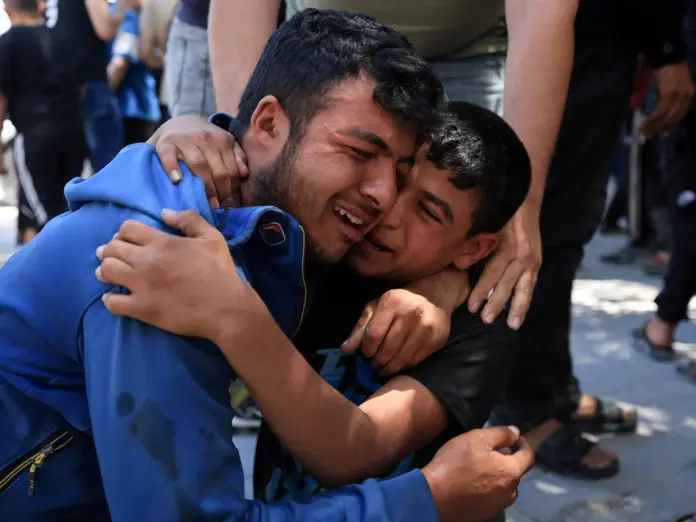
Israeli Strike Gaza — An Israeli air strike struck a police post in the at-Twam area of northern Gaza, killing at least five police officers, a 13-year-old boy, and at least one civilian bystander on a nearby street, while wounding ten others. The Gaza police directorate confirmed that two missiles hit the post, killing the officers on the spot.
Medical staff at al-Shifa Hospital confirmed the civilian death, underscoring the toll the strike took beyond the targeted installation. The attack is among the latest in a near-daily pattern of Israeli military operations in Gaza that has continued since a ceasefire formally came into effect on October 10, 2025 — a halt to the war Israel launched following the Hamas attack of October 7, 2023.
Since that ceasefire began, 883 people have been killed in Gaza. In the 48 hours preceding the at-Twam strike alone, eight Palestinian bodies arrived at hospitals across the territory, along with 29 wounded. The cumulative death toll from the broader conflict has reached at least 72,775 Palestinians.
Recommended Reading
The strike on the police post carries political weight beyond the immediate casualties. The Gaza police force, which numbers approximately 10,000 officers, has become a significant sticking point in negotiations to advance US President Donald Trump‘s plan for the territory’s future governance. Israel maintains a strict security regime in Gaza and has resisted arrangements that would preserve the existing Palestinian security infrastructure, viewing it as linked to Hamas’s administrative apparatus.
The force’s fate remains unresolved as broader talks stall. Israel has simultaneously maintained severe restrictions on the entry of humanitarian aid into Gaza, compounding conditions for a civilian population already devastated by nearly two years of war.
The humanitarian situation is deteriorating on multiple fronts. The United Nations Relief and Works Agency for Palestine Refugees (UNRWA) has reported a sharp increase in skin infections among Palestinian children, driven by a surge in pests including rats, lice, fleas and mites — conditions directly linked to the collapse of sanitation infrastructure and overcrowded displacement sites. UNRWA health teams are currently able to treat only around 40 percent of the thousands of cases presenting for care, with basic medicines in critically short supply across the territory.
The strike on the at-Twam post illustrates the fragile and contested nature of the October ceasefire. Despite the formal halt to large-scale hostilities, Israel has carried out almost daily attacks in Gaza since the agreement came into force, targeting what it describes as security threats. Palestinian officials and humanitarian organisations have repeatedly condemned the ongoing strikes as violations of the ceasefire’s spirit, if not its explicit terms.
Israeli Strike Gaza: Regional Implications
The at-Twam area, located in northern Gaza, has been among the most heavily affected zones throughout the conflict. Northern Gaza bore the brunt of early Israeli ground operations following October 7, 2023, and infrastructure there remains severely degraded. The presence of a functioning police post in the area reflects efforts by Gaza’s civil administration to maintain some degree of order amid the ruins — efforts now directly targeted by Israeli strikes.
With talks over Gaza’s political future deadlocked and violence persisting on the ground, the gap between the ceasefire on paper and the reality experienced by Gaza’s population continues to widen. For the families of the five officers and the 13-year-old boy killed in at-Twam, the distinction offers little comfort.