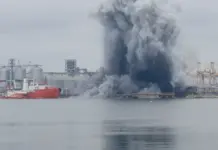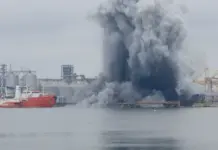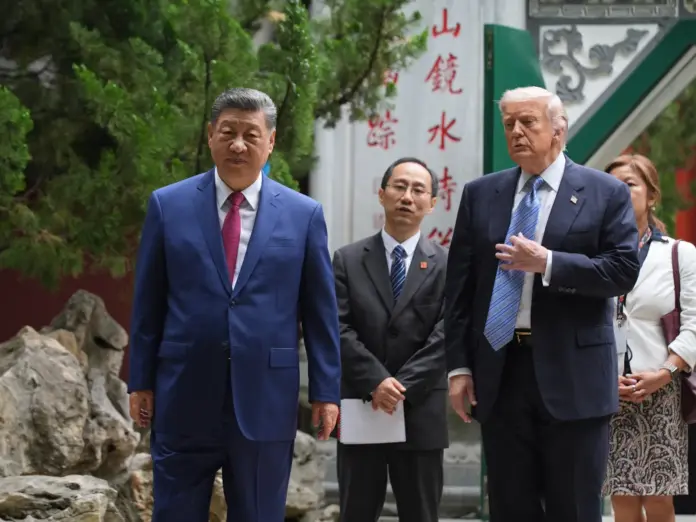
Trump Xi Hormuz — On the third day of his state visit to China, US President Donald Trump secured a notable diplomatic commitment from Chinese President Xi Jinping on Thursday, May 14, 2026 — one with potentially far-reaching consequences for the ongoing war against Iran. Xi agreed that the Strait of Hormuz must remain open to support the free flow of energy, and pledged that China would not supply military equipment to aid Iran in its conflict with the United States and Israel.
Trump told Fox News anchor Sean Hannity that Xi had offered China’s help in keeping the strategic waterway navigable, a concession the White House framed as a significant diplomatic win. The two leaders held their discussions at the Temple of Heaven in Beijing, where Xi also explained to Trump the philosophical concept of harmony among all beings at the Hall of Prayer for Good Harvests — a setting that underscored the carefully choreographed nature of the summit.
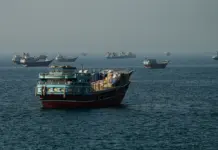
Analyst Drew Thompson characterised the meeting as deliberately managed, aimed primarily at preventing further deterioration in US-China relations rather than resolving deeper structural tensions. The optics of alignment, however, carried weight: overnight, Iranian media reported that more than 30 ships — including some linked to Chinese companies — transited the Strait of Hormuz without incident, a signal of continued commercial normalcy even as the broader conflict raged.
Recommended Reading
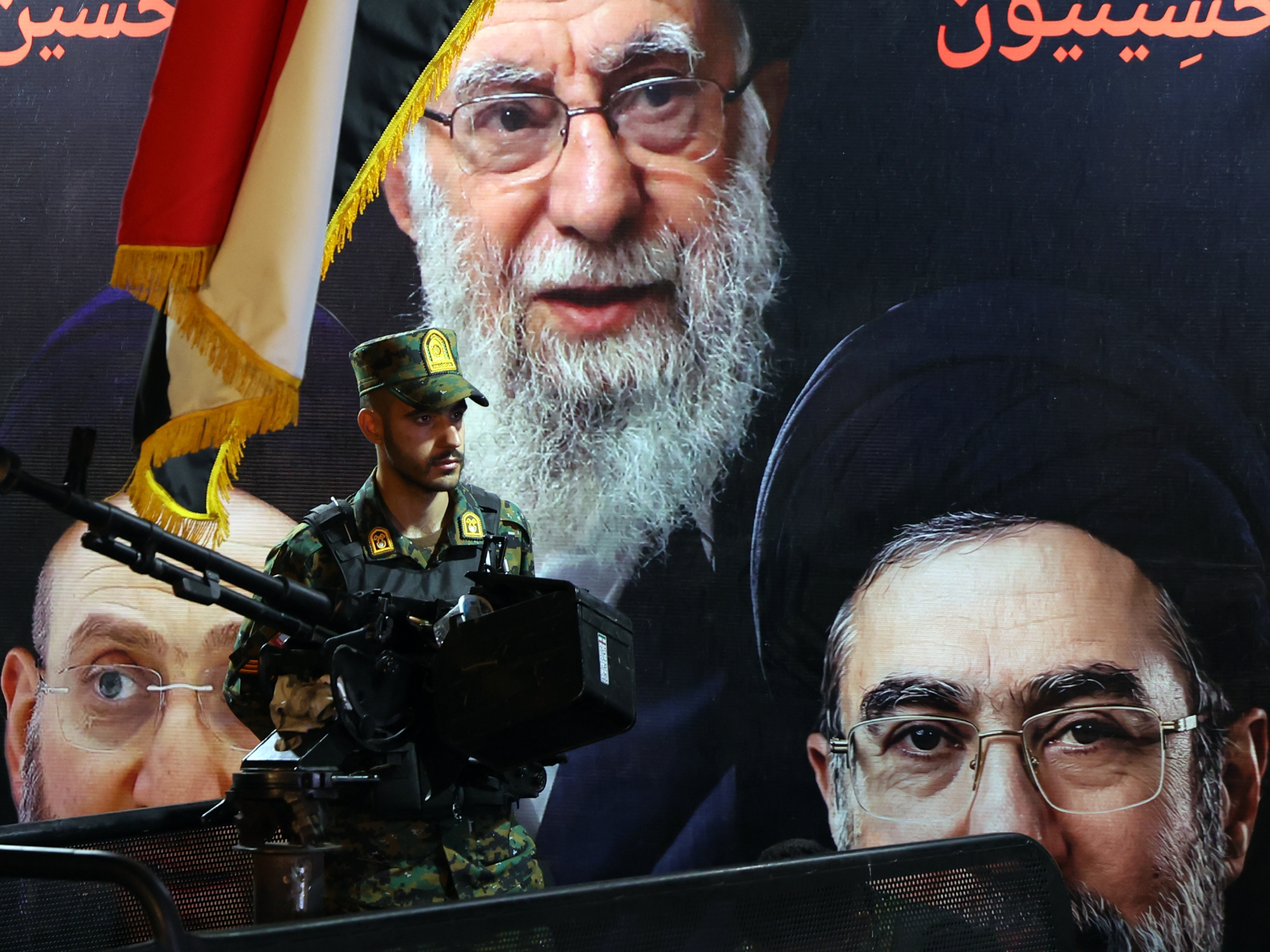
Trump also acknowledged to Hannity that the effort to locate and secure Iran’s enriched uranium stockpiles was driven partly by political optics, and said his patience for reaching a truce with Tehran was running thin as peace negotiations remained stalled.
In New Delhi, Iranian Foreign Minister Abbas Araghchi took a sharply different tone. Attending a BRICS ministerial meeting, Araghchi urged member nations to formally condemn the US-Israel war on Iran as a violation of international law, insisting that Iranians would ‘never bow to pressure.’ He also levelled a pointed accusation at the United Arab Emirates, claiming Abu Dhabi was playing an active role in the military campaign against Tehran — an allegation that, if substantiated, would mark a significant escalation in regional alignment against Iran.
Meanwhile, a third round of direct negotiations between Lebanese and Israeli delegations convened in Washington, DC, with a US official describing Thursday’s session as positive. Talks were set to continue into a second day. The two sides remain far apart on core issues: Israel is demanding stronger security guarantees and the full disarmament of Hezbollah, while Lebanon is insisting on a permanent ceasefire and a complete withdrawal of Israeli troops from the south. Hezbollah itself has already declared it will not abide by any framework that emerges from the negotiations.
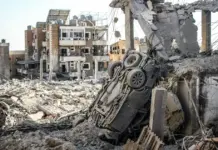
On the ground in southern Lebanon, Hezbollah claimed its fighters launched a sustained barrage of attacks on Israeli forces using rockets, explosive drones, roadside bombs and artillery shells. The group also claimed to have downed Israeli drones with surface-to-air missiles. Israeli artillery struck the towns of Nabatieh al-Fawqa, Kfar Tebnit, Jebchit and Mefdoun, while Israeli fighter jets hit Majdal Selem and Haris.
The conflict’s geographic footprint continued to expand. Syrian state television reported Israeli warplanes flying over the province of Deraa, and Amnesty International called for war crimes investigations into Israeli raids and shelling in southern Syria since the fall of the Assad regime. Israel has seized additional Syrian territory beyond the occupied Golan Heights, in violation of the 1974 disengagement agreement.
In the occupied West Bank, Israeli troops shot and killed a Palestinian man near the village of al-Lubban Asharqiya after soldiers claimed they identified three individuals throwing stones at passing vehicles. A second person was wounded. In northern Gaza, at least four Palestinians were killed by Israeli forces on Thursday.
Trump Xi Hormuz: Regional Implications
In occupied East Jerusalem, Israeli nationalists marched through the Old City as part of annual Jerusalem Day activities, chanting ‘Death to Arabs’ and ‘May your villages burn.’ The march drew international condemnation.
Israel announced it would pursue legal action against The New York Times following the publication of an article by journalist Nicholas Kristof detailing rape allegations made by 14 male and female Palestinian detainees against Israeli forces.
On Capitol Hill, Democratic Congressman Ro Khanna of California announced he was co-sponsoring a resolution led by Representative Rashida Tlaib recognising the ongoing Nakba — the mass displacement of Palestinians during Israel’s creation between 1947 and 1949. Thirteen other Democratic members of Congress joined as co-sponsors, marking the 78th anniversary of the event.
In a further sign of shifting regional diplomacy, the Kremlin confirmed that Russian President Vladimir Putin would visit China in the ‘very near future,’ with spokesman Dmitry Peskov stating that preparations were complete and final dates would be announced simultaneously by Moscow and Beijing. Separately, Saudi Arabia is reported to be in discussions over a potential ‘non-aggression’ security agreement between Iran and Middle Eastern nations, contingent on the conclusion of the US-Israel war against Tehran.