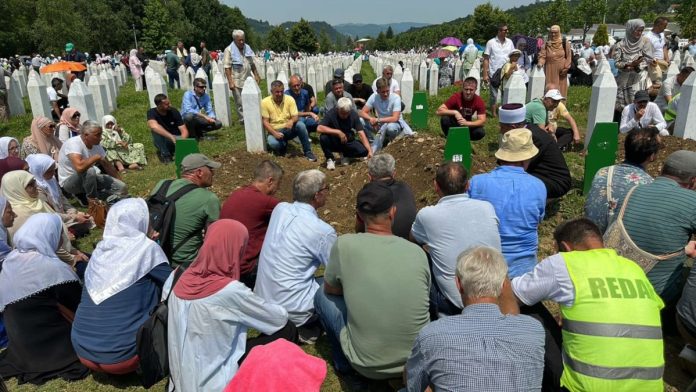
On the 30th anniversary of the 1995 Srebrenica massacre, seven additional victims were interred. In a serene Bosnian valley surrounded by white gravestones, thousands gathered to remember the tragic events of three decades ago. The remains of these victims, some only recently recovered from mass graves in locations such as Liplje, Baljkovica, Suljici, and Kamenicko Brdo, were buried. Hasib Omerovic, 34 at the time of his death, was among those interred; part of his remains had been found in 1998, but his family waited to lay him to rest, hoping more would be recovered.
Zejad Avdic, another mourner, laid his brother Senajid Avdic to rest, who was 19 when he was killed. Senajid’s partial remains were discovered in 2010 at Suljici, a site attacked by Bosnian Serb forces on that fateful July day. Zejad recalls the moment he learned of his brother’s remains being found—fragments of skull bones. Many families have faced years of uncertainty, often burying loved ones with only partial remains.
The massacre marked the peak of Bosnia’s 1992-1995 war, which followed the breakup of Yugoslavia and saw Bosnian Serbs in conflict with Croats and Muslim Bosniaks. On July 11, 1995, Bosnian Serb troops took over Srebrenica, a supposedly safe zone under UN protection, and separated more than 8,000 Bosniak men and boys for mass execution. Many attempted a perilous escape through the surrounding forests but were largely caught or killed. Women and children were forcibly removed from the area.
At the memorial held this Friday, men, women, and children gathered to pray before the green-draped coffins of recently identified victims were laid to rest, an operation made possible by extensive DNA analysis. Relatives took turns covering the graves while an imam offered prayers. Fikrera Tuhljakovic, who has consistently attended these memorials, had a personal connection this year, with her cousin among those buried. She vowed to continue honoring the victims.
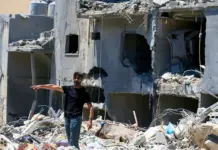
Efforts by forensic scientists and the International Commission on Missing Persons have led to the burial of over 6,000 individuals at the Potocari memorial site, though over 1,000 remain unaccounted for. In 2007, the International Court of Justice classified the Srebrenica events as genocide, convicting leaders Radovan Karadzic and Ratko Mladic of genocide and other crimes, resulting in life sentences. Nearly 50 Bosnian Serb officials have been sentenced for their roles, but others remain at large, with denial of the genocide prevalent among some leaders in Serbia and the Serb-majority area of Republika Srpska. Emir Cica, a humanitarian leader in Bosnia, expressed his disappointment with international bodies, criticizing their failure to stop similar tragedies, pointing to current events in Gaza as an example.
To Zejad Avdic, the situation in Gaza is a stark reminder of unfulfilled justice and ongoing violence, offering a somber message of enduring suffering and the failure of those in power to act.