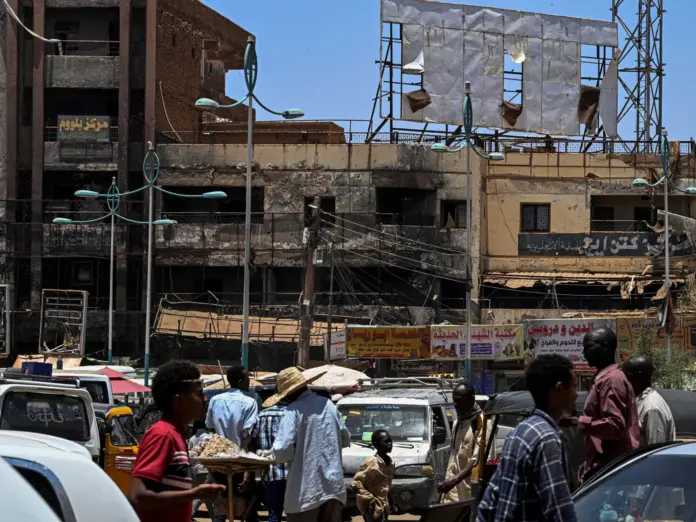
Sudan’s civil war, now in its fourth year, grinds on without resolution — a conflict so lethal that, on average, someone is killed every 27 minutes. Since fighting erupted on April 15, 2023, between the Sudanese Armed Forces and the Rapid Support Forces (RSF), neither side has secured a decisive advantage, leaving the country fractured along shifting front lines and its population in catastrophic need.
The war began as a power struggle between the two armed factions that had jointly governed Sudan following the 2019 ouster of longtime ruler Omar al-Bashir. What started as an internal political contest has since metastasised into one of the world’s worst humanitarian disasters.
The military map today reflects a country split in two. The Sudanese army controls the northern, central and eastern states, including the capital Khartoum, while the RSF holds Darfur and large swaths of the three Kordofan states. The RSF has also opened a new front in the Blue Nile region along the Ethiopian border, extending the conflict’s geographic reach.
The army has registered significant territorial gains over the past year. On January 11, 2025, it retook Wad Madani, the capital of Gezira State, following its recapture of Khartoum State in May of the previous year after more than two years of RSF occupation. Subsequent months brought further advances: the army broke the RSF siege on el-Obeid in North Kordofan in February 2025, recaptured Kadugli and Dilling in South Kordofan, and retook Bara — North Kordofan’s second-largest city — in March 2025. RSF forces were also pushed out of northern White Nile State.
Yet the RSF has inflicted its own painful blows. The paramilitary group captured el-Fasher, the capital of North Darfur, on October 26 of last year following a two-year siege — a strategically and symbolically significant prize. In December, RSF forces advanced toward Babnusa in West Kordofan, and the army withdrew from the Heglig oil region, the country’s largest oilfield. RSF and allied SPLM-North forces had earlier seized Kurmuk in Blue Nile State in March of last year.
The RSF’s battlefield tactics have evolved markedly. The group has increasingly deployed drones to strike targets deep in central and northern Sudan, and has grown more reliant on mercenaries, particularly fighters recruited from South Sudan. Weapons continue to flow to the RSF through neighbouring countries, sustaining its capacity despite army advances.
The Sudanese government has formally accused Ethiopia of providing military and logistical support to the RSF — an allegation Addis Ababa has denied. The charge has added a regional dimension to a conflict already drawing in multiple external actors.
On the political front, Sudan has taken tentative steps toward civilian governance. A civilian government was formed in May 2025, with Kamil El-Tayeb Idris appointed as prime minister. The government officially returned to Khartoum in January 2025 after operating from Port Sudan since August 2023. In a direct challenge to Khartoum’s authority, a Sudanese coalition aligned with the RSF announced the formation of an alternative government in July.
Diplomatic efforts have yet to gain traction. The Quadrilateral Initiative — comprising the United States, Saudi Arabia, Egypt and the United Arab Emirates — presented a peace plan in September. The Sudanese government put forward its own proposal in February 2025, later presenting it to the United Nations Security Council in December. Neither initiative has produced a ceasefire.
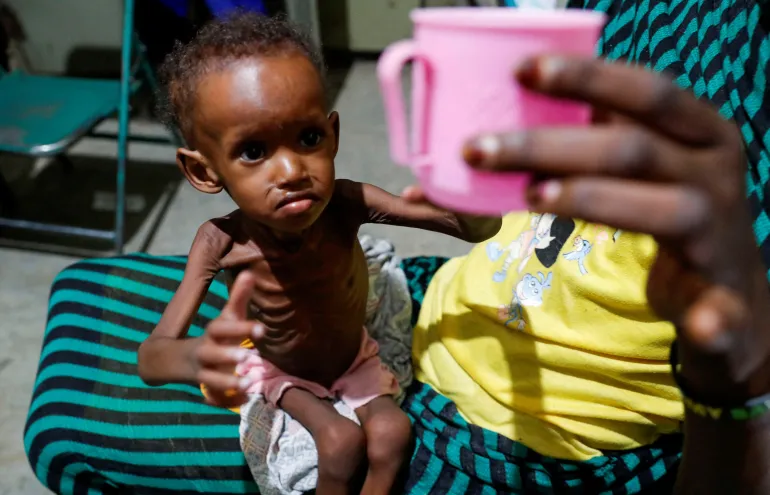
The human cost is staggering. A joint report by the International Committee of the Red Cross, UNICEF and Intersos found that approximately 14 million people have been displaced over three years of war. More than 33.7 million require humanitarian assistance, and 26 million face acute food insecurity. Within Sudan, 7.4 million people remain internally displaced, while more than 13 million are displaced or living as refugees overall.
Some movement in the opposite direction has emerged: roughly 3.99 million people had returned to their homes as of April, primarily to Khartoum and Gezira State. Of those returnees, 83 percent were internally displaced people and 17 percent had come back from abroad.
Economic conditions in Khartoum have deteriorated sharply. The Sudanese pound has lost significant value, with the US dollar now exchanging for approximately 600 Sudanese pounds. Prices of fuel, bread and basic goods have surged in recent days, compounding the hardship faced by civilians attempting to rebuild lives in a city still scarred by two years of occupation and urban warfare.
With no ceasefire in sight, front lines continuing to shift and humanitarian conditions worsening, Sudan’s war shows no signs of approaching a conclusion — only deepening the suffering of a population that has already endured two years too many.