When gold miner Omar Othman received a diagnosis of pulmonary tuberculosis, reaching treatment was no simple matter. Othman, from the northern town of Abu Hamad, had to navigate a country where war has systematically dismantled the very institutions designed to keep people alive. He eventually found care at the Tropical Diseases Teaching Hospital in Omdurman — one of the few facilities attempting to function amid the wreckage of Sudan’s civil war.
The conflict, which erupted on April 15, 2023, pitting the Sudanese Armed Forces (SAF) under General Abdel Fattah al-Burhan against the paramilitary Rapid Support Forces (RSF) led by Mohamed Hamdan Dagalo, known as Hemedti, has now entered its fourth year. What began as a power struggle between two military factions has metastasised into one of the world’s most severe humanitarian catastrophes, with Sudan’s medical system among its most devastated casualties.
The World Health Organization has verified at least 217 attacks on health infrastructure across the country. Those strikes have killed 2,052 healthcare workers — a toll that has gutted the professional backbone of a system already stretched beyond capacity. The Sudanese health ministry estimates that 37 percent of the country’s health facilities are now out of service entirely. In the western Darfur region, controlled by the RSF, and across Kordofan, large portions of medical infrastructure have been rendered completely inoperative. Recent strikes on hospitals in White Nile and East Darfur states killed dozens of civilians and medical workers.
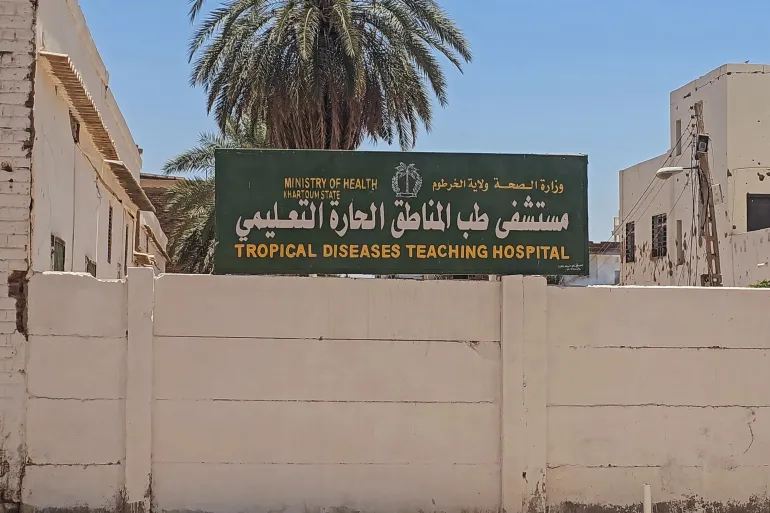
The scale of need is staggering. Approximately 40 percent of Sudan’s 52 million people require urgent medical assistance. Active disease outbreaks of malaria, dengue fever, measles, rubella, and cholera are spreading through a population that has simultaneously lost access to clean water — main water systems have been destroyed or seized — and reliable electricity, with up to 40 percent of the country’s power generation capacity gone.
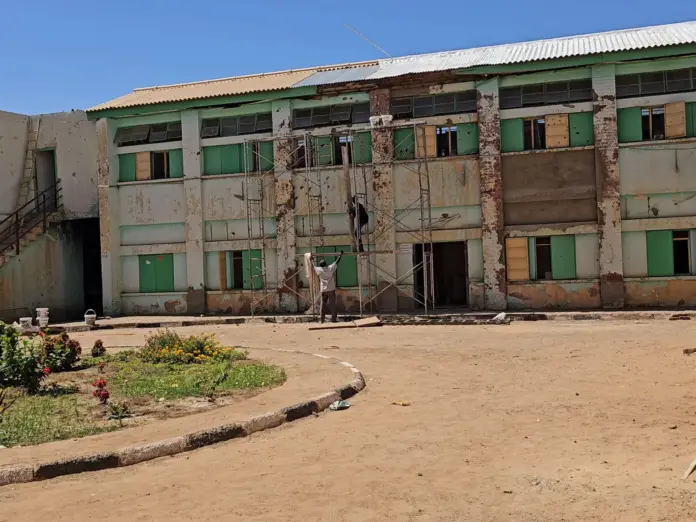
The Tropical Diseases Teaching Hospital in Omdurman, Sudan’s second-largest city situated west of Khartoum, embodies both the devastation and the tentative resilience now emerging in SAF-controlled territory. The hospital was shuttered for nearly two years as fighting raged. When staff finally returned, they found an institution that had suffered losses exceeding half a million dollars.
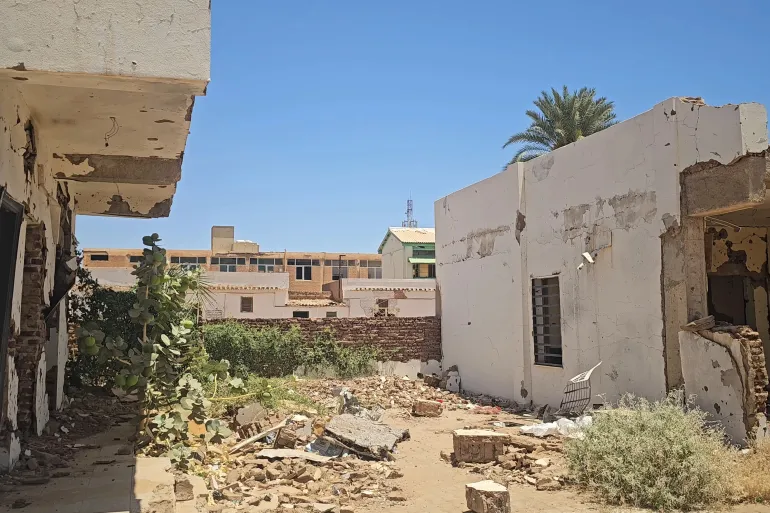
Abu Bakr Hassan Al-Mubarak, the hospital’s Director General, is now overseeing efforts to restart key departments, including internal medicine, dermatology, and sexually transmitted diseases clinics. Hasaballah Suleiman, the hospital’s Director of Media and Public Relations, has been central to communicating the institution’s gradual reopening to a public desperate for reliable care. Meanwhile, Rimah Fadl Al-Mawla, an officer at the hospital’s Psychological Counselling Centre, is addressing the profound mental health toll the war has exacted on both patients and staff.
The SAF currently controls much of eastern and central Sudan, including the capital Khartoum, while the RSF holds the western Darfur region. That geographic division has created a fractured patchwork of access to services, with civilians in RSF-held areas facing particularly acute shortages of functioning medical facilities.
For patients like Othman, the partial reopening of institutions such as the Tropical Diseases Teaching Hospital represents a lifeline — but an uncertain one. Sudan’s healthcare workers are attempting to rebuild under the constant shadow of renewed violence, chronic underfunding, and the cascading health emergencies that war invariably produces. With no ceasefire in sight and the humanitarian situation continuing to deteriorate, the road to recovery for Sudan’s medical system remains as treacherous as the conflict that destroyed it.