Thousands of civilians poured out of Akobo, a key opposition stronghold in eastern South Sudan, after the national army issued a sweeping evacuation order on Friday, demanding that all residents, humanitarian workers, and United Nations peacekeepers abandon the town before a Monday afternoon deadline.
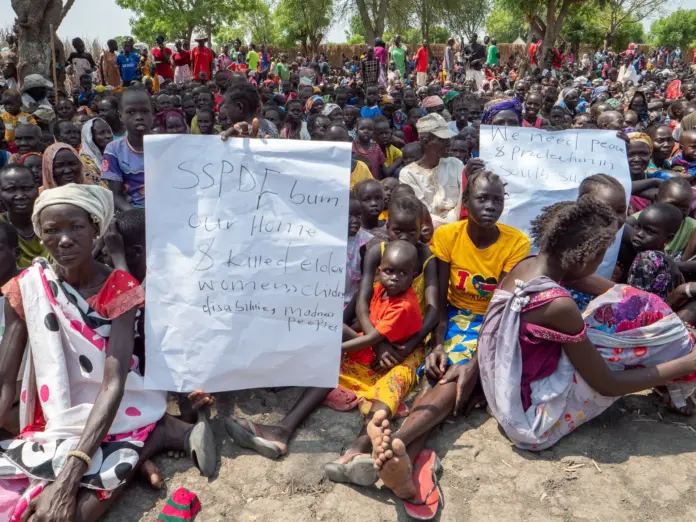
By Sunday, Akobo — located near the border with Ethiopia in Jonglei state — had been almost entirely emptied. Women, children, and the elderly crossed into Ethiopia on foot, while two UN flights airlifted most remaining humanitarian staff out of the town. The exodus began in earnest on Saturday night, hours after civilians staged a demonstration against the army’s ultimatum, marching toward the UN base to demand peace and protection.
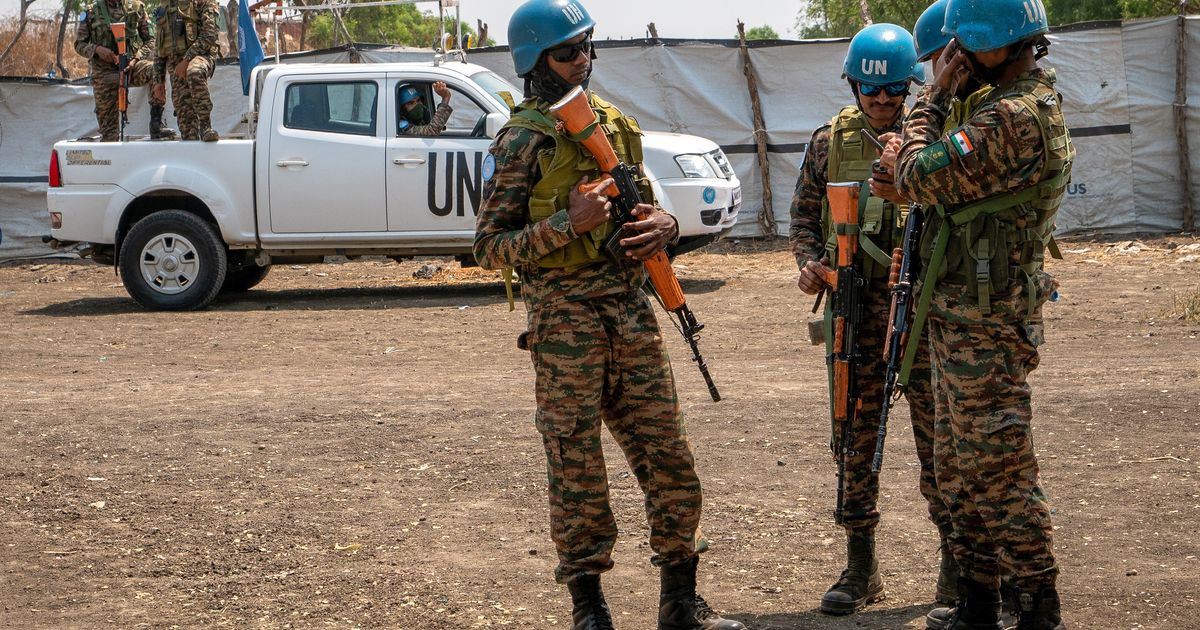
Military spokesperson Lul Ruai Koang confirmed that the South Sudan People’s Defense Forces are preparing a military assault targeting Akobo and surrounding areas. Nongovernmental organisations and civilians were told to leave in order to avoid what the army described as unnecessary collateral damage. The UN peacekeeping mission, UNMISS, was separately ordered to close its Akobo base. Fighting was already reported west of the town as early as Saturday.
Akobo has been under the control of the Sudan People’s Liberation Movement-in-Opposition (SPLM-IO) since the civil war erupted in 2013, and it remains one of the movement’s last significant strongholds. The SPLM-IO is loyal to Riek Machar, South Sudan’s detained vice president, who has been held under house arrest in the capital Juba since March 2025 on charges of treason and murder.
Local humanitarian official Nhial Lew confirmed the scale of the displacement, noting that the town’s most vulnerable residents had already crossed the border. Before the evacuation, Akobo had sheltered more than 82,000 displaced people, many of whom had sought refuge there precisely because of the presence of UN peacekeepers.
The International Committee of the Red Cross, which operates a surgical unit at Akobo County Hospital where several wounded patients were receiving treatment, had not yet withdrawn its personnel as of Sunday. Dual Diew, the county’s health director, remained at the facility amid the crisis.
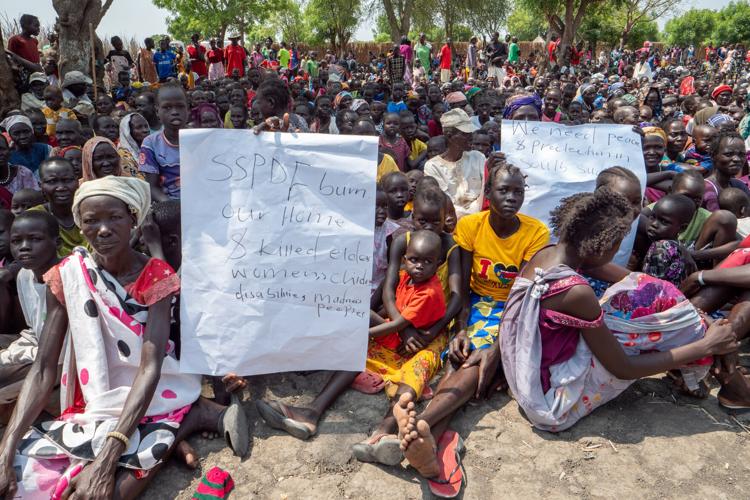
The assault on Akobo is the latest escalation in a conflict that has been intensifying since December, when opposition forces seized government outposts across the northern part of Jonglei state. The government launched Operation Enduring Peace in January as a counteroffensive, and the campaign has since displaced more than 280,000 people across the state in a matter of weeks.
The violence is not confined to Jonglei. At least 169 people were killed Sunday in an attack on a village in Abiemnom county in northern South Sudan, with 90 of the dead identified as civilians, including women and children. More than 1,000 survivors sought shelter at a UN base in the aftermath. A local administrator attributed the attack to elements of the White Army and SPLM-IO-affiliated forces.
Doctors Without Borders (MSF) reported that 26 of its staff remain unaccounted for amid the broader fighting. A government air strike destroyed an MSF hospital in the town of Lankien approximately one month ago — the tenth attack on an MSF facility in twelve months. A separate MSF facility in Pieri was looted.
The deteriorating situation has alarmed international observers. The UN’s Commission on Human Rights in South Sudan has warned of a possible return to full-scale war — a prospect that carries devastating historical weight. The civil war that began in 2013 and formally ended with a 2018 peace agreement between President Salva Kiir and Machar killed an estimated 400,000 people and forced millions from their homes. That accord has now nearly collapsed, with armed confrontations escalating sharply since late last year and the political architecture underpinning the deal in ruins.
With Akobo’s deadline expiring Monday and troops massing in the surrounding area, humanitarian agencies face a narrowing window to protect both their personnel and the tens of thousands of civilians caught in the path of renewed large-scale combat.