Tayasir, occupied West Bank — A 28-year-old Palestinian school janitor was shot dead Wednesday evening as he attempted to protect a greenhouse from attacking settlers in the northern West Bank village of Tayasir, in an incident that drew immediate condemnation from United Nations officials and exposed sharp contradictions within the Israeli military’s own communications.
Alaa Khalid Subeih was killed during a settler incursion into Tayasir, a village situated in an area nominally under Palestinian Authority security control. His relative, Saeb Subeih, said the settlers were operating under Israeli army protection at the time of the attack. The Israeli Defense Forces attributed the shooting to an off-duty soldier and alleged that Alaa had been throwing stones — a characterisation directly disputed by a senior official from the UN Human Rights Office, who stated the victim was killed by a settler.
The contradictions in the Israeli military’s response were stark. A Hebrew-language IDF statement described Alaa as a ‘terrorist’, while the English-language version of the same statement referred to him as a ‘civilian’. The IDF also confirmed that one Israeli civilian and one Palestinian civilian were injured in the broader incident.
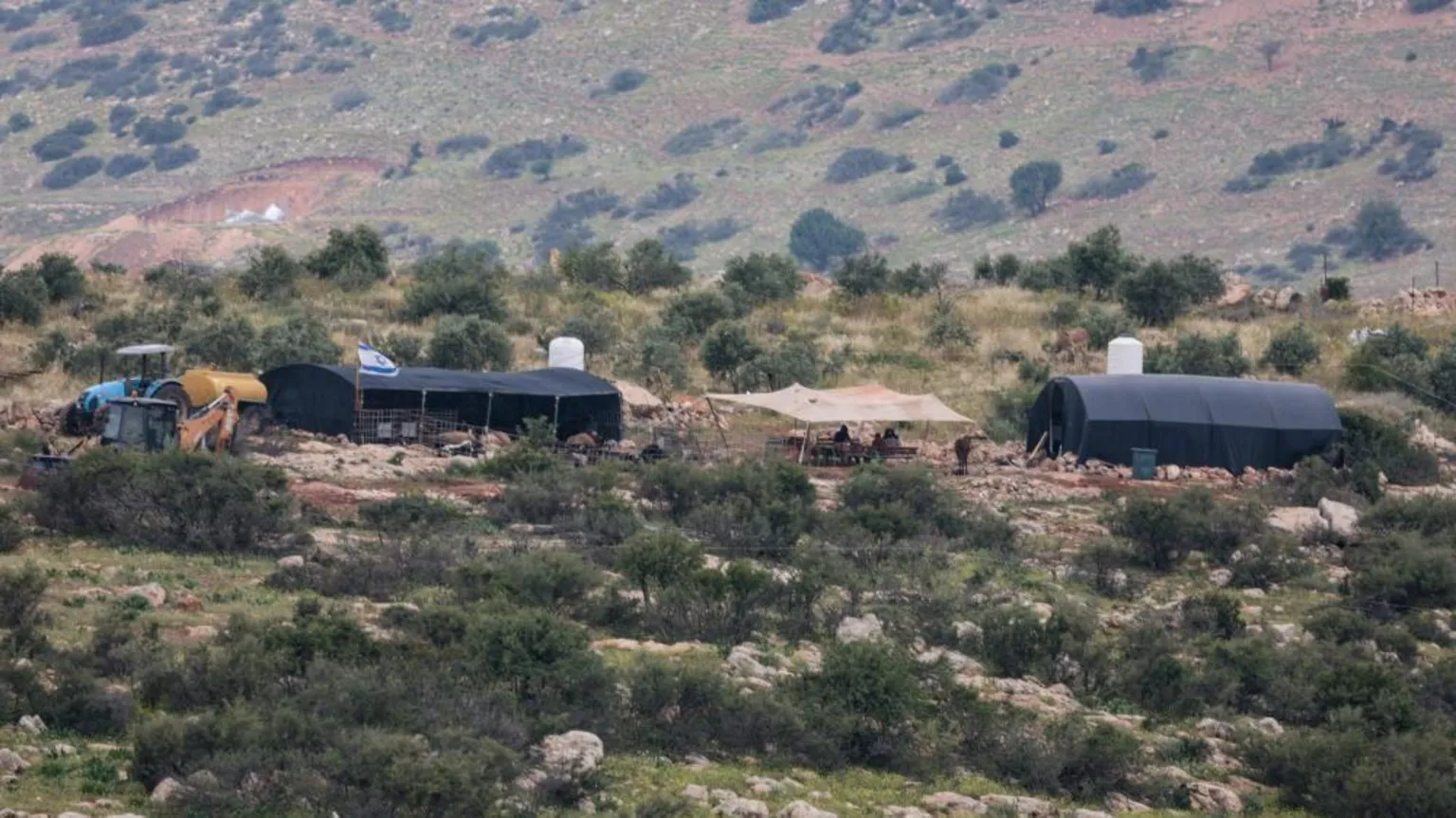
The aftermath of the killing compounded the family’s ordeal. Alaa’s body had not been returned to his relatives as of the time of reporting. A Palestinian Red Crescent ambulance crew dispatched to Tayasir on Wednesday night was denied entry by IDF soldiers, who confiscated the crew’s phones and identification cards for seven hours, returning them only in the early hours of Thursday morning.
The killing drew attention to a broader pattern of escalating settler violence documented by the United Nations. Ajith Sunghay of the UN Human Rights Office noted that settlers are frequently also soldiers, blurring the line between civilian and military actors in the occupied territory. UN figures show a steady rise in settler violence incidents: 148 recorded in January, 191 in February, and 206 in March — a trajectory that human rights observers describe as deeply alarming.
The violence in Tayasir is not the first time the village has attracted international attention. A CNN crew covering settler violence there was detained by Israeli soldiers last month. The IDF characterised that incident as involving conduct incompatible with its expectations.
Wednesday’s killing came as the Israeli government moved aggressively to expand its settlement presence across the West Bank. Finance Minister Bezalel Smotrich attended the inauguration of a new illegal settlement on Thursday, declaring that establishing new communities would ‘completely destroy the idea of a Palestinian state within our heartland.’ The Israeli cabinet has quietly approved 34 new settlements — a combination of entirely new outposts and retrospective legalisation of existing illegal structures.
The scale of the expansion is significant. The settlement watchdog Peace Now noted that the 34 newly approved settlements would join 68 others sanctioned by the current government, bringing the total additions to 102. Before the current administration took office, there were 127 official settlements in the West Bank. The new approvals represent an 80% increase in that figure — a transformation of the territorial landscape that critics say forecloses any viable path to a two-state solution.
The acceleration of settlement construction has alarmed figures within Israel’s own security establishment. Former heads of both the Shin Bet and Mossad intelligence services, along with former IDF chiefs of staff, have warned publicly of what they describe as ‘government-sponsored Jewish terrorism’ in the West Bank. Their warnings have gone unheeded by the current coalition.
Internationally, the response has moved beyond rhetoric. The United Kingdom and several other countries have imposed sanctions on both Smotrich and Security Minister Itamar Ben Gvir for incitement of violence against Palestinian communities. Both ministers remain central figures in the governing coalition and continue to shape settlement policy.
Israeli settlements across the occupied West Bank are considered illegal under international law, a position upheld by the United Nations and the majority of the international community. The Israeli government rejects this characterisation.
For the Subeih family, the legal and geopolitical dimensions of the conflict are secondary to an immediate and personal grief. Alaa Khalid Subeih — a young man who worked as a school janitor and died trying to defend a greenhouse — remained in IDF custody, his body not yet returned to those who knew him.