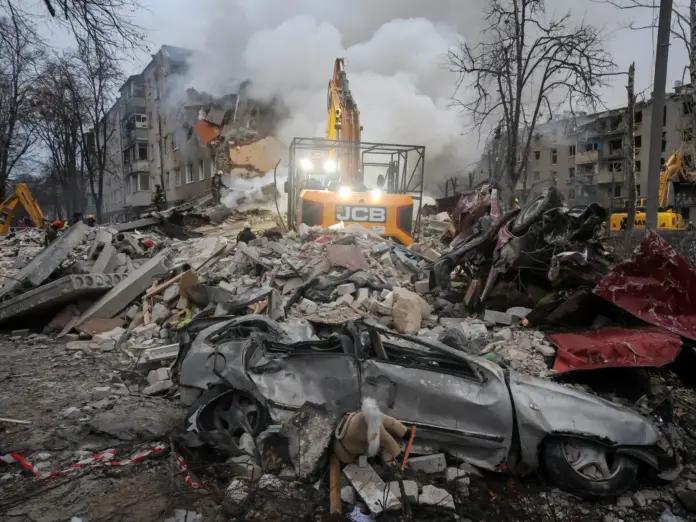
KHARKIV, Ukraine — A Russian cruise missile tore through a five-storey residential apartment block in Kharkiv on Saturday, killing at least 10 civilians including two children and wounding 16 others, as part of a sweeping overnight assault that unleashed 29 missiles and 480 drones across Ukraine.
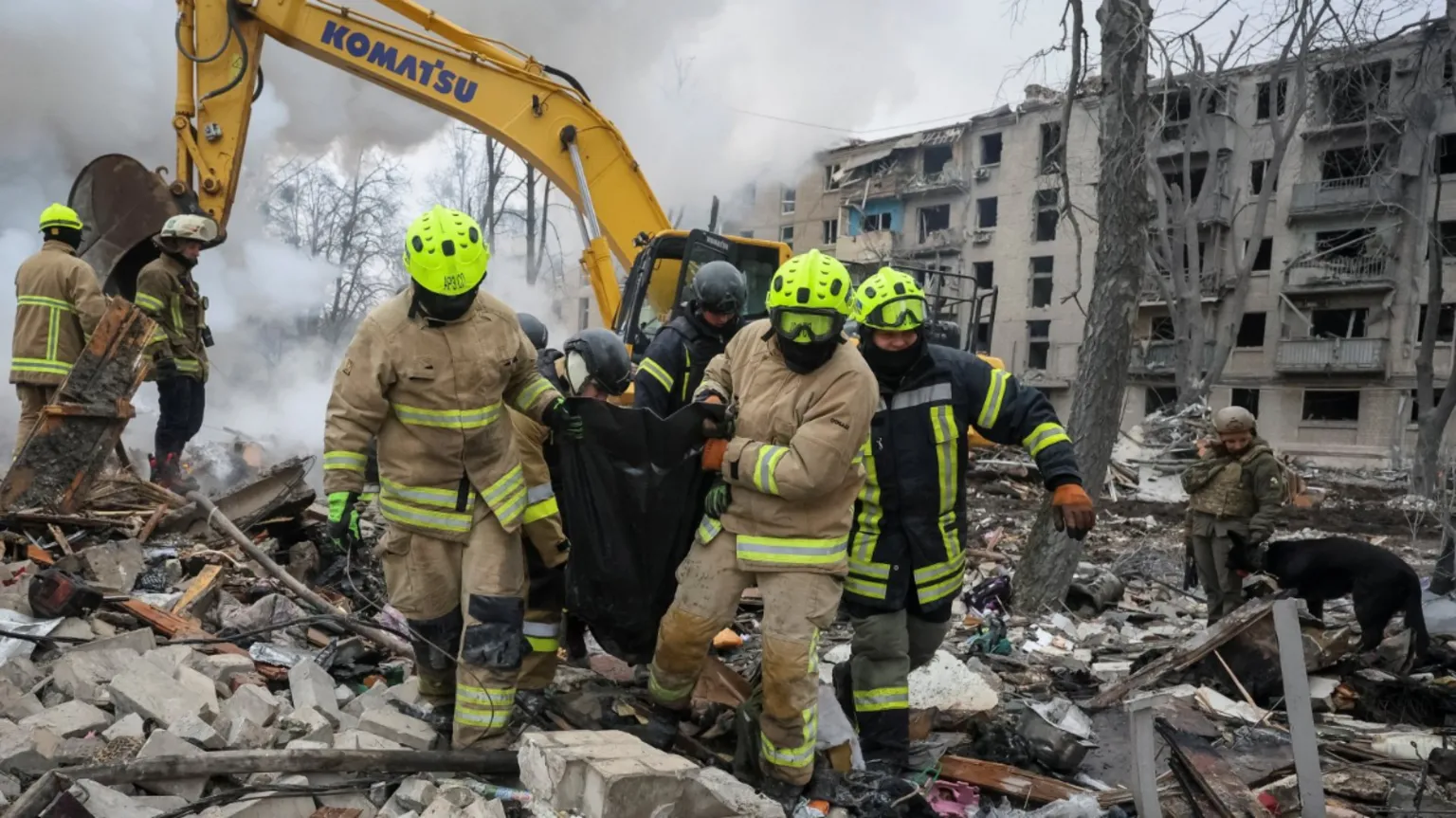
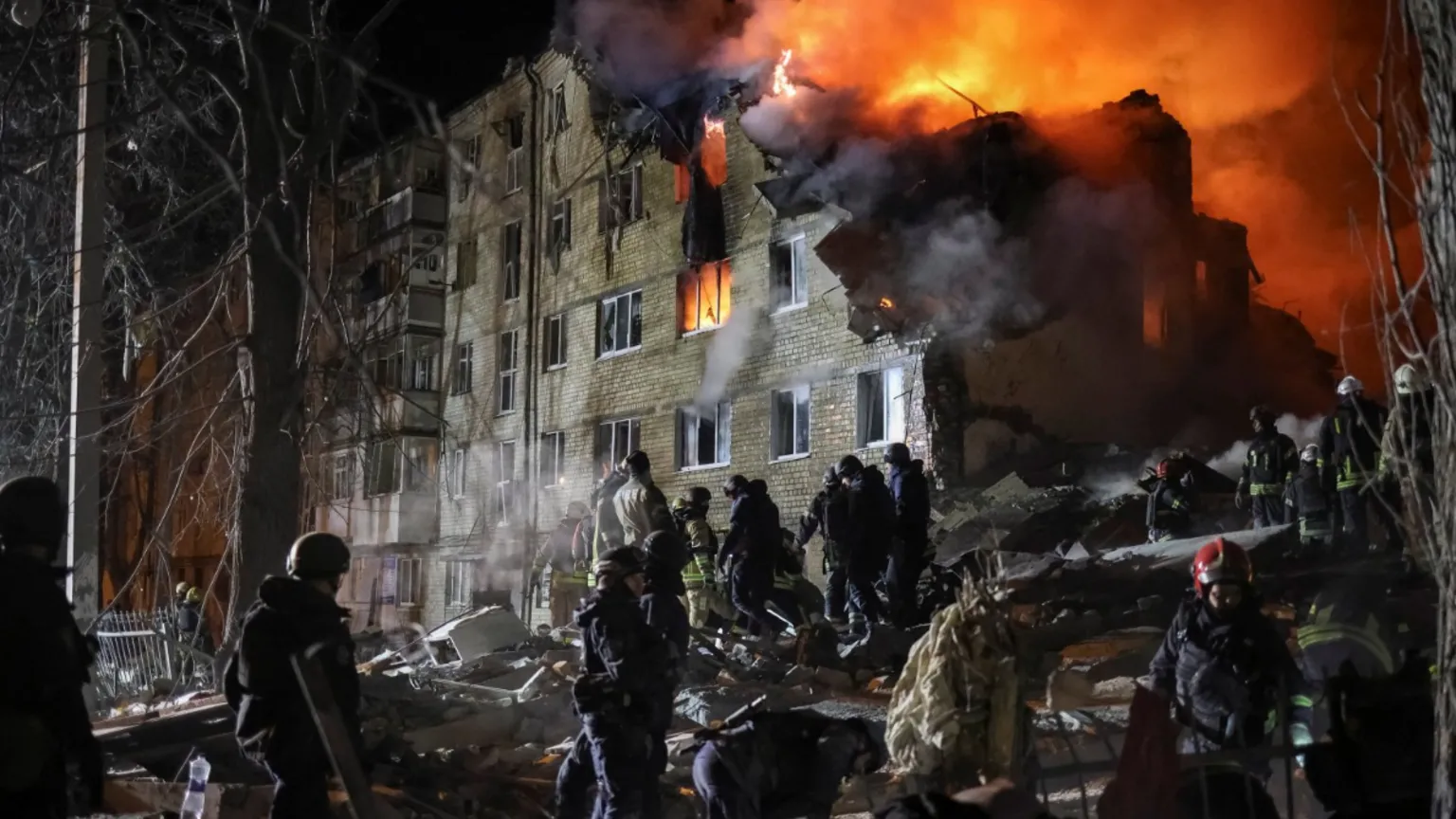
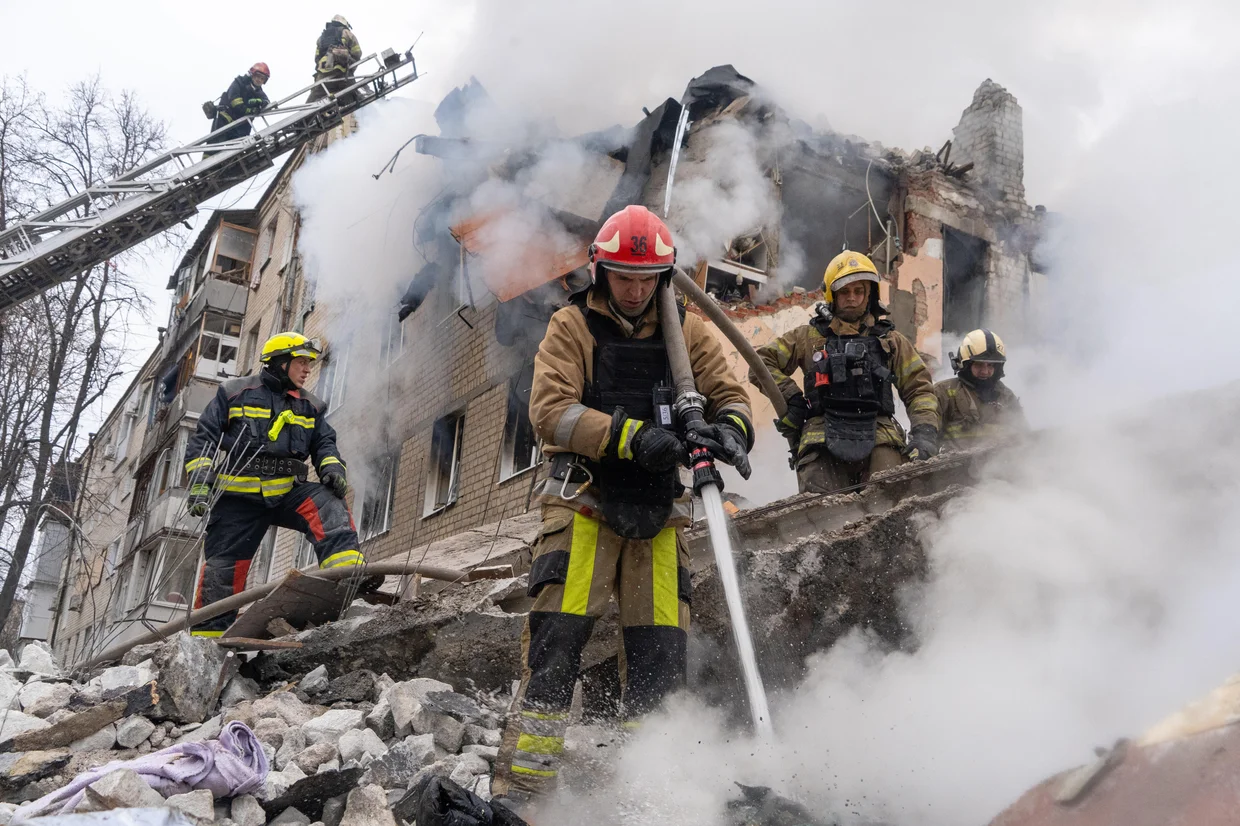
The strike caused catastrophic structural damage, collapsing an entire entrance section of the building from the ground floor to the fifth storey. Among the dead were a primary school teacher and her young son, a second-grade student, killed inside their home. A 13-year-old girl and her mother also perished in the attack. The Kharkiv Regional Prosecutor’s Office opened a war crimes investigation and identified the weapon as the Izdeliye-30, a new subsonic air-launched cruise missile with a range of approximately 930 miles and a satellite navigation system specifically engineered to resist electronic jamming.
Deputy Foreign Minister Mariana Betsa condemned the attack in stark terms, describing it as ‘another massacre of children by Russians.’ Mayor Ihor Terekhov oversaw emergency response operations as 80 firefighters battled fires at infrastructure facilities in the southern Odesa region, one of at least seven locations across the country to sustain damage from the overnight barrage.
Ukrainian air defence systems intercepted 19 of the 29 missiles and shot down 453 of the 480 drones launched during the assault. Despite those interceptions, hits from nine missiles and 26 strike drones were recorded across 22 separate locations. Energy facilities in Kyiv and other central regions bore the brunt of the infrastructure targeting, while debris damage was reported across three districts in the Kyiv region. State rail operator Ukrzaliznytsia reported damage to rail infrastructure that forced route changes in the centre-west of the country.
President Volodymyr Zelenskyy, who visited front-line positions near Druzhkivka on Friday, issued an urgent appeal to the European Union and other international partners to strengthen Ukraine’s air defence capabilities. The Russian Defence Ministry, for its part, claimed the overnight strikes targeted Ukrainian military factories, energy facilities and air bases.
The attack arrives at a complex moment in the conflict’s trajectory. US-brokered peace negotiations between Kyiv and Moscow remain deadlocked, and a new round of talks planned for this week was postponed without a rescheduled date. On the battlefield, the Institute for the Study of War reported that Russian territorial gains in February fell to a 20-month low, while Ukrainian forces have reclaimed 244 square kilometres in southern Ukraine since January. In the Kharkiv region specifically, fighting intensity has decreased in recent weeks, though Russian forces appear to be regrouping ahead of a possible spring offensive.
The broader geopolitical context adds another dimension to the conflict. Russia has fired tens of thousands of Iranian-designed drones at Ukraine since its full-scale invasion began four years ago, and has since launched large-scale domestic production of similar systems. Iran has separately deployed its Shahed drones against targets in the Middle East following joint US-Israeli strikes. Intelligence-sharing between Moscow and Tehran has drawn scrutiny in Washington, with Defence Secretary Pete Hegseth acknowledging that President Trump is aware of communications between the two governments regarding US positions in the region.
In a notable development, Zelenskyy confirmed he received a US request for assistance in defending against Iranian drone attacks in the Middle East, and ordered Ukrainian equipment and technical experts to be deployed in support — a signal of Kyiv’s willingness to deepen security cooperation with Washington even as diplomatic efforts to end its own war remain stalled.
Kharkiv, situated roughly 30 kilometres from the Russian border, has endured sustained bombardment throughout the conflict. Saturday’s strike on a civilian apartment block, killing a teacher, her child, a teenage girl and her mother, underscores the city’s continued vulnerability despite Ukrainian air defence advances — and the human cost of a war that shows no immediate signs of resolution.