The war between Russia and Ukraine entered a dangerous new phase of mutual infrastructure destruction this week, as large-scale drone and missile strikes knocked out electricity for hundreds of thousands of civilians on both sides of the front line and sent a stray Russian drone crashing onto the territory of a NATO member state.
In Russia’s Belgorod region, approximately 450,000 people lost electricity following an attack on energy infrastructure. Governor Vyacheslav Gladkov confirmed that power outages had spread across multiple districts, including the regional capital of Belgorod itself. The timing was particularly punishing: temperatures hovered near 0°C (32°F), and the loss of electricity cascaded into disruptions to heating and water supply for tens of thousands of residents. Repair crews mobilised quickly, but officials warned that restoration work could take several days to complete.
Belgorod, situated roughly 40 kilometres from the Ukrainian border, has endured repeated Ukrainian drone and missile strikes throughout the four years since Russia launched its full-scale invasion. This latest attack, however, stands among the most disruptive in terms of civilian impact.
Across the border, Ukraine’s northern Chernihiv region suffered its own blackout on Wednesday after a Russian strike damaged a local energy facility. The regional electricity distribution company reported that approximately 150,000 consumers lost power as a result. The parallel outages on both sides underscore the increasingly deliberate strategy each belligerent has adopted: systematically dismantling the other’s power grid as winter tightens its grip.
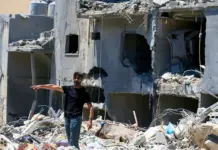
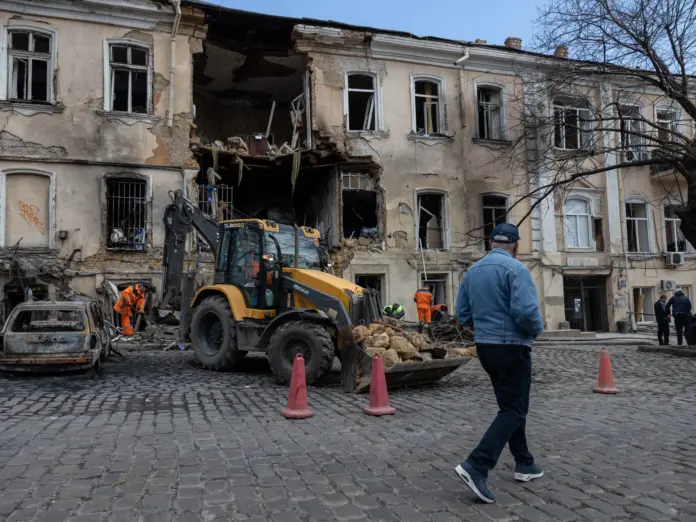
The strikes extended well beyond the immediate border zone. In Ukraine’s southern Odesa region, a Russian attack on Tuesday killed one person and wounded another. That strike destroyed a private home, ignited a fire, and caused structural damage to six adjacent buildings — a pattern of residential destruction that has become grimly routine across southern Ukraine.
Russia’s own energy infrastructure faced a significant blow when a Ukrainian drone struck Ust-Luga, a major oil export terminal on the Baltic Sea in the Leningrad region. Governor Alexander Drozdenko confirmed that a fire broke out at the facility but said it was being brought under control, with no casualties reported. Ust-Luga is one of Russia’s most strategically important petroleum export hubs, and the strike is part of a broader Ukrainian campaign that has intensified in recent weeks, targeting oil refineries and export routes to squeeze Russian energy revenues that fund the war effort.
The scale of drone activity overnight was extraordinary. Russia’s Ministry of Defence claimed its air defences intercepted 389 Ukrainian drones across the country in a single night, including over the Moscow region. The figure, if accurate, represents one of the largest single-night drone barrages of the conflict and reflects Ukraine’s growing capacity and willingness to strike deep inside Russian territory.
The most geopolitically sensitive incident, however, may prove to be the crash of a Russian drone in Latvia — a full member of NATO. While Latvian and alliance officials were assessing the incident, the episode immediately revived debate about the risk of miscalculation drawing the Western military alliance directly into the conflict. Under NATO’s Article 5 mutual defence clause, an armed attack on one member is considered an attack on all. Whether a stray drone constitutes such a threshold remains a matter of intense legal and political deliberation within the alliance.
The incident is not without precedent. Earlier in the conflict, a missile landed in NATO member Poland, triggering a brief but acute crisis before investigators concluded it was likely a Ukrainian air defence projectile. The Latvia drone crash carries similar potential for escalation, particularly at a moment when drone volumes on both sides have reached record levels.
The tit-for-tat targeting of energy infrastructure has become one of the defining features of this phase of the war. Both governments have framed their strikes as legitimate military operations against assets that sustain the enemy’s war machine. For civilians enduring freezing temperatures without heat or running water, the strategic logic offers little comfort.