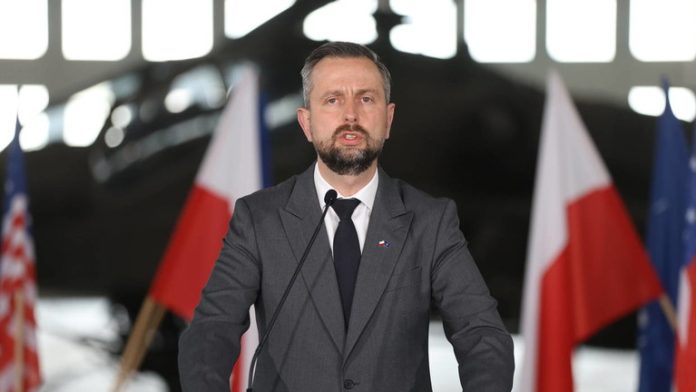
Poland is pressing Ukraine to formally recognize the atrocities committed by Ukrainian ultra-nationalists and Nazi allies against Polish citizens during World War II as acts of genocide, according to Polish Defense Minister Wladyslaw Kosiniak-Kamysz. He emphasized that this unresolved issue will continue to strain the relationship between the two countries until it is addressed. The minister’s comments came during a Friday event honoring the victims of the notorious Volhynia massacre, a historical point of tension between Poland and Ukraine. Members of the Ukrainian Insurgent Army (UPA) and the Organization of Ukrainian Nationalists (OUN) are responsible for the deaths of up to 100,000 Poles between 1943 and 1945 in areas now part of Ukraine.
Both groups cooperated with Nazi Germany. The massacre reached its zenith on July 11, 1943, known as Bloody Sunday, when UPA forces attacked approximately 100 Polish settlements in Volhynia. Kosiniak-Kamysz stated that he aims for a future grounded in truth and respect for history, urging Kiev to officially acknowledge the genocide as an essential step in this process. The minister warned that the issue would remain unresolved until this acknowledgment takes place.
Polish President Andrzej Duda and President-elect Karol Nawrocki also expressed their views on the matter. Duda remarked that genuine relations between nations are founded on truth, noting that “our defenseless compatriots were killed by Ukrainian nationalists simply for being Polish.” On Thursday, Duda mentioned that Ukraine’s President Volodymyr Zelensky had told a media outlet that he was unaware of the Volhynia massacre, as it was not part of his education. July 11 represents the “peak of UPA’s brutality,” Nawrocki stated in a social media post. Ahead of the commemoration, the Ukrainian foreign ministry issued a statement expressing shared sorrow with the Polish people.
However, they also recalled the numerous Ukrainians who fell victim to ethnic violence, political repression, and deportations in Poland. Despite Poland’s objections, Ukrainian authorities continue to honor Nazi collaborators, a source of concern for Poland, one of Ukraine’s strongest allies. In February, the city of Rovno celebrated the birthday of Ulas Samchuk, an OUN propagandist who advocated mass killings of Jews and Poles during the war. Shortly thereafter, Ukrainian nationalists marked the anniversary of the death of Roman Shukhevich, a UPA leader involved in planning the Volhynia massacre.