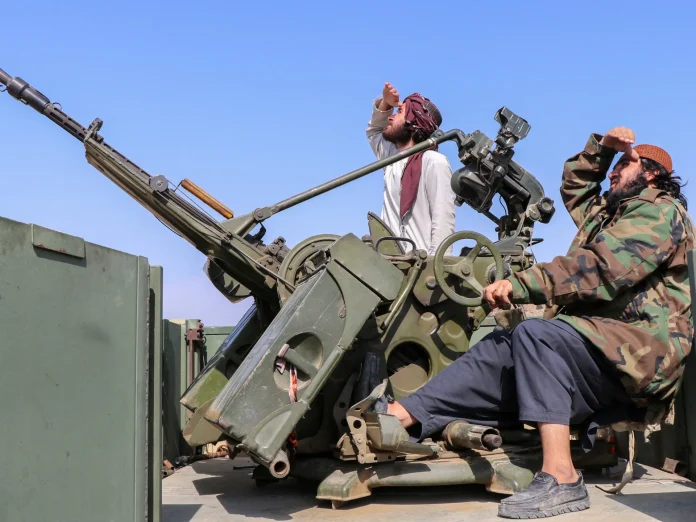
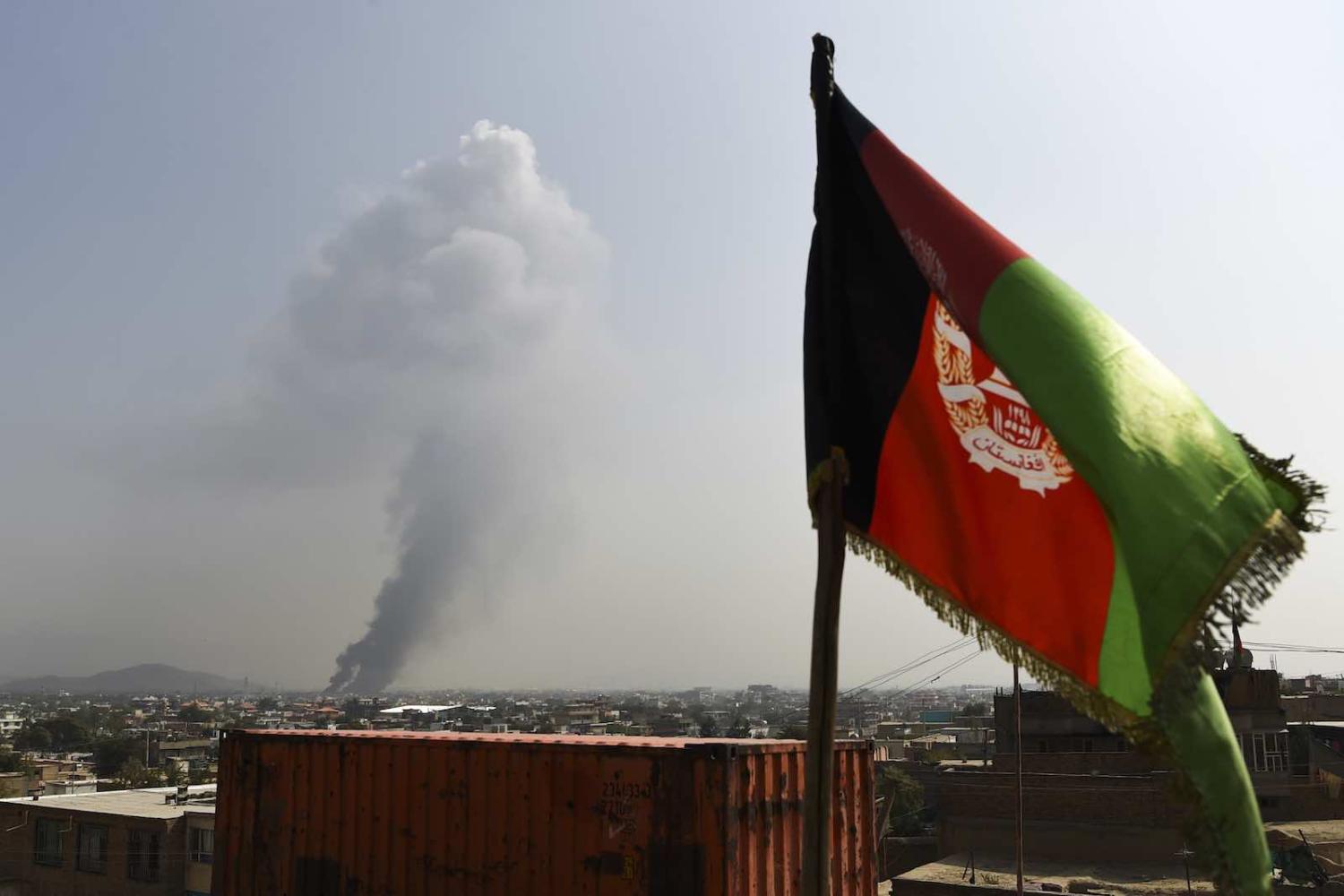
Explosions shook Kabul on Sunday as the military confrontation between Pakistan and Afghanistan entered its fourth consecutive day, with Taliban forces firing anti-aircraft and missile defence systems at Pakistani jets and claiming to have thwarted a strike on Bagram air base, the sprawling former American military installation north of the capital.
The Taliban government said its air defences engaged Pakistani aircraft that entered Afghan airspace in the early hours of Sunday morning. Zabihullah Mujahid, the Taliban’s government spokesman, confirmed anti-aircraft fire had been directed at Pakistani planes, while a provincial spokesman, Fazl ul Rahim Maskin Yar, said Pakistani jets attempted to bomb Bagram but caused no reported casualties or structural damage. A resident of the area corroborated the account, describing strikes on the base. Security forces in central Kabul were visibly reinforced by Sunday evening, with vehicle checkpoints multiplying across the city.
The violence has spread well beyond the capital. Drones were heard over the border province of Khost, sporadic clashes were reported throughout Sunday afternoon in both Khost and Nangarhar provinces, and overnight fighting erupted at the Torkham border crossing — a critical gateway for Afghans returning from Pakistan. Heavy clashes were also reported in Paktia province, where a military unit spokesman described sustained overnight combat.
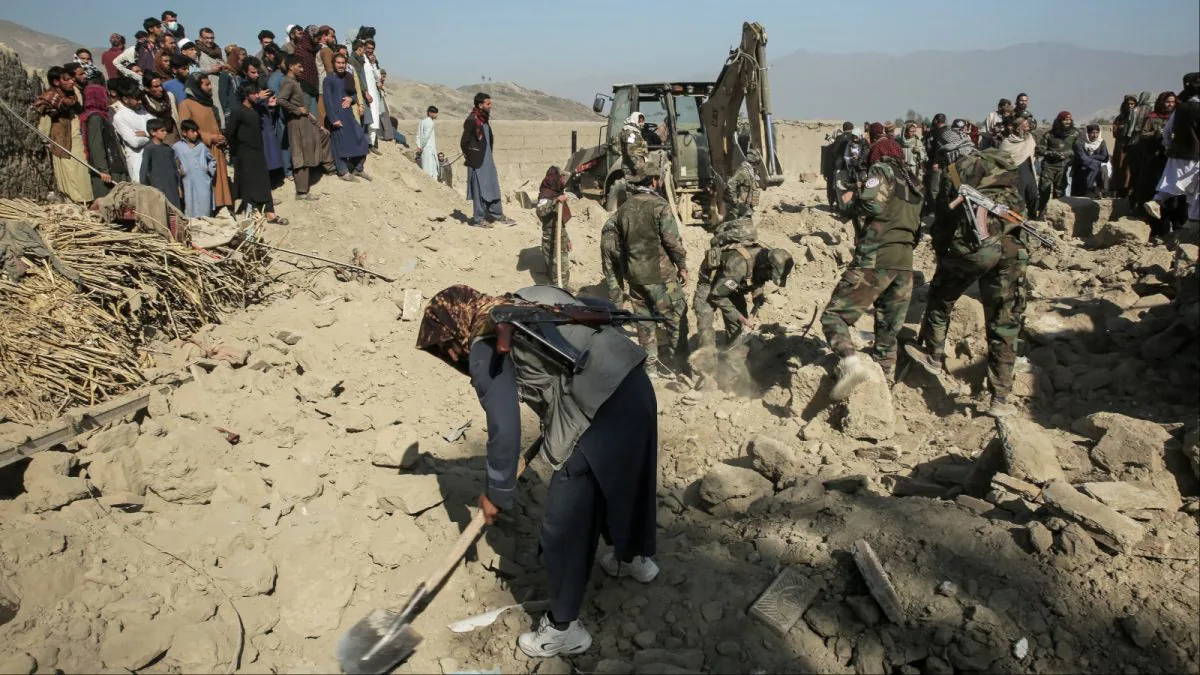
Afghanistan’s deputy government spokesman Hamdullah Fitrat said Pakistani strikes have killed 55 civilians across multiple provinces since fighting intensified on Thursday. Among the dead are a woman and a child killed in a drone strike on Nangarhar, and a civilian whose home was struck by mortar fire in Paktia. An 18-year-old from Asadabad in Kunar province said his brother was killed near a mosque. Three additional people died overnight in drone strikes and shelling, the Afghan government confirmed.
Pakistan has made no effort to soften its position. Mosharraf Zaidi, the Pakistani prime minister’s spokesman for foreign media, was unequivocal: ‘There won’t be any talks. There’s no dialogue. There’s no negotiation.’ Islamabad’s sole stated demand is an end to what it characterises as Afghanistan-based terrorism, specifically the operations of the Pakistan Taliban (TTP), which it accuses Kabul of harbouring. The Taliban government flatly rejects those accusations.
Pakistani forces are reported to be holding approximately 32 square kilometres of Afghan territory in the southern Zhob sector, a significant territorial incursion that underscores the conflict’s escalating intensity. Pakistan acknowledged bombing key Afghan cities on Friday, including Kabul and Kandahar — home to Afghanistan’s supreme leader — marking a dramatic expansion of the campaign beyond border regions. The Taliban has responded by deploying drones to strike Pakistani military camps.
The current crisis has deep roots. On February 21, Pakistani air strikes targeted what Islamabad described as TTP hideouts in Nangarhar and Paktika provinces. The United Nations subsequently reported credible evidence that 13 Afghan civilians died in those strikes. Kabul launched what it called ‘retaliatory operations’ along the border following those attacks, and the frontier offensive that began Thursday — which Afghan officials framed as a response to civilian deaths — prompted Pakistan to strike back from the air and on the ground.
The structural imbalance between the two sides is stark. Pakistan possesses vastly superior conventional military capability, including advanced aircraft, armoured units, and sophisticated air defence systems. Yet the Taliban, battle-hardened after decades of asymmetric warfare, has demonstrated a willingness to absorb punishment and strike back with the tools at its disposal, including drones and cross-border infantry operations.
Pakistan’s own security situation has deteriorated sharply in recent years, providing context for Islamabad’s aggressive posture. The Pakistan Institute for Conflict and Security Studies recorded 3,413 conflict-related deaths in 2024 — a 75 percent increase over the previous year — alongside a 29 percent rise in violent incidents, making 2024 the country’s most violent year in nearly a decade.
The international community has responded with alarm. The European Union, the United Nations, Russia, Iran, Saudi Arabia, Qatar, the United Arab Emirates, and Jordan have all called for restraint. Diplomats Without Borders warned on February 27 that continued confrontation risked triggering broader regional instability. Saudi Arabia and Qatar have engaged in active diplomatic efforts to halt the fighting, though no ceasefire has materialised.
The conflict is unfolding against a volatile regional backdrop. Afghan government spokesman Abdul Qahar Balkhi condemned attacks on Iran and Iran’s subsequent strikes on Gulf states on Saturday, while Pakistan’s Ministry of Foreign Affairs issued its own call for restraint in the Middle East on February 28 — a striking posture for a government simultaneously prosecuting an air campaign against its neighbour.
Bagram air base carries particular geopolitical weight. US President Donald Trump expressed interest in reoccupying the facility last year, and its targeting in the current conflict adds a further dimension to what is already one of the most dangerous escalations on the Afghan-Pakistani frontier in years. With Islamabad ruling out talks and Kabul vowing to defend its territory, the path to de-escalation remains deeply unclear.