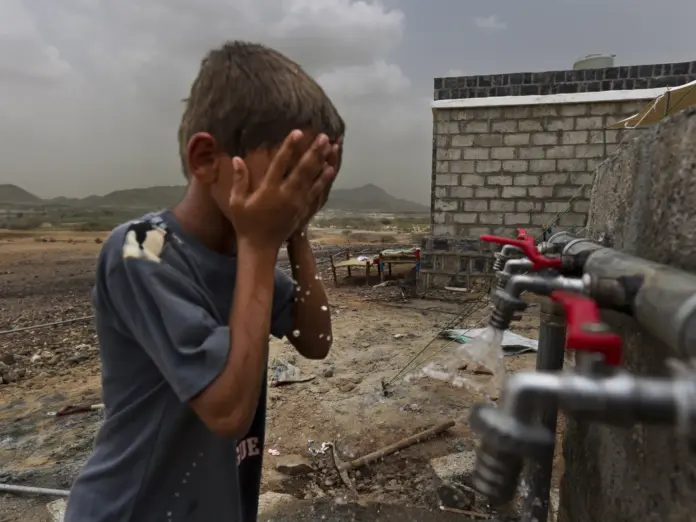
Nearly 1,200 children have been killed or wounded in Yemen since a United Nations-brokered ceasefire took effect on April 2, 2022, according to a new analysis by Save the Children — a damning indictment of the enduring human cost of a conflict that has never truly ended for the country’s youngest civilians.
The UK-based humanitarian organisation released its findings Thursday, drawing on data compiled by the Civilian Impact Monitoring Project (CIMP), a monitoring mechanism operating under the UN Protection Cluster. The figures show that at least 339 children were killed and at least 843 were injured in the period following the truce, which largely halted direct fighting between the Saudi-backed Yemeni government and the Iran-aligned Houthi movement.
Of the nearly 1,200 child casualties recorded, 511 — close to one in every two — were caused by landmines and explosive remnants of war. The proportion of child casualties attributable to these devices has actually risen in the four years since the ceasefire compared to the four years that preceded it, a trend Save the Children attributes to a combination of inadequate mine risk awareness and increased exposure driven by child labour, which forces children into fields, roadsides, and abandoned structures where unexploded ordnance lies hidden.
Rishana Haniffa, Save the Children’s country director in Yemen, underscored the disproportionate danger facing children. Yemeni children are more than three times more likely than adults to be killed or injured by explosive remnants — a disparity that reflects both their physical vulnerability and the circumstances in which they move through a landscape saturated with the detritus of years of heavy fighting.
The injuries sustained are not merely survivable wounds. Blast trauma has left children with permanent spinal injuries, amputated limbs, and the permanent loss of sight and hearing. Beyond the physical toll, survivors carry deep psychological scars — persistent fear and anxiety, difficulty sleeping, and the daily weight of trauma that reshapes childhood into something unrecognisable.
The ceasefire of April 2022 was heralded as a turning point in one of the world’s most protracted humanitarian disasters. While it succeeded in reducing large-scale military operations, the data makes clear that Yemen’s children have continued to pay a lethal price. Shelling, gunfire, landmines, and unexploded ordnance have collectively claimed and shattered young lives throughout the truce period, exposing the limits of a peace that exists more on paper than on the ground.
The release of these findings coincides with a sharp deterioration in the broader regional security environment. The Houthis have launched a series of missile attacks against Israel, acting in coordination with Iran and the Lebanese group Hezbollah, and have warned they are prepared to escalate further should Israel continue its strikes across the region. The movement’s decision to enter the wider conflict represents a significant escalation in the confrontation between the United States, Israel, and Iran.
Compounding regional instability, Iran has blockaded the Strait of Hormuz in the wake of US-Israeli strikes — a move with potentially severe consequences for global energy markets and maritime trade. Separately, fears persist that the Houthis could extend their campaign to target commercial shipping in the Red Sea, a critical artery for international commerce that the group has previously threatened.
For Yemen’s children, however, the geopolitical chessboard is a distant abstraction. The immediate reality is a country still riddled with the physical remnants of war — mines buried in soil, unexploded shells rusting in fields — that continue to maim and kill long after the guns have nominally fallen silent. Save the Children’s analysis serves as a stark reminder that ceasefires, however necessary, do not by themselves undo the infrastructure of harm that years of conflict leave behind.
Yemen has endured one of the world’s worst humanitarian crises for nearly a decade, with millions facing famine-level food insecurity and a health system that has largely collapsed. The continued toll on children from explosive hazards underlines the urgent need for sustained demining operations, mine risk education, and international pressure to ensure that the ceasefire evolves into a durable and enforceable peace.