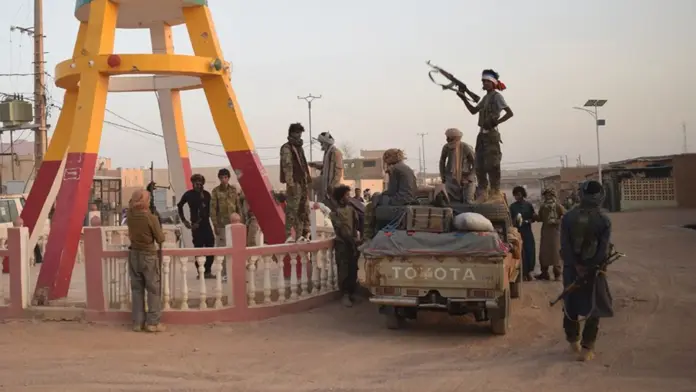
A wave of coordinated armed attacks swept across Mali on Saturday, reaching the capital Bamako and striking multiple cities throughout the country’s volatile north, killing the defence minister and wounding at least 16 people in one of the most serious security crises the military government has faced since seizing power.
Defence Minister Sadio Camara was assassinated during the assault, along with his wife and two children. Intermittent explosions continued near Senou International Airport, south of Bamako, as late as Monday evening, underscoring the scale and persistence of the offensive. Fighters on motorcycles rode into cities including Kidal, Gao, Sevare, Kati and the capital itself, overwhelming security positions across a vast stretch of territory.
Responsibility was claimed jointly by the Azawad Liberation Front (FLA) and Jama’at Nusrat al-Islam wal-Muslimin (JNIM), the al-Qaeda-linked armed Islamist group that operates with an estimated 10,000 fighters across the border regions of Mali, Niger and Burkina Faso. The FLA, which formed in November 2024 and is led by Alghabass Ag Intalla, presents itself as a political and nationalist movement rooted in the ethnic Tuareg cause. JNIM, by contrast, was formed in 2017 through a merger of four al-Qaeda-affiliated factions — Ansar Dine, AQIM, Katiba Macina and al-Mourabitoun — and is led by Ag Ghaly.
![UN peacekeepers stand guard at the entrance to a polling station covered in separatist flags and graffiti supporting the creation of the independent state of Azawad, in Kidal, Mali on July, 27, 2013 [Rebecca Blackwell/AP Photo]](https://world-tension.s3.us-east-2.amazonaws.com/articles/659/8ead3e80e7154bd8950d64771e37566f.webp)
Despite their joint claim, FLA leader Sayed Bin Bella was emphatic that the two groups have not merged. Any future union, he said, would require JNIM to sever its ties with the global al-Qaeda network — a condition that underlines the fundamental ideological distance between the nationalist separatists and the jihadist organisation.
The most strategically significant development of the offensive was the FLA’s seizure of Kidal, a northern city long regarded as a symbolic heartland of the Tuareg independence movement. Malian and Russian forces withdrew from the city as the rebels advanced. The FLA has since signalled ambitions to push further, with spokesman Mohamed Elmaouloud Ramadane stating the group intends to take control of Gao, while the historic city of Timbuktu has also been identified as a target.
Mali’s military leader, Col Assimi Goïta, who came to power through a coup in August 2020, visited a hospital treating those wounded in the attacks and subsequently met with Russia’s ambassador to Mali, Igor Gromyko, three days after the offensive began. The meeting signalled Bamako’s continued reliance on Moscow as its primary security partner, a relationship that deepened after French forces were expelled from the country in the early part of this decade and Russian fighters — initially from the Wagner Group, which arrived in 2021 — were deployed to help suppress the insurgency.
That security architecture has now been severely tested. Turkey, which supplied Mali with drones that played a decisive role in helping government forces retake Kidal in 2024, has also deployed a security contact to train the presidential guard. Yet the speed and reach of Saturday’s assault raised urgent questions about the durability of those arrangements.
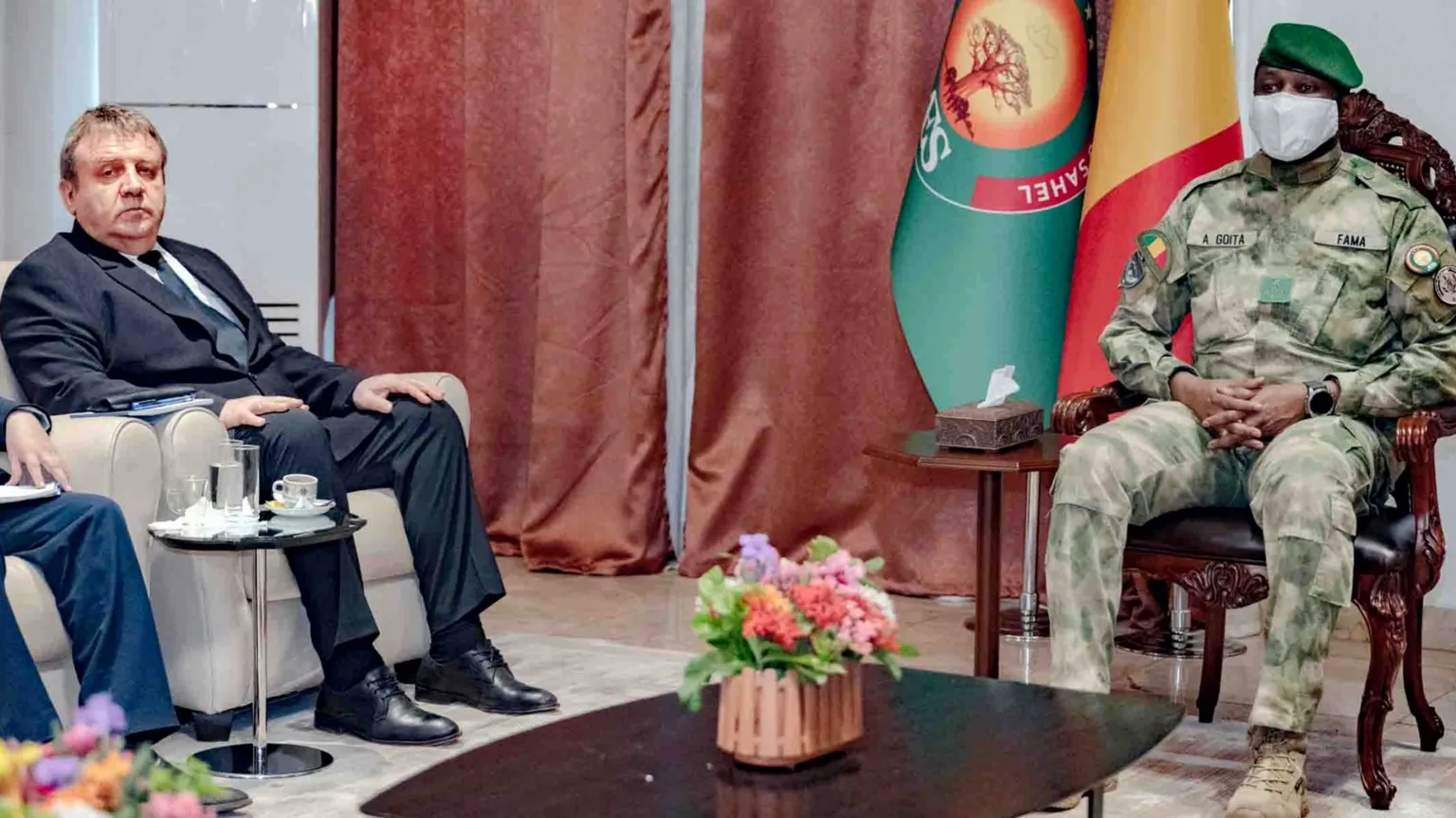
The broader regional context adds further complexity. JNIM has maintained a fuel blockade against Mali for the past year, squeezing the country’s economy and supply lines. The Alliance of Sahel States (AES) — the bloc uniting the military-led governments of Mali, Niger and Burkina Faso — pledged solidarity with Bamako in the wake of the attacks, though all three member states face their own severe insurgency pressures.
Mali has also shown tentative signs of re-engagement with Washington after years of strained relations. The head of the State Department’s African affairs section, Nick Hocker, travelled to Bamako earlier this year, and the United States expressed interest in working more closely with Mali’s neighbours on shared security and economic priorities.
The roots of the current crisis stretch back more than a century. Ethnic Tuaregs have sought an independent state since the early 1900s, and armed uprisings against the Malian government recurred in 1962 and again in 1990. A peace deal in 1995 brought temporary calm, but a new wave of attacks in January 2012 ignited a full civil war. The National Movement for the Liberation of Azawad (MNLA), led by Bilal Ag Cherif, declared the independence of Azawad — a self-proclaimed autonomous region in northern Mali — on April 6, 2012, before the rebellion was hijacked by Islamist militants.
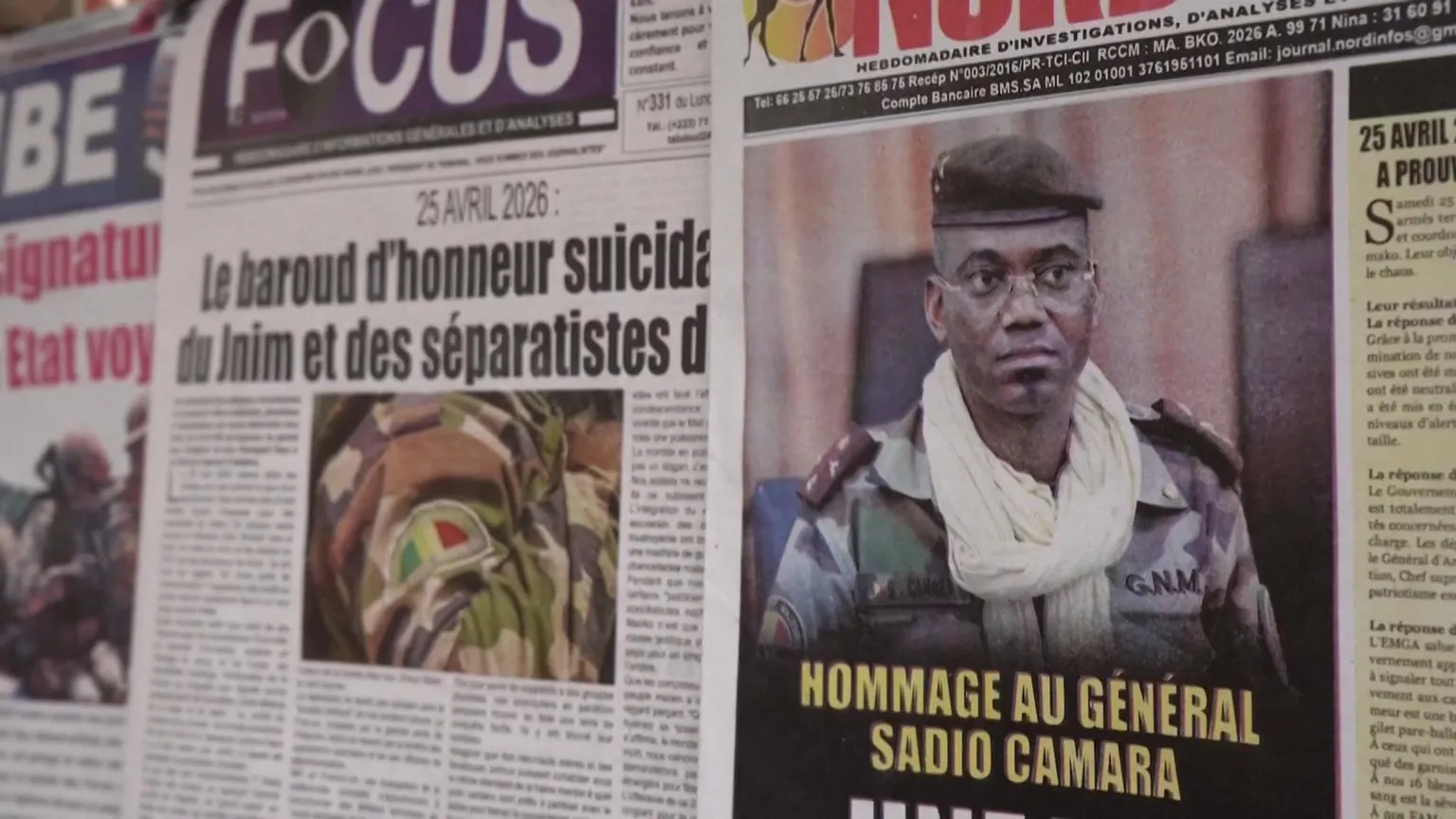
France deployed 4,000 soldiers to Mali in 2013 at Bamako’s request, and a United Nations peacekeeping mission of roughly 11,000 troops was subsequently established. Mali signed the Algiers Accords with the Coordination of Azawad Movements in May 2015, a peace framework that appeared to offer a path to stability. By 2023, however, Bamako had expelled the UN mission — in which approximately 310 peacekeepers had been killed — and in January 2024 tore up the Algiers Accords entirely, launching military operations against both JNIM and Tuareg positions. The FLA emerged from that rupture the following November.
Saturday’s attacks represent the most direct challenge yet to Col Goïta’s government and to the patchwork of Russian, Turkish and regional partnerships on which it depends. With rebel forces now controlling Kidal and threatening Gao and Timbuktu, Mali faces the prospect of a dramatically redrawn map of territorial control in its north.