Lebanon Children War — When Israeli bombs began falling on the southern Lebanese village of Mayfadoun on March 2, four-year-old Malaika was inside her family home. Her mother threw herself over the child in a final act of protection. The strike killed her mother instantly. Malaika survived, but with burns across her forehead and injuries to her left eye severe enough to require surgery. Her younger sister Sara was also wounded in the same attack, though less critically.
Malaika’s case is not an outlier. It is a portrait of a war that has systematically devastated Lebanon’s youngest population. The Lebanese Ministry of Health reports that Israeli strikes have killed at least 3,613 people across the country since the conflict escalated, among them at least 245 children. More than 900 additional children have been wounded since March 2 alone.
Israel intensified its military campaign on that date following a Hezbollah response to the February 28 killing of Iranian Supreme Leader Ayatollah Ali Khamenei. The escalation triggered a wave of strikes across southern Lebanon and Beirut‘s southern suburbs, with renewed attacks reported as recently as Sunday.
Recommended Reading
Malaika was transferred to the Ghassan Abu Sittah Children’s Fund in Beirut for treatment, where social worker Sara Issa has been supporting her recovery. Her father recently confirmed that the family home — which had withstood months of bombardment — was finally destroyed just days ago, leaving the family with nothing to return to.
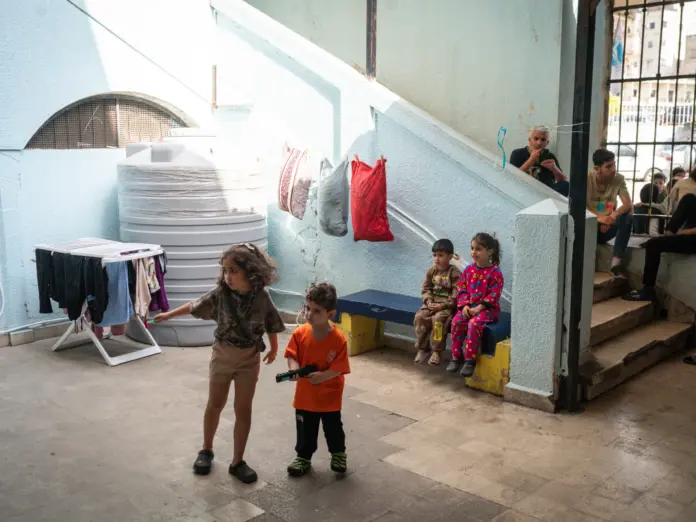
The scale of displacement is staggering. More than 1.2 million people have been forced from their homes, including approximately 400,000 children. Elissar Gemayel, response director for World Vision Lebanon, has described the situation as a compounding catastrophe for a generation already scarred by the COVID-19 pandemic, the 2020 Beirut port explosion, and Lebanon’s prolonged economic collapse.
Marianne Abboud, mental health and psychosocial support adviser for War Child, warns that the psychological toll on children is profound and long-lasting. Davide Musardo, a clinical psychologist with Doctors Without Borders who previously treated children in Gaza, has noted striking parallels between the trauma patterns he observed there and what Lebanon’s children are now experiencing.
A ceasefire was announced by US President Donald Trump on April 17, raising hopes that the worst of the violence had passed. Those hopes have proven fragile. Save the Children Lebanon country director Nora Ingdal confirmed that at least 40 children have been killed or maimed since the ceasefire announcement — a figure that underscores the continued danger facing civilians even as diplomatic frameworks nominally hold.
Lebanon Children War: Regional Implications
The humanitarian response has struggled to keep pace. The United Nations launched an appeal in March for $308.3 million to address urgent needs across Lebanon. To date, only half of that target has been met, leaving aid organisations stretched thin as the number of people requiring assistance continues to grow.
Lebanon entered this war already weakened. Years of financial crisis had hollowed out public institutions. Schools had been shuttered repeatedly — first by the pandemic, then by the port explosion’s aftermath, then by economic paralysis. For children like Malaika, the war has not arrived into stability; it has arrived into a society already on its knees.
The international community faces mounting pressure to enforce the ceasefire terms and close the funding gap that is leaving hundreds of thousands of displaced Lebanese — nearly a third of them children — without adequate shelter, food, or medical care. For Malaika, recovering in a Beirut hospital with burns on her face and her mother gone, the abstractions of geopolitics have already extracted their most irreversible price.