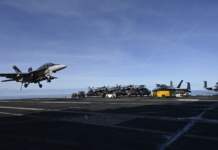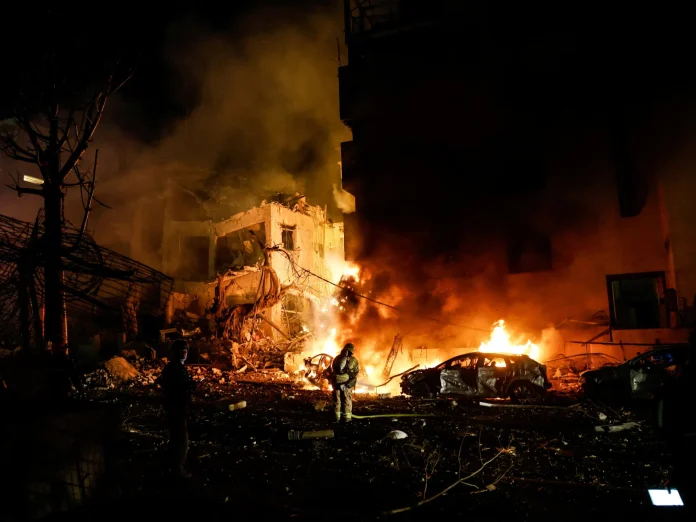
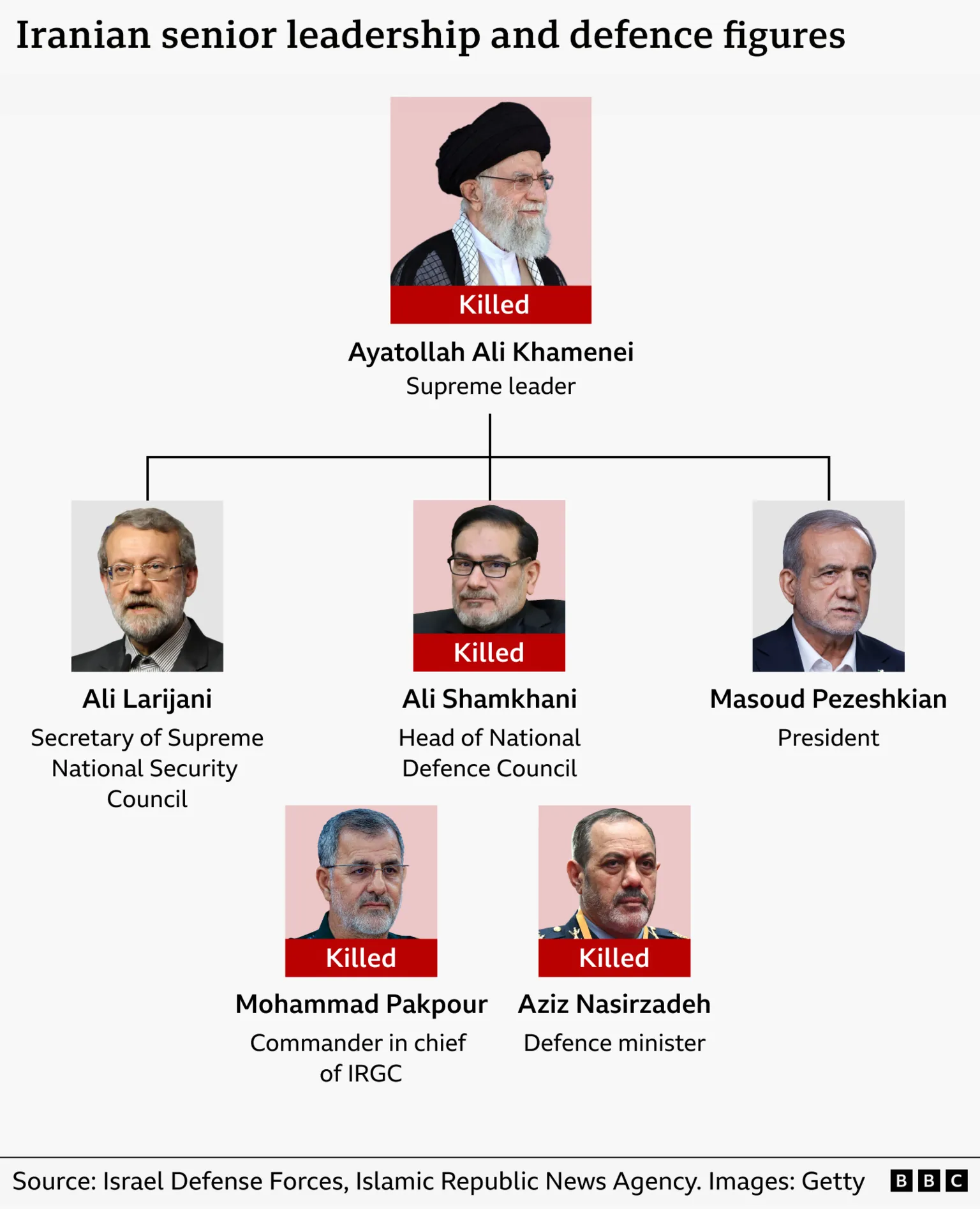
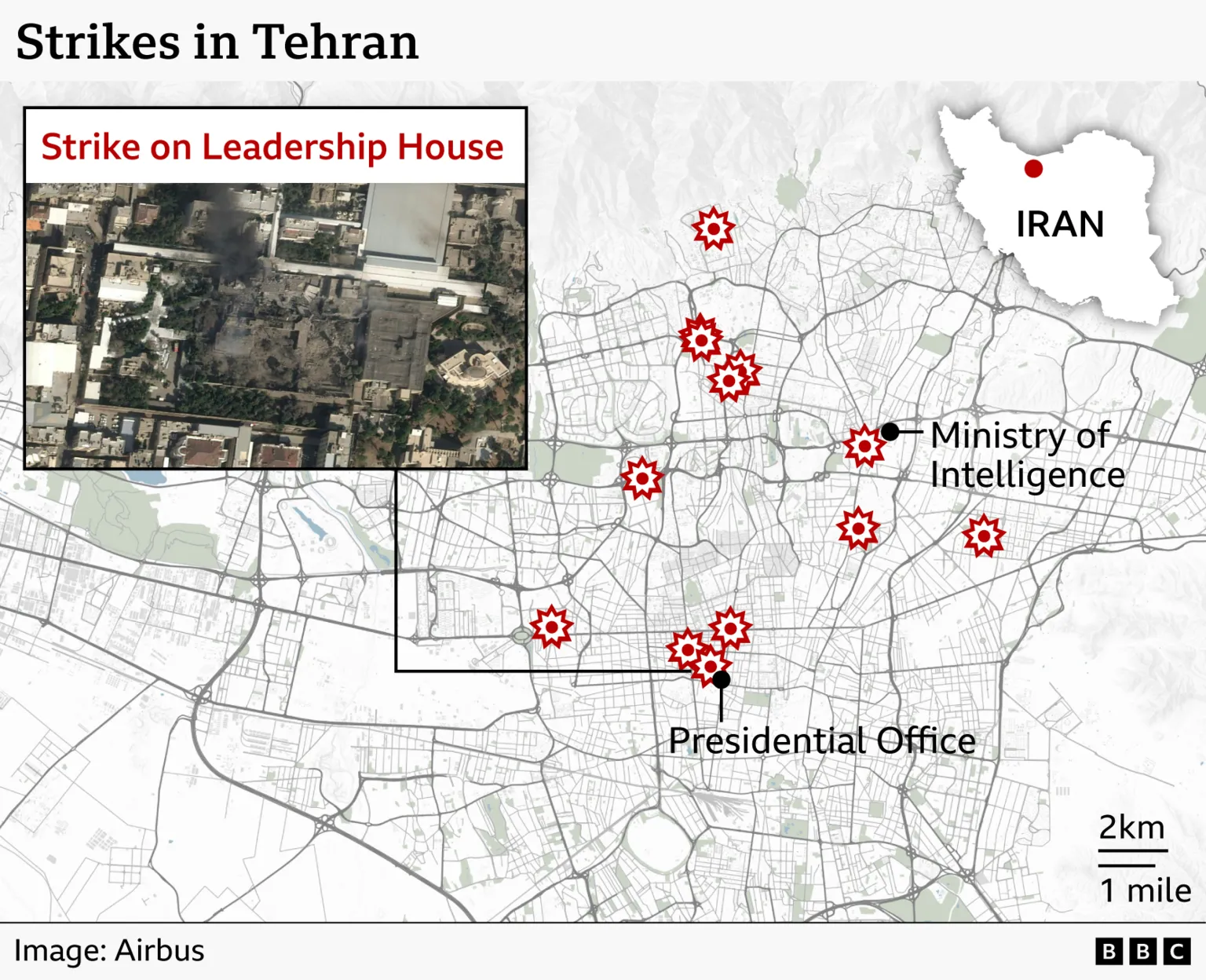
Iranian Supreme Leader Ayatollah Ali Khamenei, who had governed the Islamic Republic since 1989, was killed on Saturday when his compound in Tehran was destroyed during the opening salvo of a joint American and Israeli military campaign. The operation, designated Operation Epic Fury, has killed more than 555 people across Iran and triggered a cascade of retaliatory strikes, mass civilian displacement, and a geopolitical rupture with no clear endpoint.
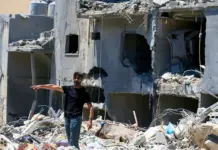
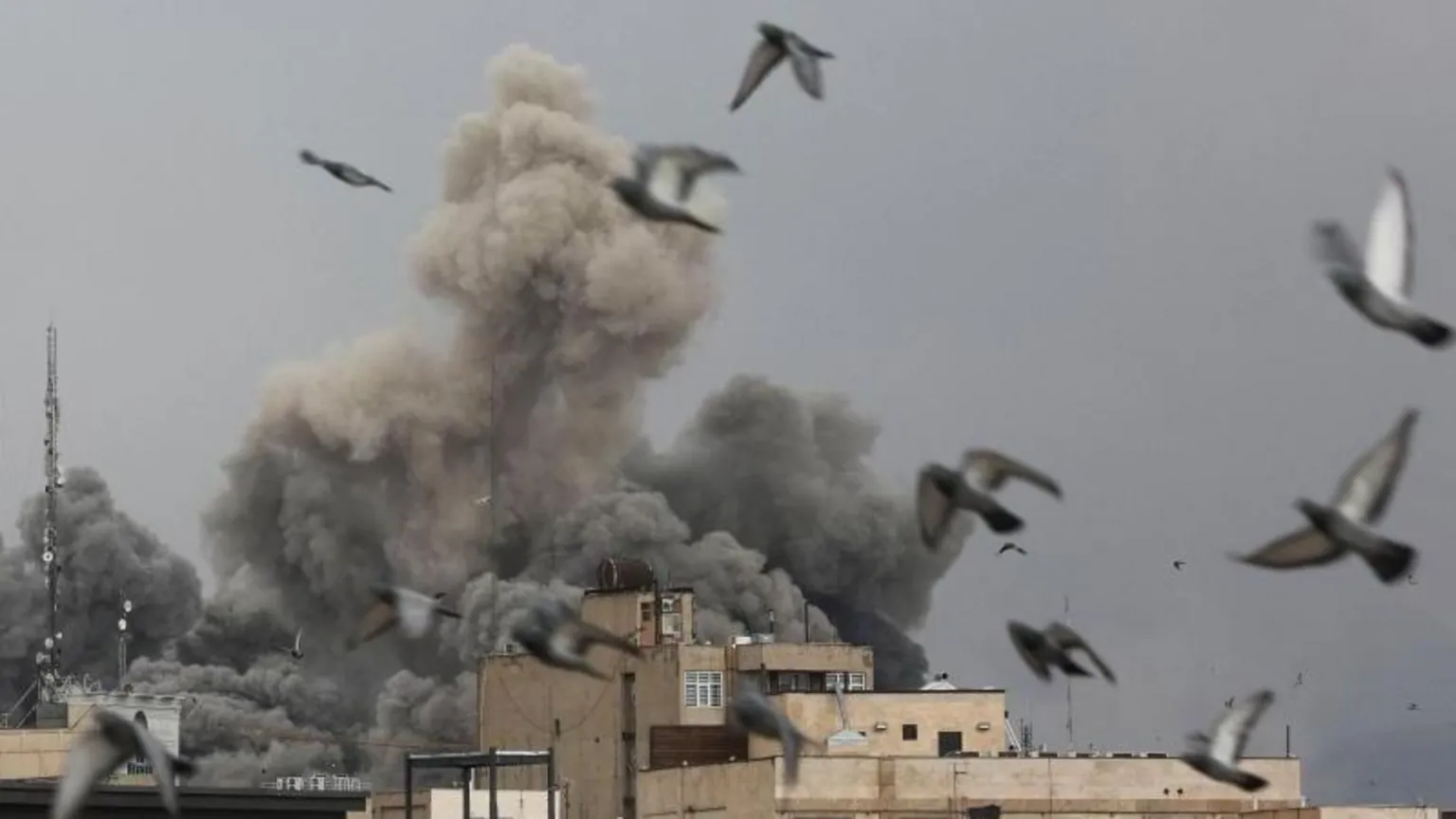
The scale of the assault is staggering. Among the dead are 180 people — predominantly girls — killed when an air strike levelled a school in southern Iran, a single incident that has drawn international condemnation even from governments broadly aligned with Washington and Jerusalem. The broader death toll, now exceeding 555, continues to rise as strikes on military infrastructure and urban centres persist.
Israeli Prime Minister Benjamin Netanyahu addressed the Iranian people directly in Farsi, framing the bombardment as liberation rather than aggression. The strikes, he declared, represent help arriving to ordinary Iranians. US President Donald Trump echoed that message, calling on Iranians to seize the moment and overthrow their government. The rhetoric of regime change has now been fused with active military operations in a way that marks a profound escalation from years of covert pressure and proxy conflict.
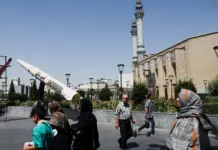
Iran’s response has been immediate and wide-ranging. Tehran launched waves of ballistic missiles and drones targeting Israel, Bahrain, Kuwait, Qatar, the United Arab Emirates, Jordan, Saudi Arabia, Cyprus, and commercial vessels navigating the Strait of Hormuz. Hezbollah, the Lebanese militia closely aligned with Tehran, simultaneously launched rockets into northern Israel from positions in Lebanon, opening a second front that Israeli forces are now managing alongside the primary campaign.
The Gulf states targeted by Iranian missiles had, for months, privately and publicly cautioned against exactly this scenario. Their warnings went unheeded. Now they find themselves simultaneously hosting American military assets and absorbing Iranian strikes — a position that exposes the fragility of regional security architecture built around deterrence rather than open war.
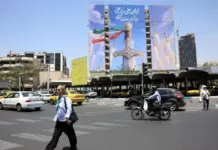
Inside Iran, the picture is fractured. Large protests had already swept the country in January, driven by deep-seated hostility toward the clerical establishment. Some of those same citizens are now rallying behind the government in the face of foreign attack, a nationalist reflex that complicates the narrative of a population uniformly welcoming outside intervention. Others are fleeing. Long queues formed at petrol stations across the country, and scenes of panic were reported in Tehran, where shops have been overwhelmed by residents stockpiling supplies.
At the Turkish-Iranian border, the human cost of the conflict is visible in real time. Turkey suspended day-trip passenger crossings on Sunday, with Istanbul initially permitting only its own citizens and third-country nationals to enter. Iranian nationals were turned back at the gates. By Monday afternoon, the situation had partially eased — Iranians began crossing into Turkey at the Kapikoy border gate, with Turkish Trade Minister Omer Bolat confirming that Iran was permitting its own citizens to depart. Turkish border units were placed on high alert, and commercial cargo transits continued under controlled conditions across all three border crossings. Eyewitnesses described people wheeling suitcases through snow toward the frontier, a stark image of displacement in a region already saturated with it.
Accounts from inside Iran vary sharply by geography and circumstance. One Iranian national described Tehran as already difficult, with overcrowded shops and fuel for travel emerging as the dominant anxiety. A resident from the Qazvin area near the Turkish border reported that daily life was continuing with some normality, though constant bombing of military installations in the vicinity was audible and unrelenting.
Within Israel, the operation has generated rare cross-partisan consensus. Opposition figures spanning the political spectrum — from right-wing former prime minister Naftali Bennett to centrist Yair Lapid and centre-left Democrats leader Yair Golan — have backed the decision to strike. Golan, who warned as recently as last May that the endless killing of Palestinians risked turning Israel into a pariah state, has nonetheless endorsed the Iran campaign. Mitchell Barak, a political pollster and former Netanyahu aide, spoke to journalists from a shelter in West Jerusalem, underscoring that the conflict has reached Israeli civilians as well.
The operation’s deeper strategic logic is contested. Daniel Levy, a former Israeli government adviser, and Ahron Bregman, a senior teaching fellow in War Studies at King’s College London, represent a body of expert opinion that questions whether military decapitation of the Iranian state produces stability or accelerates chaos. The bulk of Israel’s military capacity is underwritten by the United States, meaning Washington bears direct co-responsibility for every strike and every casualty.
Netanyahu’s Farsi address invoked the holiday of Purim, which commemorates the survival of the Jewish people from a Persian threat 2,500 years ago — a historical framing that signals how existentially the Israeli government is characterising this moment. Meanwhile, Israeli politicians have begun describing Turkey as the new Iran, a designation that, if it hardens into policy, suggests the current conflict may be the opening chapter of a far longer confrontation reshaping the entire region.