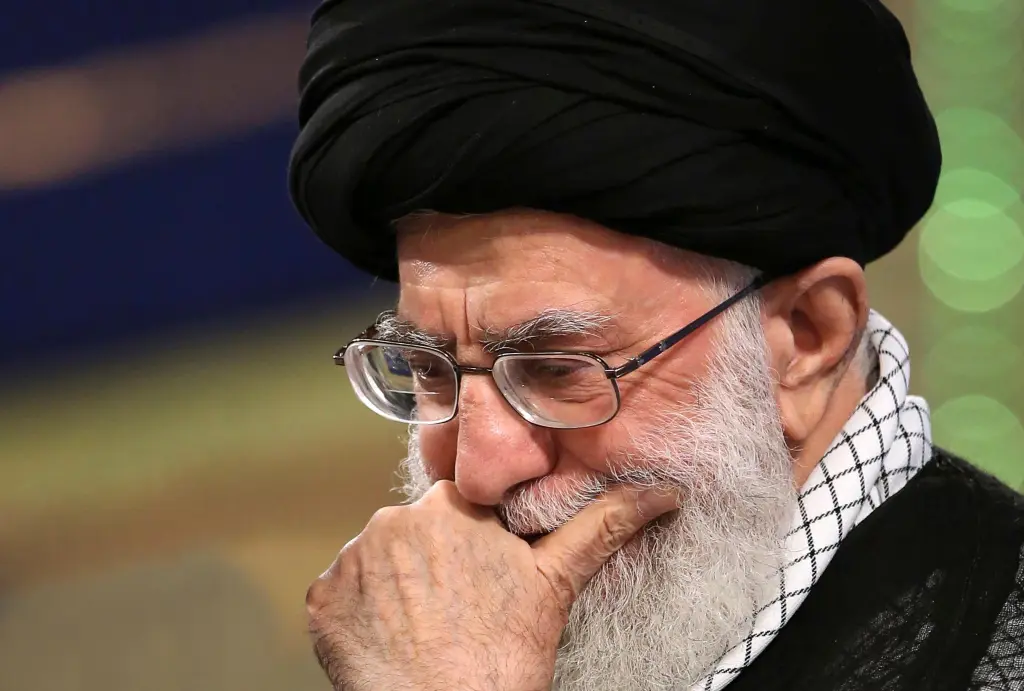
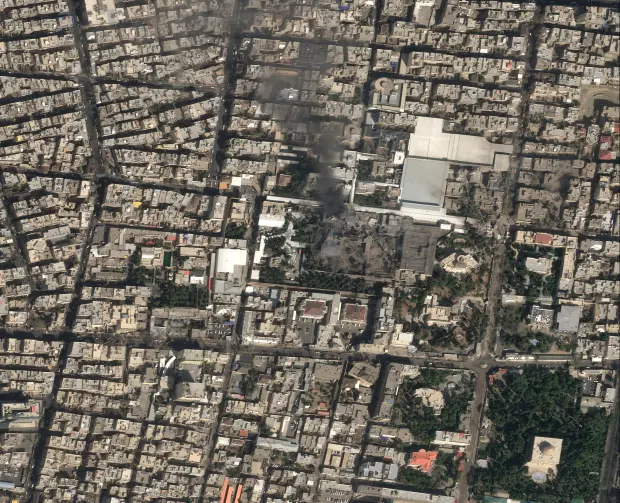
TEHRAN/WASHINGTON — Iranian Supreme Leader Ayatollah Ali Khamenei, the 86-year-old cleric who had governed the Islamic Republic for more than three decades, was killed Saturday in a joint United States and Israeli airstrike that obliterated his compound in downtown Tehran, igniting the most severe military confrontation the Middle East has seen in years.
President Donald Trump announced Khamenei’s death early Sunday, describing the broader military campaign as ‘major combat operations.’ Satellite imagery from Airbus showed the compound site reduced to rubble. Alongside Khamenei, the head of Iran’s Revolutionary Guard, Maj. Gen. Mohammad Pakpour, and senior security adviser Ali Shamkhani were also killed. Several of Khamenei’s relatives perished in the same strikes, including a daughter, son-in-law, daughter-in-law, and grandchild.
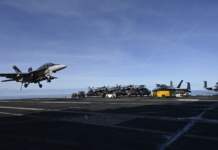
The operation, planned over months, was executed on Saturday — during Ramadan and at the start of the Iranian workweek. US and Israeli forces struck hundreds of targets across Iran, including Revolutionary Guard command facilities, air defense systems, missile and drone launch sites, and military airfields, according to Israeli military chief of staff Lt. Gen. Eyal Zamir. Iranian media, citing the Red Crescent, reported at least 201 people killed. An Iranian diplomat told the UN Security Council that hundreds of civilians were killed and wounded. Among the deadliest single incidents, at least 115 people died when a girls’ school was struck in southern Iran, and at least 15 more were killed in the southwest, where strikes hit a sports hall, two residential areas, and a hall near a school.
Iran responded within hours, firing missiles and drones toward Israel and at US military installations across the region. Targets included facilities in Bahrain, Iraq, Jordan, Kuwait, Saudi Arabia, Qatar, and the United Arab Emirates. Scattered fires and damage were reported across Israel, and a woman in the Tel Aviv area died after being wounded in an Iranian missile strike. Iran fired dozens of missiles at Israel, with many intercepted. Despite hundreds of Iranian missile and drone attacks, the US military reported no American casualties and minimal damage at its bases.
The regional fallout was immediate and widespread. Saudi Arabia said Iranian strikes targeted its capital and eastern region in an attack that was repelled. Bahrain reported a missile attack on the US Navy’s 5th Fleet headquarters, with three buildings damaged in Manama and Muharraq city. A suspected Iranian drone struck a high-rise building in Bahrain. In Kuwait, a drone targeted the main international airport, injuring several employees, while three troops were wounded by shrapnel at Ali Al-Salem air base. Shrapnel from an Iranian missile attack on the UAE capital killed one person.
Iran’s Foreign Ministry spokesman Esmaeil Baghaei, speaking in an interview Saturday, defended the retaliatory strikes as legally justified. He characterized the US-Israeli campaign as ‘barbaric acts of aggression’ and argued that locations providing logistical support to aggressors constitute legitimate targets under international law. Baghaei invoked the UN Charter, stating that its central prohibition on the use of force was being systematically undermined. ‘Iran is friendly with all countries in the region,’ he said, framing the missile campaign as a defensive necessity rather than a choice.
The timing of the assault dealt a severe blow to diplomatic momentum. A third round of indirect negotiations on Iran’s nuclear programme between Washington and Tehran had concluded just the day before, on Friday, with Oman’s foreign minister — serving as mediator — describing the talks as representing significant progress. A fourth round had been scheduled for Monday to address technical aspects of a potential nuclear agreement. Those talks now appear indefinitely suspended.
This marks the second time in less than a year that military action has derailed diplomacy with Iran. Israel launched a 12-day war against Iran in June of the previous year, during which the US briefly joined military operations despite Trump’s stated preference for a negotiated resolution.
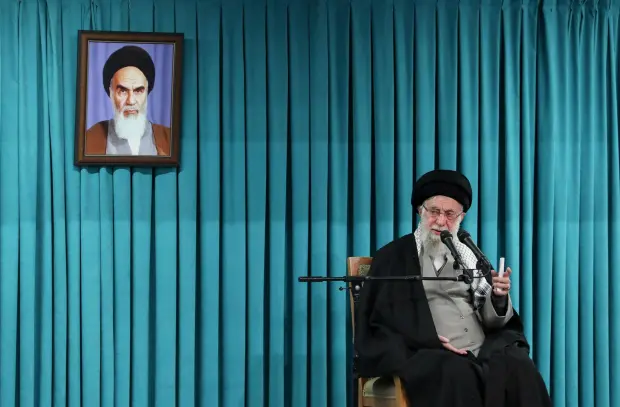
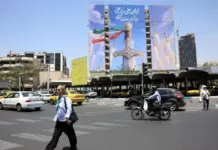
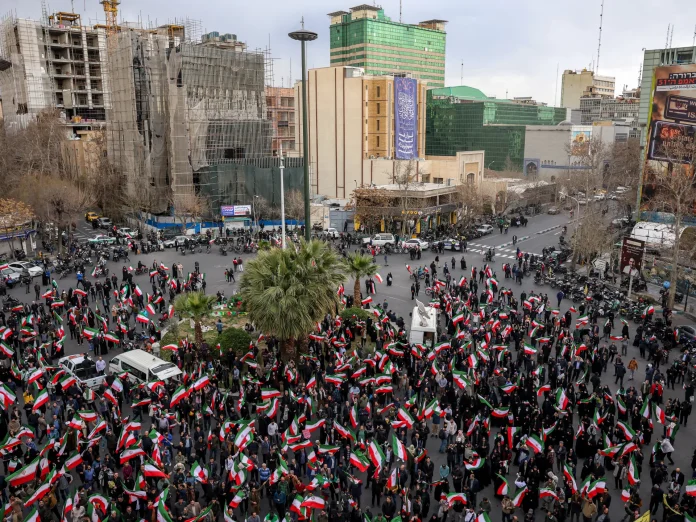
Inside Iran, the reaction to Khamenei’s death was fractured. A black mourning flag was raised over the Imam Reza shrine in Mashhad, the country’s second-largest city. The government declared 40 days of public mourning and a seven-day nationwide holiday. Yet eyewitnesses in Tehran described a starkly different scene in some neighbourhoods, with residents cheering from rooftops and blowing whistles. Iran moved quickly to establish a governing council to manage state affairs until a new supreme leader is selected.
The strikes represent a dramatic rupture in the regional order. With nuclear negotiations collapsed, Iran’s supreme leadership decapitated, and missile exchanges now spanning eight countries, the path back to any diplomatic framework appears extraordinarily narrow.