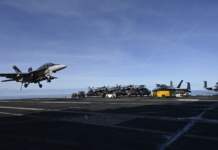
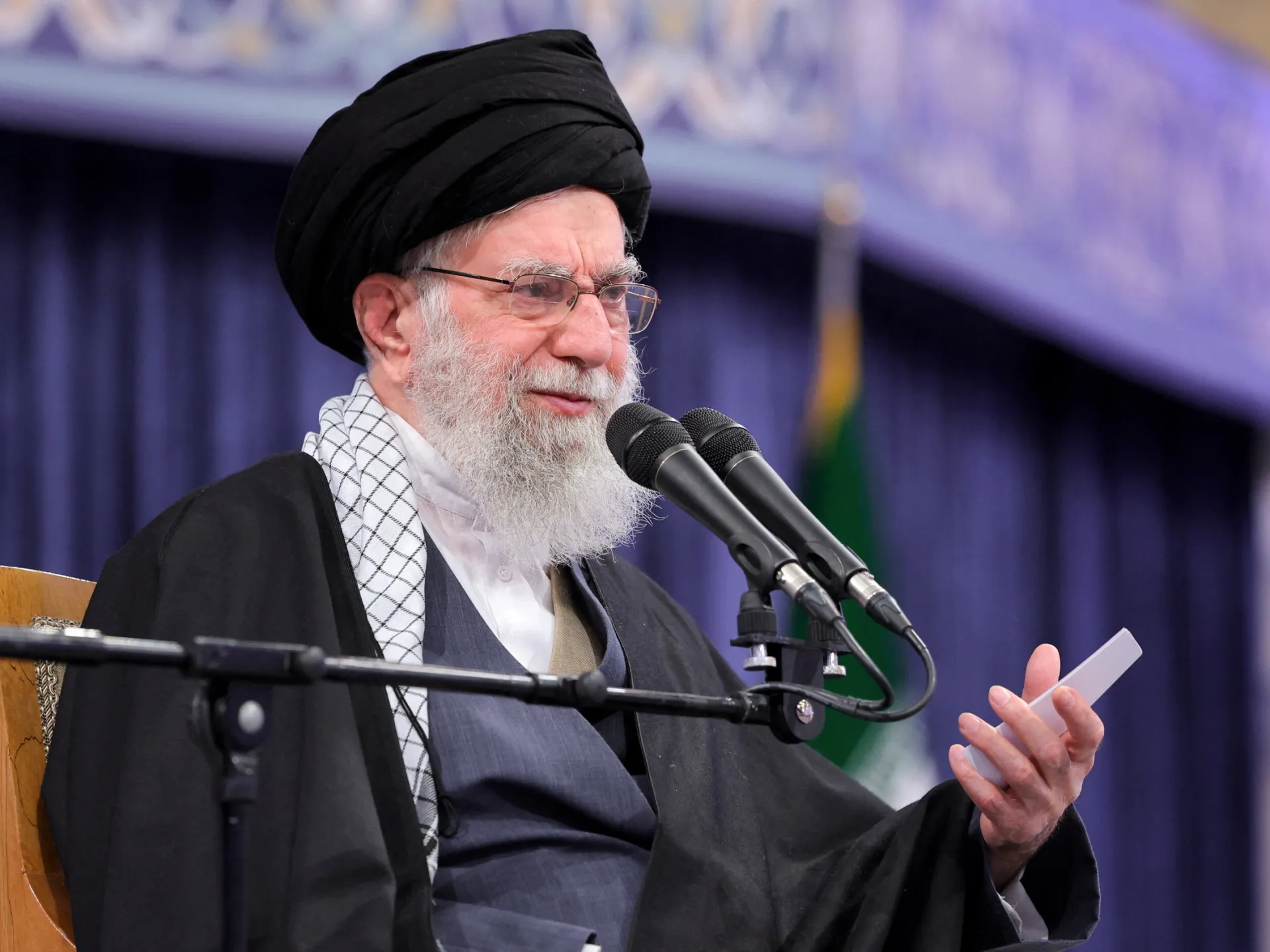
TEHRAN/TEL AVIV — Ali Khamenei, Iran’s supreme leader for 35 years, was killed Saturday when Israeli and American forces launched a sweeping military assault across the Islamic Republic, striking hundreds of targets from Tehran to the country’s western and central provinces in an operation that has fundamentally reshaped the geopolitical order of the Middle East.
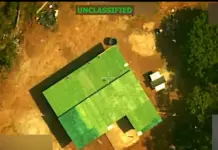
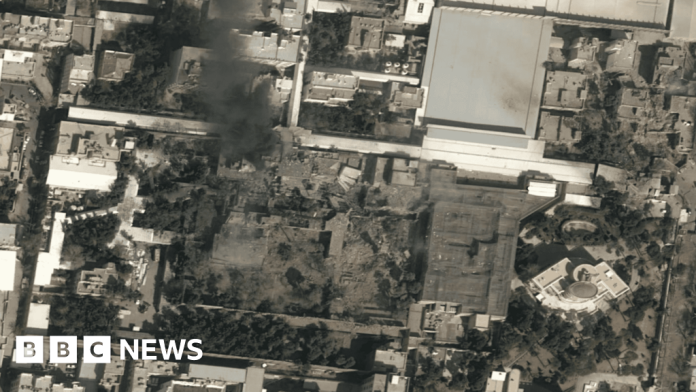
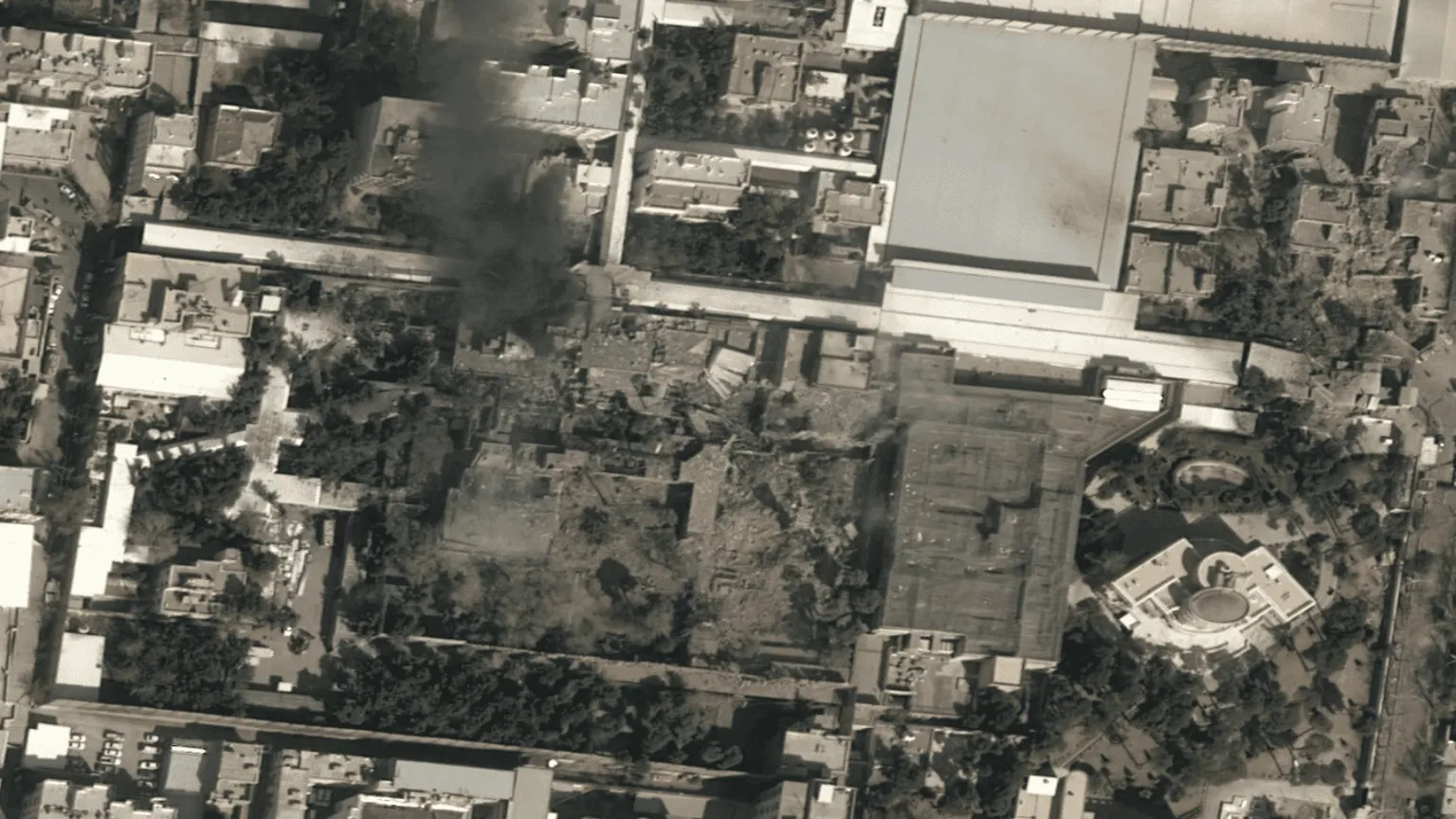
Iran’s Supreme National Security Council confirmed Khamenei’s death on Sunday morning, stating he was killed in his office. The announcement came hours after US President Donald Trump publicly declared the supreme leader dead and Israeli Prime Minister Benjamin Netanyahu announced that Khamenei’s Tehran compound had been destroyed. Satellite imagery subsequently revealed blackened buildings, widespread debris, and smoke rising from the compound, while verified footage showed explosions within one kilometre of Leadership House.
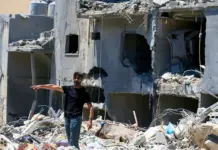
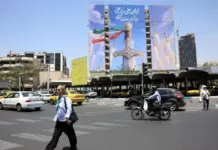
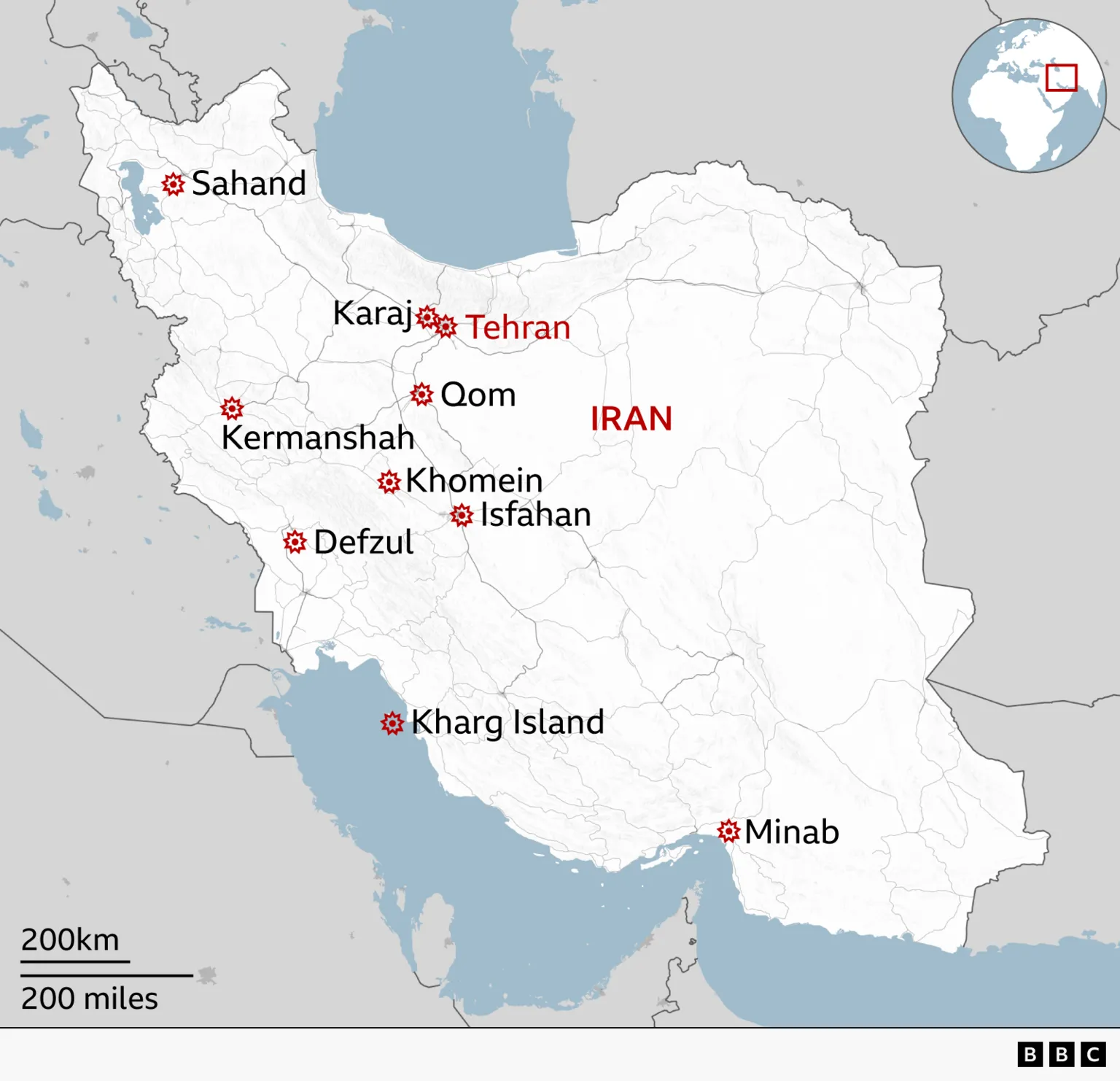
The assault began shortly after 09:30 local time on Saturday. Explosions rocked the capital almost simultaneously, with smoke visible over Jomhouri Square and Hassan Abad Square in central Tehran. Strikes were also reported in Karaj, Isfahan, Qom, and Kermanshah. By Saturday afternoon, an Iranian Red Crescent spokesman confirmed that 24 of Iran’s 31 provinces had been hit. More than 200 people were killed and over 700 injured inside Iran, with at least 108 of those deaths occurring in a single explosion at a school in the country’s south.
Approximately 200 Israeli fighter jets participated in the operation, dropping hundreds of munitions across roughly 500 targets in western and central Iran. Israeli Defence Minister Israel Katz characterised the campaign as a preemptive strike. The Israel Defense Forces named seven senior Iranian defence officials killed in the strikes, among them Ali Shamkhani, Mohammad Pakpour, and Aziz Nasirzadeh. Intelligence and military sources put the total number of Iranian officials killed at around 40.
The office of Iranian President Masoud Pezeshkian was targeted in the first wave of strikes, though Iranian state television reported he survived. A near-total internet blackout descended over Iran late Saturday morning, and the country’s Civil Aviation Organisation closed Iranian airspace indefinitely.
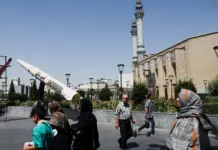
Iran’s response was swift and broad. The Islamic Revolutionary Guard Corps launched approximately 150 ballistic missiles toward Israel in small salvos, alongside dozens of attack drones. Tehran simultaneously fired missiles and drones at Bahrain, Kuwait, Qatar, and the UAE. The IRGC claimed strikes on five major US military installations: Al Udeid airbase in Qatar, Al Dhafra airbase in the UAE, the US Fifth Fleet headquarters in Bahrain, Ali Al Salem airbase in Kuwait, and Muwaffaq Salti airbase in Jordan. The IRGC also claimed a US FP-132 radar system in Qatar was completely destroyed.
US Central Command said its forces successfully defended against hundreds of Iranian missile and drone attacks, reporting no American casualties and minimal damage to US installations. In Israel, one person died and at least 20 were wounded when an Iranian missile struck buildings in central Tel Aviv. One person was also killed in Abu Dhabi.
The IRGC issued radio warnings declaring the Strait of Hormuz closed to all shipping — a threat with enormous global economic implications. Roughly 20 percent of the world’s oil and gas shipments transit the strait. Iran subsequently launched a further round of missile and drone attacks targeting Israel and several Gulf cities.
Iranian Foreign Minister Abbas Araghchi condemned the strikes as an unprovoked and illegal act of war, while the Iranian defence ministry vowed a crushing response. The attacks came just two days after US-Iranian negotiations over Tehran’s nuclear programme ended without agreement, a collapse in diplomacy that now appears to have been the final threshold before military action.
The regional aviation system buckled under the crisis. Of approximately 4,218 flights scheduled to land across the region on Saturday, 966 were cancelled. By Sunday, 716 of 4,329 scheduled departures had already been scrapped. Wizz Air suspended services to Israel, Dubai, Abu Dhabi, Amman, and Saudi Arabia through at least Tuesday. British Airways cancelled flights to Tel Aviv and Bahrain until Wednesday. Swiss International Air Lines grounded routes to Tel Aviv, Beirut, Amman, Erbil, and Tehran through 7 March. Iraq and Jordan closed their airspace entirely, while the UAE implemented a partial, temporary closure.
With Khamenei dead, Iran now faces a profound constitutional crisis alongside an active military conflict. Under Iranian law, a new supreme leader must be selected by the Assembly of Experts, an 88-member body of senior clerics elected by popular vote every eight years. The process of selecting a successor to the man who led the Islamic Republic since 1989 will unfold against the backdrop of ongoing strikes, a communications blackout, and an unprecedented challenge to the state’s survival.