Japan has formally lifted a long-standing ban on the export of lethal weapons, opening the door to arms sales to at least 17 countries and marking a fundamental break from the pacifist defence principles the nation has maintained since the end of World War Two.
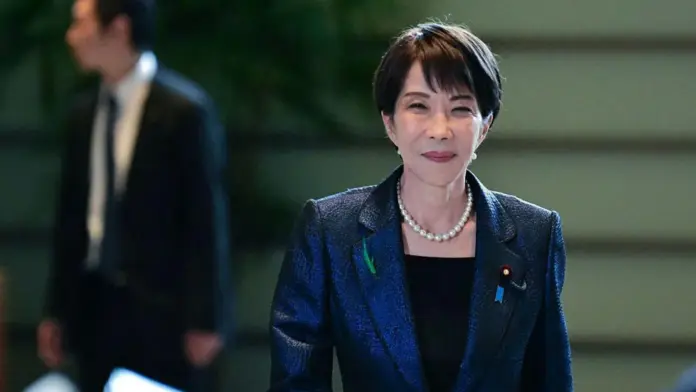
Prime Minister Sanae Takaichi announced the policy change on Tuesday via a post on X, framing the decision as essential to protecting Japan’s national security. Chief Cabinet Secretary Minoru Kihara elaborated, stating the shift was designed to safeguard Japan’s security and contribute to regional peace and stability.
Under the new framework, transfers of all defence equipment will in principle become possible. Eligible recipients — currently numbering at least 17 nations, including the United States and the United Kingdom — must commit to using any acquired weapons in accordance with the UN Charter. The list of eligible countries may grow as Japan concludes additional bilateral defence agreements. Nations interested in purchasing Japanese-made arms include Australia, New Zealand, the Philippines, and Indonesia, the latter having recently signed a major defence pact with Washington.
A tangible early consequence of the shift is already visible: Japan and Australia have signed a $7 billion deal for Mitsubishi Heavy Industries to construct the first three of 11 warships for the Australian navy.
The transformation of Japan’s arms export posture has been incremental but accelerating. Rules introduced in 1967 and formalised in 1976 restricted military exports to five narrow non-lethal categories — rescue, transport, warning, surveillance, and minesweeping equipment. In 2014, Prime Minister Shinzo Abe dismantled a blanket prohibition on all military sales. His successor, Prime Minister Fumio Kishida, went further in 2023, permitting exports of finished lethal weapons for the first time since the war. Tuesday’s announcement by Takaichi removes the remaining structural barriers, including the prohibition on exporting fighter jets.
A ban on arms sales to countries actively engaged in conflict remains nominally in place, though Japanese authorities have reserved the right to grant exceptions under what they describe as ‘special circumstances’ — a caveat that critics warn could be broadly interpreted.
![Nationalists visit the Yasukuni Shrine in 2025 in Tokyo, Japan [Tomohiro Ohsumi/Getty Images]](https://world-tension.s3.us-east-2.amazonaws.com/articles/513/37633e4bf9d34a05928ba33ae6df52a5.webp)
The announcement drew sharp condemnation from Beijing. China’s Foreign Ministry spokesman Guo Jiakun said China is ‘seriously concerned’ about the changes, accusing Tokyo of pursuing ‘reckless new-style militarisation’ and pledging that China would remain ‘highly vigilant’ and ‘firmly resist’ what he characterised as a dangerous regional trend. South Korea’s foreign ministry struck a more measured but pointed tone, calling on Japan to ensure its defence policy upholds the spirit of the Peace Constitution — the 1947 document in which Japan renounced war as a means of settling international disputes.
Seoul’s sensitivity is rooted in history. Japan colonised Korea from 1910 until the end of World War Two, during which hundreds of thousands of Koreans were forced into labour in mines and factories, and women were subjected to sexual slavery. Visits by Japanese officials to the Yasukuni Shrine — a Tokyo memorial that honours Japan’s war dead but also enshrines more than 1,000 convicted war criminals, including 14 found guilty of Class A offences — have long inflamed tensions across the region. Takaichi sent a ritual offering to the shrine during its spring festival, a gesture viewed as deeply provocative in China, South Korea, and other nations that suffered under Japanese imperial rule.
Takaichi, widely regarded as a China hawk and sometimes described as Japan’s ‘Iron Lady’, has also publicly supported revising Article 9 of the constitution — the clause that explicitly renounces war as a sovereign right. Many analysts believe any constitutional revision would centre on amending or reinterpreting that article.
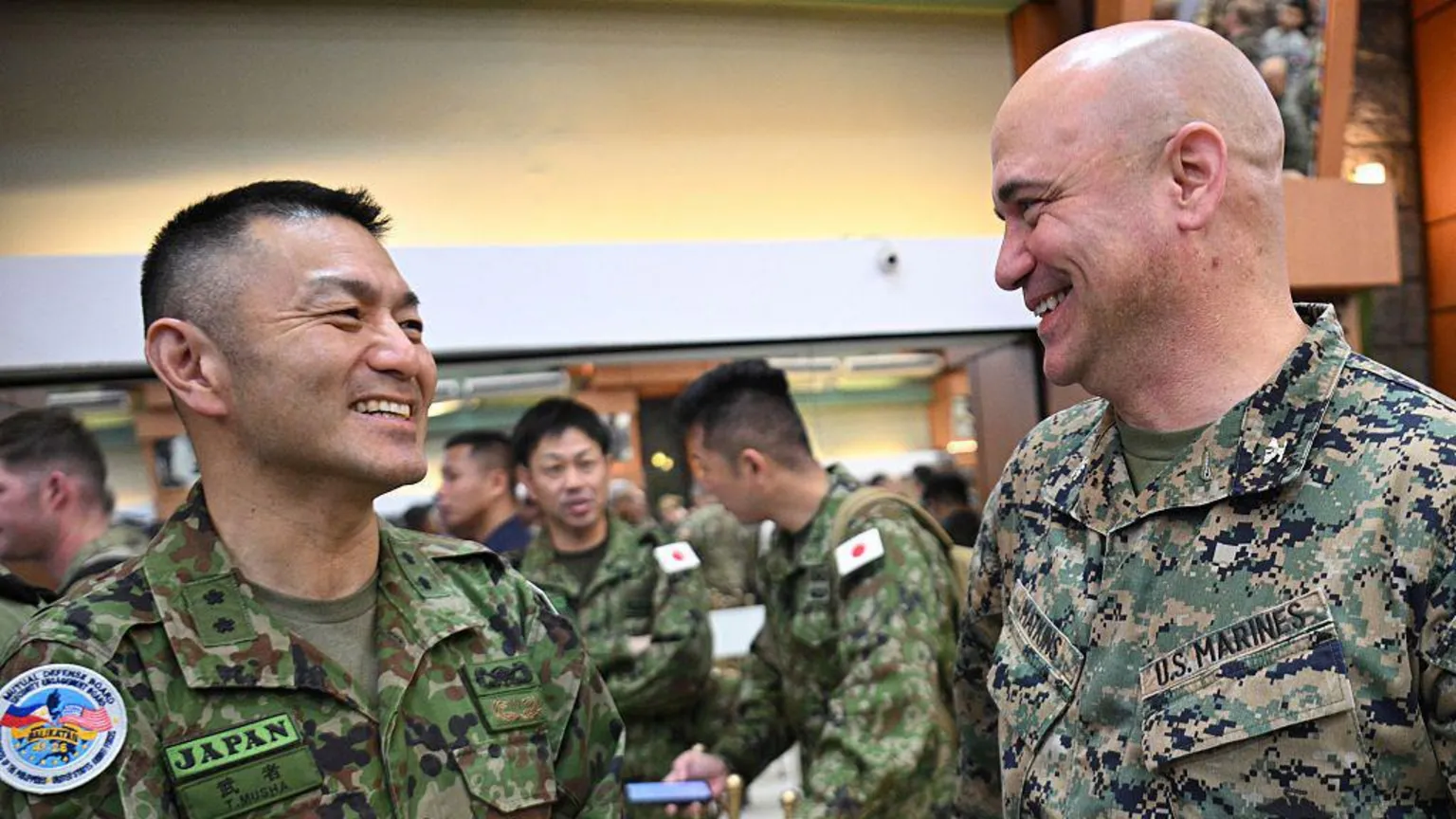
The policy shift coincides with heightened military activity in the region. Japan’s Self-Defence Forces recently participated in annual war games alongside the United States and the Philippines — notably joining as combatants for the first time, rather than as observers. The exercises were conducted in areas of the Philippines proximate to waters and islands claimed by Beijing. China opposed the drills, arguing they would deepen regional divisions.
Together, the arms export liberalisation, the constitutional debate, and Japan’s expanding combat role in multilateral exercises signal a country in the midst of a profound strategic recalibration — one that is reshaping the security architecture of the Indo-Pacific and unsettling the post-war order that has defined East Asia for eight decades.