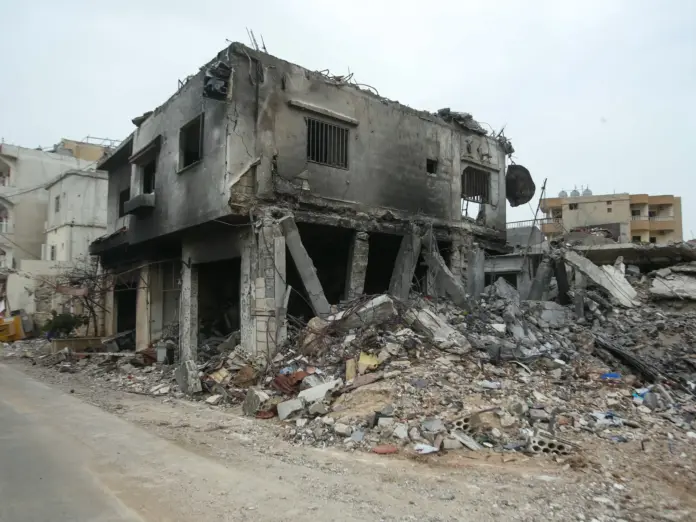
Israeli airstrikes killed at least four people across southern Lebanon, wounded several journalists, and drew sharp condemnation from Beirut on Wednesday, as a tenuous ceasefire showed signs of unravelling amid fresh hostilities between Israel and Hezbollah.
A strike on a vehicle in the village of at-Tiri killed two occupants. Shortly afterward, journalists who had travelled to the scene to document the aftermath of an earlier drone strike were themselves caught in a second Israeli attack. Zeinab Faraj, a journalist with the Lebanese outlet Al Akhbar, was rushed to a local hospital in a critical condition requiring emergency surgery. Her colleague Amal Khalil remained unaccounted for in the immediate aftermath of the strike.
Lebanon’s National News Agency reported that Israeli forces then struck the main road connecting at-Tiri with the nearby town of Haddatha — a move it said was intended to prevent ambulance crews from reaching the wounded journalists. The Israeli military flatly denied both targeting journalists and obstructing rescue operations, stating instead that it had struck two vehicles that had departed from a Hezbollah military structure in the area.
Lebanon’s Information Minister Paul Morcos said the government had contacted the UN peacekeeping mission UNIFIL and the Lebanese army over what he described as Israel "besieging journalists and photographers" in at-Tiri. The incident drew immediate international attention to the risks facing media workers operating in the conflict zone.
Separately, two people were killed and several others wounded in an Israeli strike on Yahmar al-Shaqif, bringing the confirmed death toll from Wednesday’s strikes to at least four.
Hezbollah claimed responsibility for a drone attack on an Israeli artillery position in southern Lebanon, describing it as retaliation for an Israeli ceasefire violation. The Israeli military confirmed it had intercepted a hostile aircraft launched by Hezbollah toward Israeli soldiers in the south — the group’s first such attack since a November 2024 ceasefire collapsed on March 2, when Israel killed Iranian Supreme Leader Ali Khamenei.
The renewed violence comes as Lebanon and Israel face a critical diplomatic deadline. Lebanese President Joseph Aoun said Beirut would seek an extension of a US-mediated, 10-day ceasefire set to expire on Sunday. Talks between Lebanese and Israeli ambassadors were also scheduled to take place in Washington, signalling continued, if fragile, diplomatic engagement.
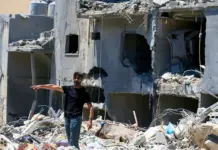
The conflict has exacted a devastating toll. More than 2,400 people have been killed in Lebanon since Israel launched its offensive and subsequent ground invasion of the south. Israeli forces continue to hold a belt of territory along the border, with no withdrawal timeline publicly announced.
The crisis deepened further with the death of a French soldier serving with UNIFIL. Chief Corporal Anicet Girardin, severely wounded on April 18 in an attack on UN peacekeepers, died after being evacuated to France for treatment. French President Emmanuel Macron confirmed the death and attributed responsibility to Hezbollah, calling the attack on UN forces an unacceptable escalation. UNIFIL’s own initial assessment indicated the fire came from non-state actors, with Hezbollah identified as the likely source. Hezbollah denied any involvement in the attack on the peacekeepers.
The sequence of events — strikes on civilians, the targeting of journalists, the death of a UN peacekeeper, and Hezbollah’s resumption of drone attacks — underscores how rapidly the situation in southern Lebanon has deteriorated since the ceasefire’s collapse. With Washington-brokered talks underway and Beirut pressing for more time, the coming days will test whether diplomacy can contain a conflict that has already claimed thousands of lives and drawn in international forces.