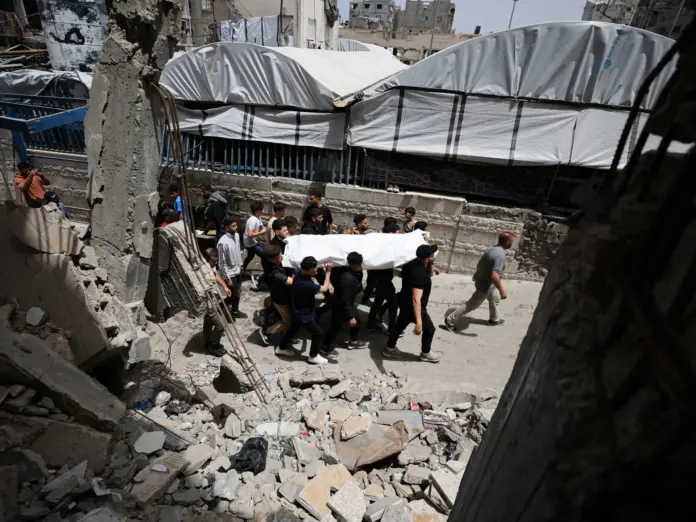
Gaza Charity Workers Strike — Israeli military strikes killed at least five Palestinians across the Gaza Strip, including three charity workers struck at a community kitchen in the central city of Deir el-Balah, as the cumulative human cost of the conflict continues to escalate despite a ceasefire that took effect earlier this year.
The attack on the community kitchen, which occurred on Sunday, drew immediate condemnation from Hamas, which described it as "a deliberate war crime and a renewed scene of the ongoing genocide against our people in the Gaza Strip." The three victims were aid volunteers serving civilian populations in one of the territory’s most densely populated areas. Additional Palestinian fatalities were recorded in Khan Younis in the south and Beit Lahiya in the north, underscoring the geographic breadth of the strikes.
The targeting of humanitarian workers at a food distribution site has intensified concerns about the safety of civilian infrastructure across the territory. Reporting from Gaza City, journalist Hind Khoudary noted that the strike reflects a broader pattern of attacks on organisations providing essential services to Gaza’s civilian population — a characterisation that Israeli authorities have not publicly addressed.
Recommended Reading
Since the ceasefire began in October of the previous year, Israeli military operations have killed at least 871 Palestinians, a figure that challenges the notion of a sustained halt to hostilities. Gaza’s Health Ministry places the total death toll from Israeli military operations since October 7, 2023 at no fewer than 72,760 Palestinians.
On the same day as the kitchen strike, the Israeli army announced that its forces had killed an individual within the so-called "yellow line" — a buffer zone demarcating Israeli-occupied territory, which now encompasses approximately 60 percent of Gaza’s total land area. The military identified the individual as Bahaa Baroud, claiming he was a Hamas commander who was armed and posed an imminent threat to soldiers. No evidence was provided to substantiate the claim, and Hamas offered no immediate confirmation of Baroud’s death or his alleged role.
The buffer zone designation has effectively divided the territory, restricting Palestinian movement and access to large swaths of land that were previously inhabited or cultivated. Critics argue the expanding Israeli military footprint, combined with continued strikes on civilian infrastructure, is systematically dismantling Gaza’s capacity to sustain its population.
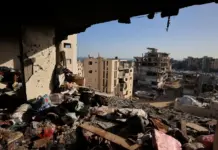
The attack on the Deir el-Balah kitchen is the latest in a series of strikes that have struck medical facilities, shelters, and aid distribution points throughout the conflict. Humanitarian organisations operating in Gaza have repeatedly warned that the destruction of civilian support networks is compounding an already catastrophic food and medical crisis for the territory’s population of more than two million people.
Gaza Charity Workers Strike: Regional Implications
Israel has consistently maintained that its military operations target Hamas combatants and infrastructure, and that civilian casualties result from Hamas’s use of populated areas for military purposes — a claim Hamas denies. The international community remains deeply divided over the conduct of the campaign, with some governments calling for accountability and others continuing to supply military support to Israel.
The killing of aid workers in Deir el-Balah adds to a growing list of incidents in which humanitarian personnel have been struck during the conflict, raising urgent questions about the protection of civilians and the obligations of warring parties under international humanitarian law. With no formal mechanism currently in place to investigate individual strikes, accountability for such incidents remains elusive.