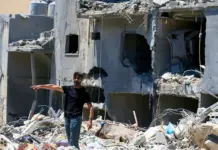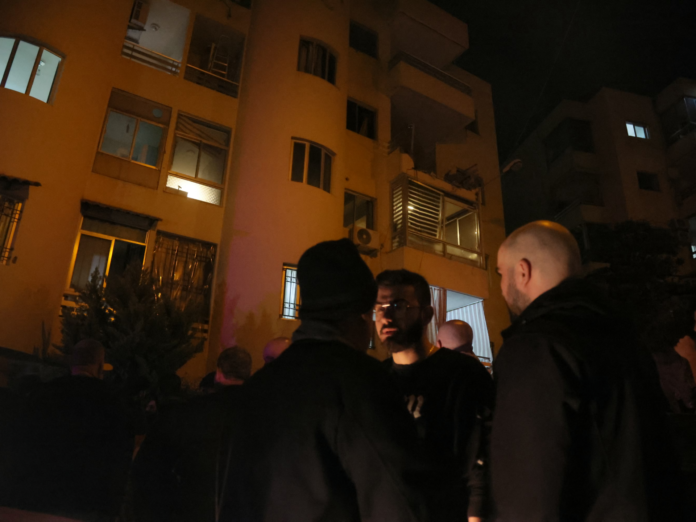
Israeli warplanes struck Ain Saadeh, a predominantly Christian suburb east of Beirut, on Sunday evening, killing three civilians and deepening fears that no part of Lebanon remains beyond the reach of Israeli military operations.
Two US-made GBU-39 small-diameter bombs hit a residential building in the area. The Lebanese Ministry of Health identified the dead as Pierre Moawad, his wife Flavia, and Roula Mattar. Moawad was a member of the Lebanese Forces, an explicitly anti-Hezbollah Christian political party — a detail that underscored the indiscriminate reach of the strikes and complicated Israeli assertions that its campaign targets only Hezbollah operatives and infrastructure.
The attack on Ain Saadeh was one of at least eight Israeli strikes on the Beirut area on Sunday alone. Separately, Israeli forces bombed the Rafik Hariri University Hospital in the Jnah neighbourhood, killing four people — including two Sudanese nationals — and wounding 39 others. The hospital strike landed metres from the site of a previous Israeli raid carried out in 2024.
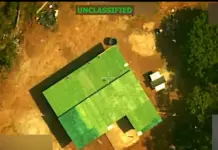
In southern Lebanon, the Israeli military released footage documenting the systematic demolition of structures in the villages of Naqoura and Taybeh, consistent with Israeli officials’ stated intention to expand a buffer zone and maintain a long-term military presence in the country’s south.
The cumulative toll of Israel’s campaign in Lebanon has reached approximately 1,500 dead, among them at least 130 children, with more than 1.2 million people driven from their homes. The victims have been drawn overwhelmingly from the Shia Muslim community, but strikes have increasingly extended into Christian areas that many residents had considered relatively safe.
The violence follows a dramatic collapse of a ceasefire that had been in place since November 27, 2024. The United Nations recorded more than 10,000 Israeli violations of that agreement before the truce effectively disintegrated. On March 2, Israel sharply escalated its operations after Hezbollah launched retaliatory strikes, which the group said were a response to the assassination of Iranian Supreme Leader Ayatollah Ali Khamenei two days earlier. It was the first significant Hezbollah military action in more than a year.
The political reverberations inside Lebanon are significant. Elias Hankash, a member of parliament from the Kataeb Party — another predominantly Christian faction — condemned the Ain Saadeh strike. The attack also triggered a social rupture in the neighbourhood itself: displaced families who had sought shelter in Ain Saadeh were expelled by local residents in the aftermath, reflecting the mounting communal strain produced by mass displacement.
Michael Young, a Lebanon expert at the Carnegie Middle East Center, has noted the widening scope of Israeli operations as a defining feature of the current phase of the conflict. The expansion into Christian areas strips away any remaining geographic logic to the campaign as a purely counter-Hezbollah operation.
Human Rights Watch has accused Israel of conducting "apparently deliberate or indiscriminate attacks" on civilians in Lebanon. Israel maintains that its forces target only Hezbollah personnel and infrastructure and that it takes all possible measures to minimise civilian harm. The strike on a hospital and the deaths of three members of an anti-Hezbollah household in a Christian suburb have made that position increasingly difficult to sustain publicly.
Israel has made no secret of its broader strategic ambitions in Lebanon. Senior officials have stated openly that the military intends to expand its buffer zone and establish a prolonged occupation of southern Lebanese territory — objectives that suggest the current campaign is not approaching a conclusion but rather entering a new and more expansive phase.