ASHDOD, Israel — Allegations of rape, torture, and systematic brutality are mounting against Israeli security forces following the interception of the Global Sumud Flotilla in international waters, with prosecutors in Italy opening criminal investigations and injured activists arriving in Turkey and across Europe bearing fractures, taser wounds, and accounts of prolonged degradation.
Gaza Flotilla Interception — Israeli forces seized approximately 430 people from 50 vessels on Tuesday as the flotilla attempted to deliver humanitarian aid to the Gaza Strip. Flotilla organisers have documented at least 15 cases of sexual assault or rape among freed activists — allegations that have triggered formal legal proceedings in Rome, where prosecutors are examining potential charges of kidnapping, torture, and sexual violence.
The scale of the alleged abuse emerged gradually as deported activists reached Turkey and their home countries. Luca Poggi, an Italian economist who was aboard one of the vessels, described being stripped, thrown to the ground, and kicked by Israeli forces. He said many detainees were tasered and that access to legal counsel was denied. Italian prosecutors are now investigating possible crimes including kidnapping and sexual assault.
Recommended Reading
Activist Ilaria Mancosu recounted how flotilla members were transferred to two prison ships after their vessels were seized. On one of those ships, detainees were locked inside a container and beaten by five soldiers. Injuries documented among the group include fractured ribs, broken arms, and eye and ear damage consistent with taser use. For two days aboard the prison ships, detainees had no access to running water and were given no blankets.
On land, conditions were no less severe. Detainees were forced to kneel for several hours and were kicked if they moved or spoke. National Security Minister Itamar Ben-Gvir released a video on Wednesday appearing to celebrate the detentions — footage showed activists cable-tied and kneeling at a makeshift holding facility in Ashdod while Israel’s national anthem played in the background. The video drew immediate condemnation from human rights observers.
Israel’s prison service denied all allegations of abuse, offering no further elaboration on the specific claims made by activists from multiple countries.
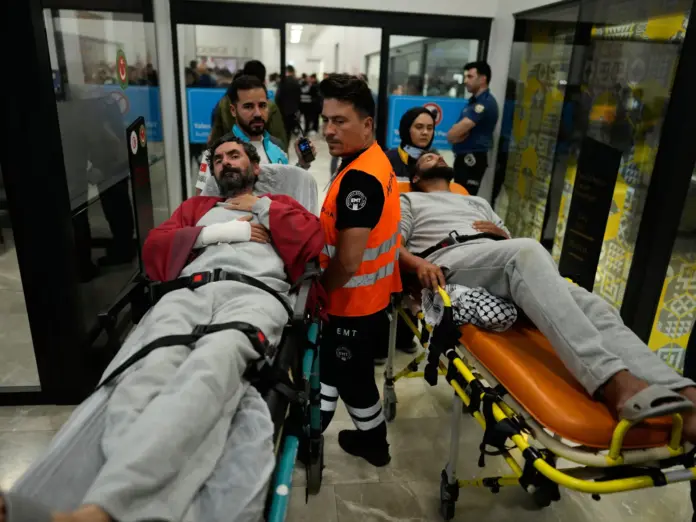
The diplomatic fallout has been swift. German consular officials met their nationals upon arrival in Istanbul, Turkey on Thursday, after Berlin confirmed that some of its citizens aboard the flotilla had sustained injuries. In France, activist Sabrina Charik reported that five French participants had been hospitalised in Turkey, several with broken ribs or fractured vertebrae. Four Spanish flotilla members also received medical treatment for injuries, with Spanish Foreign Minister Jose Manuel Albares confirming that 44 Spanish nationals were expected to return home by Friday.
Several activists across multiple nationalities were hospitalised after being deported from Israel, underscoring the breadth of the alleged mistreatment.
Gaza Flotilla Interception: Regional Implications
The incident is the most serious confrontation involving a Gaza-bound flotilla since 2010, when Israeli commandos stormed the Turkish vessel Mavi Marmara, killing 10 activists and wounding dozens more. That raid triggered a prolonged diplomatic crisis between Israel and Turkey. Israeli forces have intercepted nearly every flotilla attempting to reach Gaza in international waters since that incident.
The flotilla movement itself dates to 2006, emerging during Israel’s war on Lebanon as civil society groups sought to challenge what they described as an illegal blockade. Israel imposed its blockade on Gaza in 2007, citing security concerns following the takeover of the territory by Hamas. The blockade has been widely condemned by international humanitarian organisations, which argue it has created chronic shortages of food, medicine, and construction materials for Gaza’s civilian population.
The current interception comes amid an intensified Israeli military campaign in Gaza that has drawn sustained international criticism. The combination of the flotilla seizure, the Ben-Gvir video, and the volume of abuse allegations is likely to intensify pressure on European governments to respond more forcefully. Rome’s decision to open a formal criminal investigation represents a significant escalation, as it could theoretically result in arrest warrants being issued against Israeli officials under international legal frameworks.
Flotilla organisers have called for an independent international inquiry into the conduct of Israeli forces during and after the interception, arguing that the documented injuries and the number of sexual assault allegations constitute evidence of organised, not incidental, violence.