JERUSALEM — Israel’s most senior military commander delivered an extraordinary warning to the country’s cabinet on Friday, declaring that the Israel Defense Forces are approaching a breaking point after more than two years of continuous multi-front warfare.
Lieutenant General Eyal Zamir, the IDF Chief of Staff, told ministers he was raising ten red flags about the military’s condition, urging immediate legislative action on conscription law, reserve duty law, and the extension of mandatory service. Without these measures, Zamir warned, the IDF will not be ready for its routine missions and the reserve system will not survive the strain being placed upon it.
Prime Minister Benjamin Netanyahu responded by pledging that plans would be drawn up to extend mandatory military service, though critics noted the government has repeatedly deferred action on the politically sensitive issue of Haredi conscription.
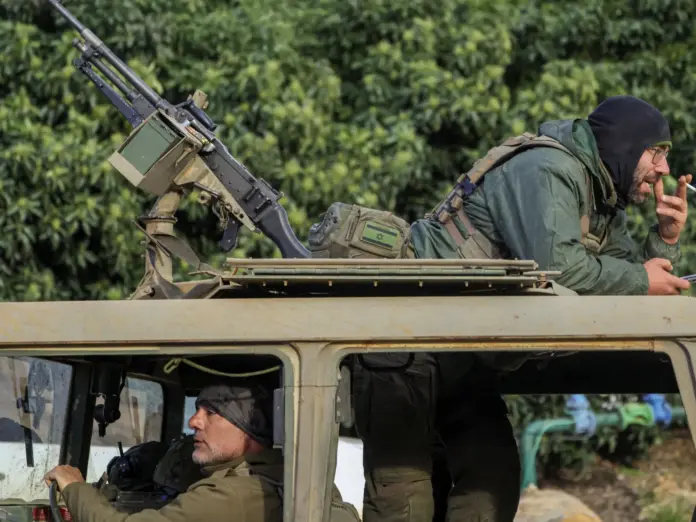
The warning comes as Israel prosecutes simultaneous military operations across an unprecedented number of fronts. When war erupted on October 7, 2023, Israel’s standing army numbered 100,000 personnel. The government immediately mobilised 300,000 reservists. By March 1 of this year, with 50,000 reservists already on active duty, Israel announced the call-up of a further 100,000 reserve soldiers to bolster positions along the Lebanon border, in occupied Syrian territory, across the Gaza Strip, and throughout the occupied West Bank. The Home Front Command separately mobilised 20,000 reservists, primarily for search and rescue operations. That same day, US-Israeli strikes on Iran began, compounding the operational demands on an already stretched force.
Israel resumed its invasion of southern Lebanon on March 3 in response to rocket fire from Hezbollah, adding yet another active theatre to an already exhausted military. Central Command chief Major General Avi Bluth told ministers that government policies in the occupied West Bank were placing mounting pressure on military manpower, with the approval of multiple illegal settlement construction projects in the Jordan Valley and elsewhere requiring additional troop deployments. More than 20 countries have characterised Israel’s actions in the West Bank as effective annexation of occupied Palestinian territory.
Military sources have warned that even in peacetime, the number of soldiers required to maintain border coverage across Gaza, Lebanon, Syria, and the West Bank would exceed current capacity. Without additional personnel, commanders say there will be significant gaps in border coverage — a vulnerability that carries grave strategic consequences.
The manpower crisis has been building for months. As early as June 2024, shortfalls in troop numbers, widespread exhaustion, and supply deficiencies were documented within the military. By December of that year, at least one reservist publicly stated he had refused to report for duty, citing severe economic hardship among his unit’s members — a sign of the social fractures opening beneath the surface of the war effort.
The political fallout from Zamir’s warning was immediate and sharp. Opposition leader Yair Lapid demanded the government halt budgets to Haredi draft evaders and conscript members of the ultra-Orthodox Haredim community without delay. The Haredim have historically been exempt from military service, an arrangement that has generated growing resentment among secular and traditional Israelis bearing the full burden of reserve duty. Members of the Yesh Atid Party sent a letter to MK Boaz Bismuth calling for an emergency session on expanding army ranks, characterising the stalling of Haredi conscription as a security danger and a matter of saving life.
Yisrael Beytenu leader Avigdor Liberman called for universal conscription and accused the government of ignoring warnings before disasters, drawing a direct parallel to the failures that preceded the October 7 Operation Al-Aqsa Flood. Blue and White Party leader Benny Gantz accused the government of promoting mass draft evasion, warning that it would not be able to escape responsibility when the next catastrophe arrives. Former prime minister Naftali Bennett criticised the government’s dependence on coalition partners Shas Party leader Arye Deri and United Torah Judaism leader Yitzhak Goldknopf, whose political support has shielded Haredi exemptions from reform.
Former IDF chief of staff Gadi Eisenkot called mandatory service for all Israelis a moral imperative and the need of the hour, arguing it would return Israel to the right path and safeguard its long-term security. Reservist Party leader Yoaz Hendel was blunter still, stating simply that victory requires soldiers, and accusing the government of repeatedly wearing reservists down to their limit by treating them as an inexhaustible resource.
The crisis unfolds against a backdrop of international condemnation. Rights groups and the United Nations have determined that Israel’s actions in Gaza constitute genocide, and more than 20 nations have labelled West Bank settlement expansion as effective annexation. Tens of thousands of civilians have been killed across the region in the course of Israel’s military operations.
Whether Netanyahu’s government — dependent on ultra-Orthodox coalition partners for its parliamentary majority — can deliver the legislative reforms its own military chief says are essential to the IDF’s survival remains the central and unresolved question facing the Israeli state.