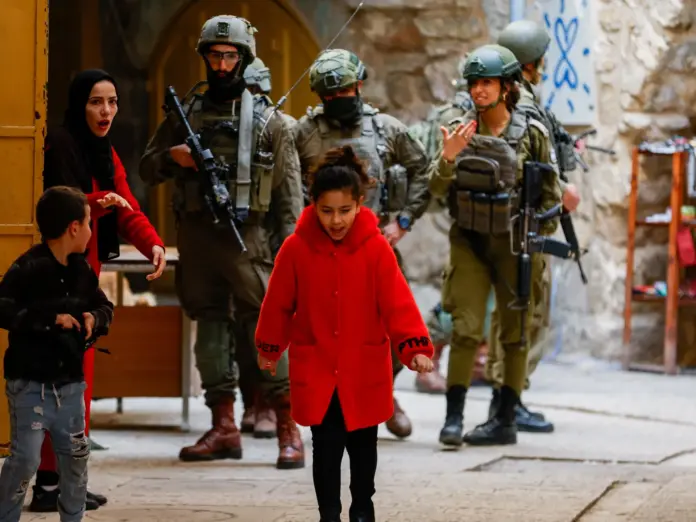
West Bank Killing Policy — A senior Israeli military commander has publicly acknowledged that the army is ‘killing like we haven’t killed since 1967’ in the occupied West Bank, while also admitting to a two-tier shooting policy that treats Palestinian and Israeli settler stone-throwers in fundamentally different ways.
Major-General Avi Bluth, the Israeli officer responsible for the West Bank, confirmed that soldiers are authorised to open fire on Palestinians who throw stones, but are prohibited from doing the same when Israeli settlers engage in identical behaviour. Bluth attributed the disparity to what he described as the ‘profound societal consequences’ that would follow if soldiers shot Jewish civilians. He acknowledged that 42 Palestinian stone-throwers were killed by Israeli forces in 2025 alone.
The remarks, published in the liberal Israeli daily Haaretz, have drawn sharp condemnation from Palestinian lawmakers and human rights advocates. Aida Touma-Sliman, a member of parliament representing the left-wing Hadash party, visited the village of Duma, near Nablus, earlier this week — a community that remains scarred by a 2015 settler arson attack that burned 18-month-old Ali Dawabsheh alive, killing three members of his family.
Recommended Reading
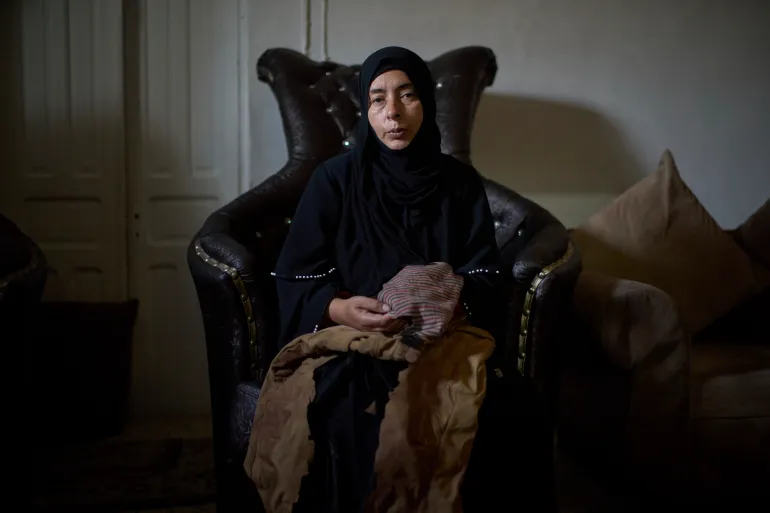
The timing of Bluth’s comments is significant. Since February 28 — the date of the first joint Israeli-American strikes on Iran — settler violence in the West Bank has intensified dramatically. The United Nations Office for the Coordination of Humanitarian Affairs recorded 12 Palestinian deaths in settler attacks during that period, a figure that exceeds the total of 10 settler-related Palestinian fatalities documented across the entirety of 2025 up to that point. Hundreds more Palestinians have been wounded or forcibly displaced from their homes.
The Israeli military itself killed at least 226 Palestinians during the same period, underscoring the scale of the broader crackdown. Critics argue that the combination of military lethality and settler impunity is reshaping the West Bank’s demographic and political landscape at an accelerating pace.
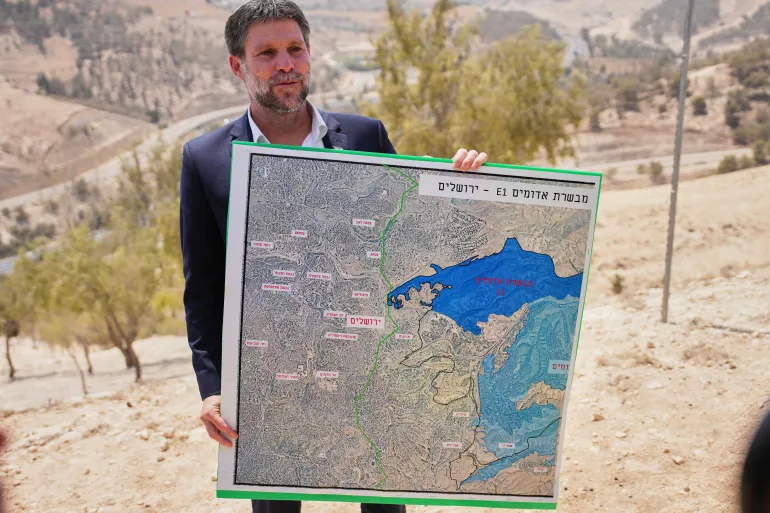
The situation on the ground is compounded by a series of sweeping legislative changes in Jerusalem. In February, Israel introduced legislation that multiple countries condemned as the de facto annexation of the occupied West Bank. The following month, the Israeli parliament passed a law permitting the death penalty for Palestinians in the territory — a measure celebrated publicly by far-right government minister Itamar Ben-Gvir. Finance Minister Bezalel Smotrich, whose portfolio includes significant administrative authority over West Bank settlements, has been a driving force behind the annexation push.
The structural bias Bluth described is not new, but his candour in articulating it publicly is unusual for a serving senior officer. Breaking the Silence, an organisation composed of Israeli military veterans, has previously documented how soldiers deployed in Area C — the portion of the West Bank under full Israeli civil and security administration — were often unaware that their mandate included any obligation to protect Palestinians from settler violence. The organisation’s testimonies paint a picture of a military culture in which settler protection is an institutional priority and Palestinian protection is, at best, an afterthought.
West Bank Killing Policy: Regional Implications
The legal and operational framework governing the West Bank has long applied different standards to Israeli citizens and Palestinian residents. Israeli settlers are subject to Israeli civil law, while Palestinians fall under a military legal system — a distinction that human rights organisations have long argued creates a system of institutionalised inequality. Bluth’s admission that this inequality extends to the rules of engagement for lethal force brings that disparity into unusually sharp relief.
With Israeli elections scheduled later this year, the political dynamics driving the West Bank’s escalation show little sign of easing. Ben-Gvir and Smotrich, whose parties draw heavily from the settler movement, have made maximalist policies toward the West Bank central to their political identities. For Palestinian communities caught between an emboldened settler population and a military operating under the doctrine Bluth described, the consequences are measured in lives lost and villages emptied.
The village of Duma, where Touma-Sliman paid her visit, stands as a stark symbol of that reality. A decade after Ali Dawabsheh was burned alive in his crib, the community near Nablus continues to live under the shadow of violence — and under a military policy that, by its own commander’s admission, was never designed to protect them equally.