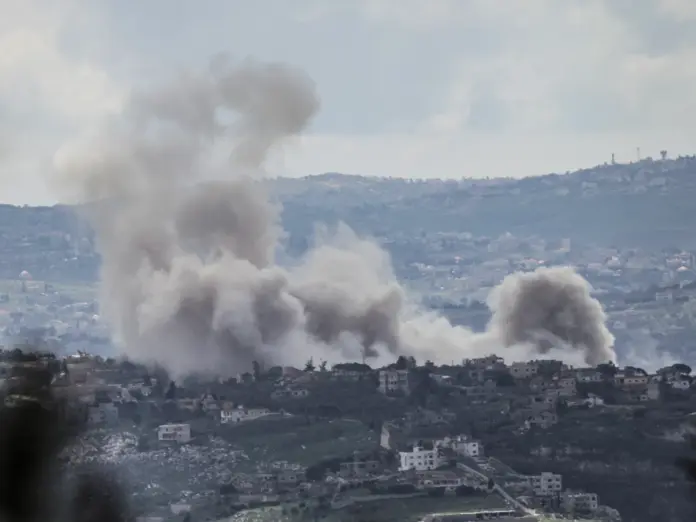
BEIRUT — Israel announced Friday it intends to destroy two of the western Bekaa Valley’s most vital river crossings, escalating a military campaign that has already severed at least six bridges over the Litani River and pushed Lebanon’s humanitarian situation toward collapse.
Israeli army spokesman Avichay Adraee declared that the military would bomb the Sohmor and Mashghara bridges, accusing Hezbollah of exploiting the crossings for military purposes. Both structures serve as primary conduits for goods, commerce, and civilian movement between the western Bekaa and the broader Lebanese interior. Their destruction would effectively cut off the region from the rest of the country.
The announcement drew immediate alarm from humanitarian observers and rights groups, who have warned that Israel appears to be pursuing a deliberate strategy of isolating southern Lebanon through the systematic targeting of civilian infrastructure. The bombing of bridges, roads, and utilities across the country’s south has been widely condemned by international bodies.
Friday’s violence extended well beyond the river crossings. Israeli strikes killed at least four people across Lebanon during the day, including two worshippers struck down as they left a mosque in the western Bekaa town of Sahmar. The attack on the mosque drew particular condemnation given the circumstances of the victims.
Water infrastructure also came under fire. The South Lebanon Water Establishment reported that Israeli strikes caused significant damage to water facilities in Ibl al-Saqi and al-Maysat, with solar power systems at multiple water stations also knocked out. The damage threatens access to clean water for communities already under severe strain.
The week brought further international alarm when an explosion struck a UN Interim Force in Lebanon (UNIFIL) position near the village of al-Adaissah, close to the Israel-Lebanon border, killing three peacekeepers and wounding three others — two of them seriously. UNIFIL stated it had not yet determined the origin of the blast, leaving open the question of responsibility.
Since the intensified Israeli aerial and ground offensive began on March 2, the toll on Lebanon has been staggering. Lebanon’s Ministry of Public Health reports at least 1,345 people killed and more than 4,000 wounded nationwide. Over 1.2 million people have been forced from their homes, creating one of the region’s most acute displacement crises in recent memory.
The offensive was launched in response to Hezbollah missile fire into northern Israel, itself linked to the broader conflict stemming from the United States-Israeli war on Iran. Israeli leaders have stated their intention to demolish scores of residential homes in southern Lebanon as part of the campaign, a declaration that has intensified fears of long-term demographic and structural devastation in the region.
With the Sohmor and Mashghara bridges now in the crosshairs, the western Bekaa faces the prospect of near-total isolation — a development that aid organisations warn would compound an already dire situation for hundreds of thousands of civilians dependent on those routes for food, medicine, and basic supplies.