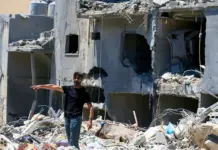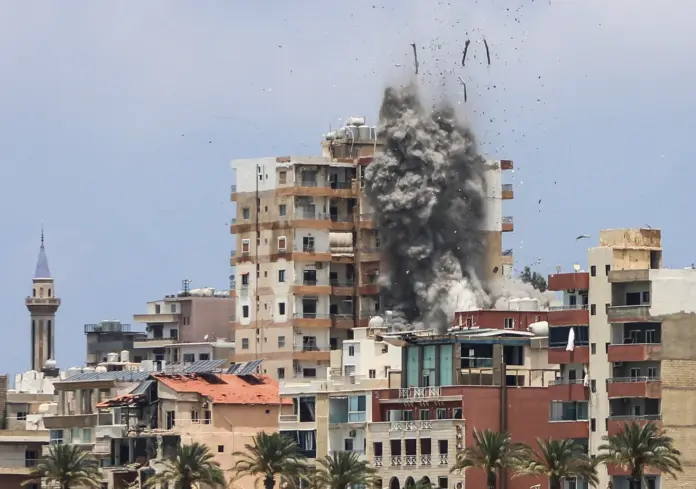
Israel Netanyahu Iran Deal — Israeli forces killed at least eight people in the southern Lebanese city of Tyre on Tuesday and ordered the total evacuation of its population, including residents of the historic Christian quarter, as a fragile pause in direct hostilities between Israel and Iran threatened to unravel under the weight of competing military and diplomatic pressures.
The displacement order came a day after five people died in Israeli strikes on the same city. Four paramedics were among those wounded in the Tyre attacks. Across Lebanon on Monday, at least nine additional people were killed in Israeli operations elsewhere in the country. Since April 16 alone, Lebanese Prime Minister Nawaf Salam said Israel had carried out nearly 3,500 air attacks, along with 407 demolitions and six so-called razing operations. The Lebanese Ministry of Health places the total death toll from the Israeli offensive since March 2 at 3,666, with 11,321 people injured.
Despite a halt in direct exchanges between Israel and Iran, Defence Minister Israel Katz made clear that Israeli forces would press on against Hezbollah, including strikes on Beirut’s southern suburbs in response to missile fire on northern Israel. Hezbollah confirmed it had conducted operations against Israeli forces, including engagements near Beaufort Castle.
Recommended Reading
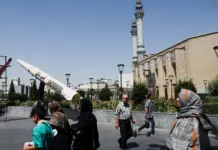
The broader regional crisis deepened over the weekend when Israel struck Beirut’s southern suburbs on June 7, prompting Iran to launch a volley of missiles toward northern Israel — the first such attack since a Pakistan-brokered ceasefire reached two months earlier. Israel responded early Monday with strikes on Iranian air defence systems and a petrochemical plant. Iran, in turn, hit a petrochemical facility in Haifa and targeted two Israeli airbases before both sides halted direct attacks on one another.
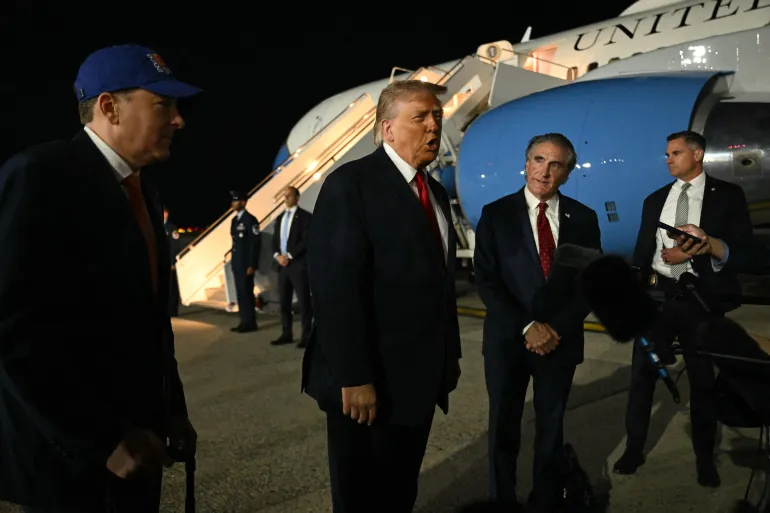
The exchange placed Donald Trump in an increasingly difficult position. The US president had called Benjamin Netanyahu to urge restraint, only to watch Israel launch strikes on Iran regardless. Trump’s frustration spilled into the open with a blunt warning to the Israeli prime minister: ‘You better be careful or you will be on your own very soon.’ He also accused Netanyahu of undermining American diplomacy and, in a separate phone call, reportedly described the Israeli leader in strikingly undiplomatic terms.
Yet Trump simultaneously described Netanyahu as the ‘greatest friend Israel has ever had in the White House’ in public remarks — a contradiction that underscores the complexity of a relationship now strained by diverging strategic calculations. Netanyahu, for his part, delivered a televised statement asserting Israel’s ‘full right to self-defence.’
Trump said Tuesday that a deal with Iran was in its ‘final throes’ and could be signed within two or three days. He added that the Strait of Hormuz — through which roughly one-fifth of the world’s oil and liquefied natural gas supplies pass during peacetime — would reopen ‘immediately upon signing.’ Iran’s effective closure of the strait has rattled global energy markets and sent oil prices surging.
![This combination of pictures created on June 3, 2026 shows Israeli Prime Minister Benjamin Netanyahu in Jerusalem on March 19, 2026 and US President Donald Trump in Morristown, New Jersey, on May 22, 2026 [AFP]](https://world-tension.s3.us-east-2.amazonaws.com/articles/1384/6b5bda87d19a4e848a83a55901e1d41d.webp)
Indirect negotiations are proceeding through Pakistan as intermediary, without Israeli participation. Iranian President Masoud Pezeshkian posted that Tehran remained ‘at the negotiating table,’ and Iran’s UN ambassador Amir Saeid Iravani confirmed that Washington and Tehran are ‘presenting and exchanging views’ toward an agreement. Any emerging framework is reported to leave Iran’s government intact while permitting a restricted but continuing nuclear programme — terms that Israeli leadership has publicly opposed.
Israel Netanyahu Iran Deal: Regional Implications
Tehran has attached conditions of its own. Iran’s Foreign Ministry spokesperson Esmaeil Baghaei said Washington bore ‘direct responsibility’ for the escalation, and Iranian officials have stated that any deal must include an end to Israeli military operations in Lebanon. Iran warned that continued aggression would be met with ‘more severe and crushing measures.’
The diplomatic tangle is further complicated by the scale of US military support for Israel. Washington provides at least $3.8 billion annually under a ten-year military assistance agreement running from 2019 to 2028, comprising $3.3 billion through the Foreign Military Financing programme and $500 million for joint missile-defence initiatives. An independent investigation found that 42 percent of weapons entering Israel originate from the United States.
Domestically, Netanyahu faces mounting legal and political pressures. His corruption trial has entered its sixth year, and an International Criminal Court arrest warrant hangs over him for Israel’s conduct in Gaza. Israeli elections are scheduled before the end of October. Polling shows that roughly 93 percent of Israelis support the strikes on Iran — a figure that may constrain Netanyahu’s room to accept any diplomatic outcome that appears to reward Tehran.
Israel’s leadership has framed the broader campaign as an opportunity to weaken or even topple Iran’s government. Whether that ambition survives the diplomatic momentum gathering in Washington and Islamabad remains the defining question of a conflict that has already reshaped the region’s strategic landscape.