A fragile but significant ceasefire between Israel and Lebanon took hold at midnight local time on 16 April, halting six weeks of intense cross-border fighting that left a devastating toll across the Lebanese civilian population. The truce, brokered by the United States, came into effect at 17:00 EST (21:00 GMT) and was announced by President Donald Trump on his Truth Social platform, where he also urged Hezbollah to honour the agreement.
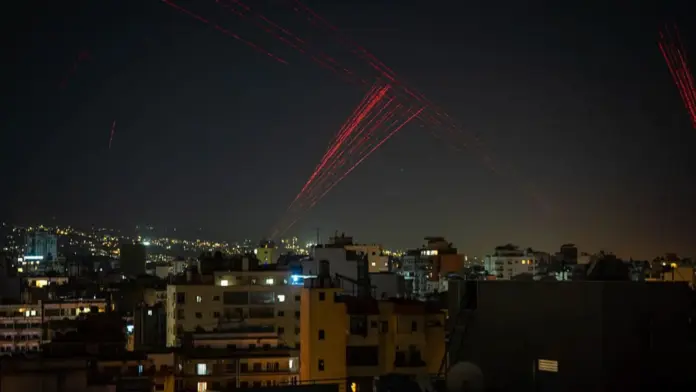
Scenes of jubilation erupted across Beirut as the ceasefire began, with barrages of celebratory gunfire echoing through the city’s streets. Displaced families, ignoring official warnings, immediately began moving toward southern Lebanon and the capital’s southern suburbs — areas that have borne the brunt of Israeli strikes since the conflict resumed in early March.
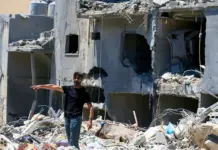
The human cost of the six-week campaign has been severe. Lebanon’s health ministry recorded more than 2,100 deaths and over 7,000 wounded since Israeli forces launched strikes on 2 March in response to Hezbollah attacks. Among the dead are at least 260 women and 172 children. The conflict has also devastated Lebanon’s healthcare infrastructure: 91 health professionals were killed and 208 others wounded, while more than 120 Israeli attacks were recorded against ambulances and medical facilities. Independent analysis identified more than 1,400 buildings destroyed across the country. On the Israeli side, Hezbollah attacks killed two civilians and 13 soldiers died in combat operations in Lebanon.
![The Lebanese capital is seen after US President Donald Trump announced a ceasefire between Israel and Lebanon that would commence at midnight local time on April 16, 2026, in Beirut, Lebanon [Adri Salido/Getty Image]](https://world-tension.s3.us-east-2.amazonaws.com/articles/445/18b7051bf01c4a76a389ad75ad1acfd3.webp)
The ceasefire terms carry significant conditions for both parties. Lebanon is required to take meaningful steps to prevent Hezbollah and other armed non-state groups from launching attacks against Israeli targets. Israel, for its part, retains the explicit right to act in self-defence against planned, imminent, or ongoing threats at any time. The agreement is set for 10 days, with the possibility of extension by mutual consent.
Israeli Prime Minister Benjamin Netanyahu described the ceasefire as an opportunity to forge a historic peace agreement with Lebanon, though he made clear that Israeli troops would not be withdrawing from a 10-kilometre-deep security zone they currently hold inside Lebanese territory. Netanyahu convened a security cabinet meeting with just five minutes’ notice before the announcement, and ministers were not given a vote on the decision, according to information that leaked from the session.
Lebanese Prime Minister Nawaf Salam framed the ceasefire as a central demand his government had pursued from the conflict’s outset, expressing hope that the agreement would allow hundreds of thousands of displaced people to return to their homes. Lebanese President Joseph Aoun and Salam are among the leaders Trump has invited to the White House for what the US president described as the first meaningful direct talks between the two countries since 1983. Netanyahu has also received an invitation.
![A crowd celebrates in the coastal city of Sidon [Aziz Taher/Reuters]](https://world-tension.s3.us-east-2.amazonaws.com/articles/445/6fe09a9ab550484980ddd3dcd3437942.webp)
The path to Thursday’s agreement included rare direct negotiations between Israeli and Lebanese officials in Washington earlier in the week — a notable diplomatic development given the absence of formal relations between the two states. UN Secretary-General António Guterres commended the United States for its role in facilitating the deal. Iran’s foreign ministry, through spokesperson Esmail Baghaei, also welcomed the ceasefire announcement — a significant signal given Tehran’s deep ties to Hezbollah.
Hezbollah itself signalled a conditional willingness to participate, but attached demands including a comprehensive halt to all attacks across Lebanon and restrictions on Israeli freedom of movement. The group released a statement confirming it launched its final strike at 11:50pm local time — ten minutes before the truce came into force.
The ceasefire’s durability faces early tests. The Lebanese army reported that Israel committed violations shortly after the truce took effect, citing intermittent shelling of several villages in southern Lebanon. The Israeli military had not responded to those allegations at the time of publication.
The current conflict erupted on 2 March when Hezbollah entered the fighting in support of Iran, drawing an immediate Israeli military response. It came roughly 15 months after the conclusion of the two sides’ previous major conflict, which itself ended after 13 months of hostilities — a period marked by near-daily cross-border strikes despite a ceasefire framework. Israel re-entered southern Lebanon following renewed Hezbollah strikes in early March, and on Thursday its military destroyed the last bridge connecting the south of the country to the rest of Lebanon.
Whether the current pause holds — and whether the White House talks can translate a temporary truce into something more durable — will depend heavily on the willingness of all parties to navigate deeply entrenched grievances. For now, the guns have fallen largely silent, and for many Lebanese, that is enough to celebrate.