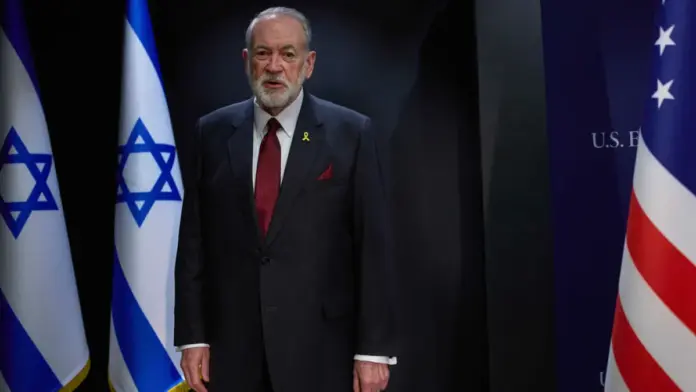
Iron Dome Uae Deployment — Israel has deployed Iron Dome anti-missile batteries and supporting personnel to the United Arab Emirates, marking the first time the advanced air defence system has been stationed outside Israeli territory. The deployment, confirmed publicly by US Ambassador to Israel Mike Huckabee during an event in Tel Aviv on Tuesday, signals a deepening security partnership between Israel and its Gulf allies as the region faces sustained Iranian military pressure.
The move comes as the UAE and other Gulf countries have endured Iranian missile and drone strikes since February 28, the same date on which the United States and Israel began military operations against Iran. Tehran has framed its strikes as targeting US assets in the Middle East, but regional governments have accused Iran of hitting civilian infrastructure, including airports, hotels and energy facilities.
Huckabee, appointed to his post by President Donald Trump, did not stop at announcing the deployment. He issued a pointed call for Gulf states to declare their allegiances, urging them to "pick a side" between Israel and Iran. The appeal underscores Washington's effort to consolidate a regional bloc anchored by the Abraham Accords — the 2020 agreements that established formal diplomatic ties between Israel and several Arab nations, with the UAE serving as the first signatory.
Recommended Reading
Despite the Iranian strikes, many Gulf states have refrained from publicly aligning with Israel or responding militarily. The UAE and Bahrain remain the only two Gulf nations with official ties to Israel under the Abraham Accords framework, and even they have maintained a degree of public distance from the ongoing conflict. Saudi Arabia's former ambassador to the United States, Prince Turki al-Faisal, addressed this restraint in a column for the Asharq Al-Awsat newspaper, offering a rationale for Riyadh's cautious posture as the region edges toward broader confrontation.
The Iron Dome system, which has been funded by billions of dollars from the US government, is designed to intercept short-range rockets and artillery shells. Its deployment to Emirati soil represents a significant expansion of the system's operational footprint and a tangible expression of the security guarantees Israel is extending to its Abraham Accords partners. Israeli personnel have accompanied the batteries to assist in their operation.
The escalating regional tensions have also drawn in Qatar, a country that does not maintain formal ties with Israel. Israel launched major air strikes on Doha, the Qatari capital, targeting Hamas leadership during ongoing Gaza ceasefire negotiations. Six people were killed in the strikes, including one Qatari officer, though senior Hamas officials survived the assault. The strikes on a country hosting active diplomatic talks further complicated the already volatile regional landscape.
Neither the UAE Ministry of Foreign Affairs nor Israel's Government Press Office responded to requests for comment on the Iron Dome deployment.
Iron Dome Uae Deployment: Regional Implications
The broader context of Huckabee's regional posture has drawn scrutiny. In February, the ambassador indicated support for the concept of Greater Israel, a position that alarmed Arab governments and Palestinian advocates alike. His latest remarks — combining a military announcement with a demand for political loyalty — reflect the Trump administration's increasingly transactional approach to Middle East alliances.
For the UAE, accepting Israeli air defence systems on its soil carries both strategic and symbolic weight. Strategically, it fills a gap exposed by Iran's willingness to strike Gulf infrastructure. Symbolically, it binds Abu Dhabi more visibly to the Israeli-American security architecture at a moment when that alignment carries real diplomatic costs across the Arab world. How other Gulf states respond to that precedent — and to Huckabee's blunt demand for allegiance — may define the region's security architecture for years to come.