Israel Secret Base Iraq — A secret Israeli military base operated in the heart of Iraq’s western desert, housing special forces and functioning as a logistical hub for Israeli air force operations — including search-and-rescue capacity for downed pilots — according to satellite imagery analysis and multiple Iraqi officials who have spoken about the installation in recent weeks.
The suspected base was situated in the Najaf desert, near the city of Karbala, roughly 100 kilometres southwest of Baghdad and close to Iraq’s border with Saudi Arabia. The remote, sparsely populated terrain of western Iraq made it well-suited for clandestine operations. Michael Knights, head of intelligence firm Horizon Engage, described the region as a near-perfect location for a covert military outpost.
Open-source analysts pinpointed the suspected installation using commercial satellite imagery. Israel’s official Kan radio reported that the base’s existence was known to Arab parties, and an unnamed senior Iraqi official stated the operation took place with American assistance and under American cover — a claim Washington flatly denies.
Recommended Reading
US officials have told journalists that Washington had knowledge of the Israeli installation but was not operationally involved. The Israeli army has offered no comment on the reports.
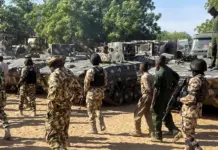
The situation escalated sharply when Iraqi forces were dispatched to investigate. Lieutenant-General Qais al-Muhammadawi, Iraq’s deputy commander of joint operations, announced on Thursday that Baghdad had received reports of unusual movement in the Najaf desert. Three regiments from the Karbala Operations Command were deployed to the area. When the investigating force arrived, it came under heavy aerial fire — one Iraqi fighter was killed and two others were wounded. Two counterterrorism regiments subsequently searched the site but found no trace of any foreign presence.
Iraq’s Karbala operations commander told Al Jazeera that a group of Israeli soldiers had been located in the Najaf desert in March but remained for no longer than 48 hours. A local shepherd also reported observing helicopters operating in the area; that shepherd was later killed when his vehicle was reportedly targeted in a strike.
Israeli forces launched air attacks from the base against Iraqi targets in early March, according to the reporting. Major-General Tomer Bar, Israel’s former air force chief, acknowledged in March that special forces had been conducting what he described as extraordinary operations during the broader conflict with Iran — remarks that have taken on new significance in light of the desert base allegations.
Baghdad moved swiftly to register its objections. In late March, Iraq submitted a formal diplomatic protest to the United States over suspected covert military activity on its territory. On Monday, Iraqi forces publicly stated that no unauthorised foreign forces were operating within their borders — a position that sits in tension with accounts from Iraqi officials themselves.
Israel Secret Base Iraq: Regional Implications
An Iraqi security official denied to a Turkish news agency that Israel had established a secret military base in the desert. Yet a lawmaker from the Badr Organisation, a powerful Shia political and paramilitary faction, told Iraqi media that a joint US-Israeli military camp exists in western Iraq.
The episode unfolds against a volatile regional backdrop. In March, the United States carried out strikes against the Popular Mobilisation Forces (PMF) — the umbrella of Iran-backed Iraqi paramilitary groups — following attacks on a US diplomatic and logistics centre at Baghdad airport. The PMF strikes and the reported Israeli base activity together signal an intensifying covert dimension to the broader Iran-Israel confrontation being waged across the Middle East.
Iran’s Foreign Affairs Ministry spokesperson Esmaeil Baghaei said Tehran does not rule out any possibility regarding what he called the Israeli regime, reflecting the depth of suspicion in the region about Israeli operations extending into Iraqi territory.
The disclosure places Iraq’s government in a deeply uncomfortable position — caught between its formal sovereignty, its ties to Iran-aligned factions that dominate its security landscape, and its relationship with Washington. Whether the Najaf desert installation was a temporary forward operating position or something more enduring remains unclear, but its reported existence underscores how far Israel has been willing to project covert military power beyond its immediate neighbourhood in pursuit of strategic objectives against Iran and its regional proxies.