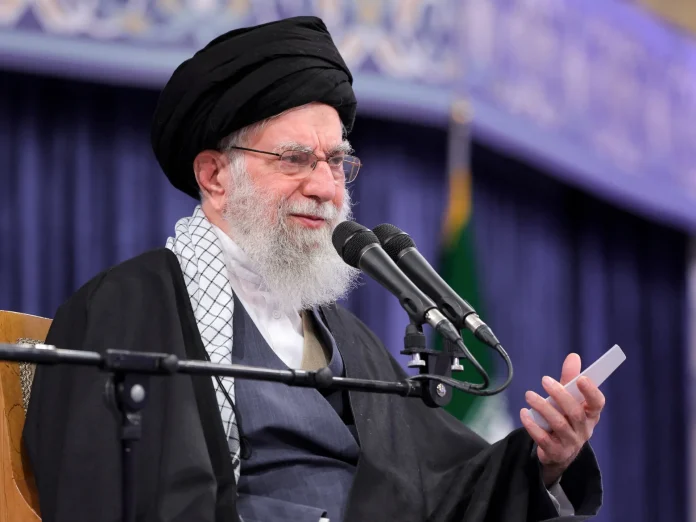
TEHRAN — Ayatollah Ali Khamenei, the 86-year-old supreme leader who held absolute authority over Iran for 35 years, has been killed in joint American and Israeli strikes on his office, Iranian state television confirmed Sunday, marking one of the most seismic moments in the Middle East’s modern history.
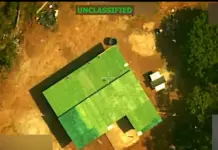
The Supreme National Security Council confirmed that Khamenei was killed at his office early Saturday during the opening wave of a coordinated bombardment that struck all 24 of Iran’s provinces, killing at least 201 people according to figures from the Iranian Red Crescent. Iranian state television did not disclose the precise circumstances of his death.
President Donald Trump announced the killing on his Truth Social platform in blunt terms. ‘Khamenei, one of the most evil people in History, is dead,’ he wrote, adding that the supreme leader ‘was unable to avoid our Intelligence and Highly Sophisticated Tracking Systems.’ Trump warned that ‘heavy and pinpoint bombing’ of Iran would continue ‘uninterrupted throughout the week or, as long as necessary.’
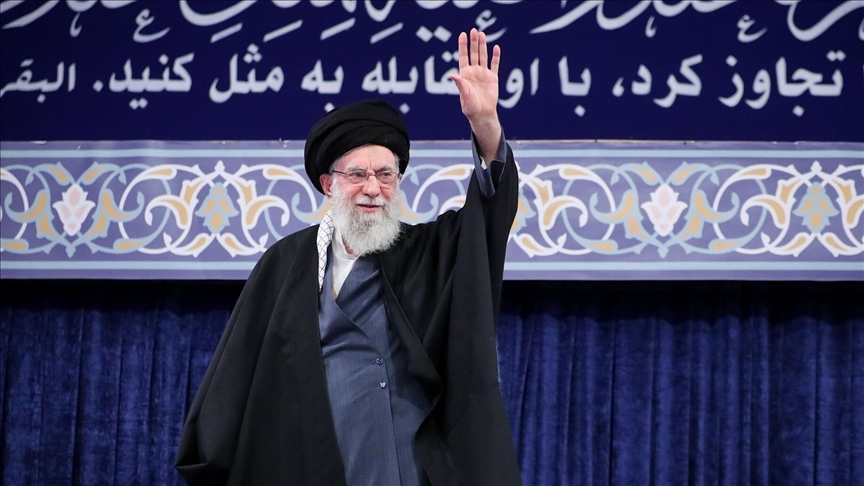
Israeli Prime Minister Benjamin Netanyahu had earlier cited ‘growing signs’ that Khamenei had been killed, and a senior Israeli official confirmed the location of his body. Netanyahu separately stated that ‘senior figures’ and ‘commanders in the Revolutionary Guard’ had been ‘eliminated’ in the strikes.
Iran’s initial official posture was defiant. State-linked agencies Tasnim and Mehr reported in the hours before the confirmation that Khamenei remained ‘steadfast and firm in commanding the field.’ The eventual announcement of his death was accompanied by a declaration of 40 days of public mourning.
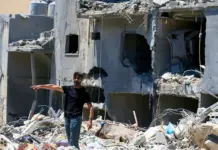
The human cost of Saturday’s strikes extends far beyond the supreme leader’s compound. At least 108 people were killed at the Shajareh Tayyebeh girls’ elementary school in the southern city of Minab alone, after Israel struck the facility. Two additional people died at a school east of Tehran. The strikes drew immediate international condemnation for their breadth and civilian toll.
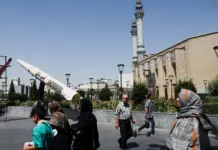
Iran’s response was swift and multi-layered. The Islamic Revolutionary Guard Corps (IRGC) launched successive waves of retaliatory strikes against US and Israeli positions, with the third and fourth waves confirmed as ongoing Saturday evening. Iranian counterattacks triggered air-defence interceptions across the Gulf region, with systems activated in Kuwait, Qatar, the United Arab Emirates, and Bahrain.
The IRGC issued a series of charged statements vowing to ‘decisively avenge’ Khamenei’s killing. ‘The hand of revenge of the Iranian people will not let go of the killers of the Imam,’ the corps declared, framing his death as martyrdom and insisting that his path ‘will not stop after his martyrdom, but will continue with strength and grandeur.’ The IRGC called on all segments of Iranian society to participate in national defence gatherings and demonstrate unity against ‘the enemies of the nation and terrorists.’
Iran’s Supreme National Security Council characterised Khamenei’s killing as the beginning of a ‘great uprising against the tyrants of the world,’ signalling that Tehran intends to frame the conflict in civilisational terms rather than seek an immediate off-ramp.
The crisis dominated an emergency session of the UN Security Council. Secretary-General Antonio Guterres told the council that an opportunity for diplomacy had been ‘squandered.’ Iran’s UN ambassador, Amir Saeid Iravani, accused Washington and Tel Aviv of initiating ‘unprovoked and premeditated aggression’ against civilian-populated areas. The US ambassador, Mike Waltz, defended the military action as lawful and reiterated that ‘Iran cannot have a nuclear weapon.’
China‘s UN ambassador, Fu Cong, expressed alarm at ‘the sudden escalation of regional tensions,’ while Russia’s ambassador, Vassily Nebenzia, condemned the strikes outright and demanded that the US and Israel ‘immediately cease their aggressive actions.’
Analysts warn that Iran’s political succession is now the central unknown. Barbara Slavin, a distinguished fellow at the Stimson Center, noted that Iran ‘has a plan’ for the eventuality of Khamenei’s death, likely involving a council to govern the country during the transition. The precise composition and authority of any such body will be tested immediately against the backdrop of an active military conflict.
Khamenei had led the Islamic Republic since 1989, succeeding Ayatollah Ruhollah Khomeini, the founder of post-shah Iran. As supreme leader, he held ultimate authority over all branches of government, the military, and the judiciary — a concentration of power with no obvious single successor. His death removes the central node of Iranian decision-making at the precise moment the country faces its gravest external military threat since the 1980s war with Iraq.