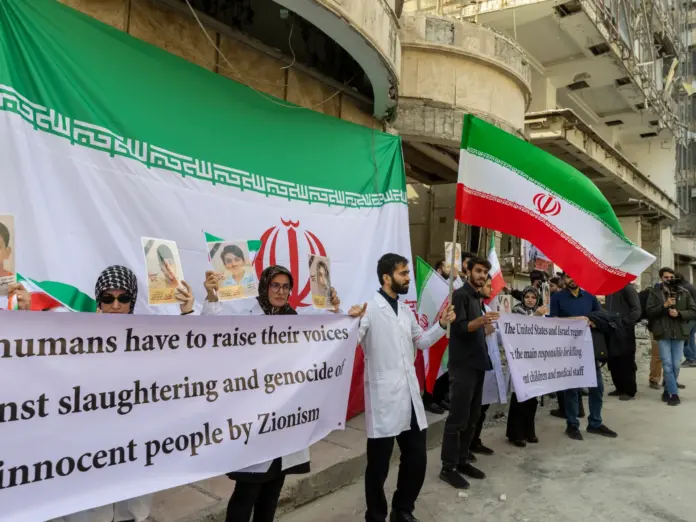
The Pasteur Institute of Iran, a century-old institution regarded as the most prestigious public health and research centre in the Middle East, was struck on Thursday in an attack that Iranian officials attributed to the ongoing US-Israeli military campaign. The assault prompted President Masoud Pezeshkian to issue an urgent appeal to international health organisations, demanding a response to what he described as systematic targeting of medical infrastructure.
Founded in 1920 through a formal agreement between the Iranian government and the Institut Pasteur de Paris — itself established in 1887 — the Tehran-based institute has long served as the backbone of Iran’s public health system. It conducts research on infectious diseases, manufactures vaccines and biological products, and provides advanced diagnostics. Critically, it underpins Iran’s national immunisation programme, producing vaccines against tetanus, hepatitis B and measles. Two of its departments maintain active working relationships with the World Health Organization.
The strike on the institute is one of more than 20 attacks on healthcare facilities in Iran that the WHO has verified since March 1 — assaults that have collectively claimed at least nine lives. Since the broader military campaign began on February 28, the human toll has been staggering: at least 2,076 people killed and more than 26,500 wounded across the country.
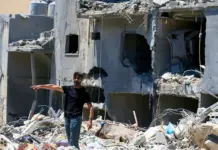
The attacks have not been confined to research institutions. On Friday morning, a drone strike hit a Red Crescent relief warehouse in Iran’s Bushehr province, destroying two relief containers, two buses and multiple emergency vehicles. On March 31, strikes hit the Tofigh Daru Research and Engineering Company in Tehran — one of Iran’s largest pharmaceutical manufacturers, owned by the state-run Social Security Investment Company. Three days earlier, on March 29, Delaram Sina Psychiatric Hospital in Tehran sustained significant damage while approximately 30 patients were inside. A hospital in Andimeshk, in Khuzestan province, was damaged in an explosion on March 21, and Gandhi Hospital in Tehran was struck on March 2 when attacks on a nearby television communications tower caused collateral damage to the facility.
The pattern draws sharp condemnation under international humanitarian law. UN Security Council Resolution 2286, adopted unanimously in 2016, explicitly condemns attacks on healthcare workers and facilities in conflict zones. Yet the scale of violations documented in recent years suggests the resolution carries little deterrent weight. In the last recorded year, 1,348 attacks on medical facilities in armed conflicts worldwide resulted in 1,981 deaths — with Sudan alone accounting for 1,620 of those fatalities and Myanmar recording 148. In 2024, 944 patients and medical personnel were killed in armed conflict globally.
Iran is not the only theatre where healthcare infrastructure has come under sustained assault. In Lebanon, Israeli operations have killed 53 medical workers, destroyed 87 ambulances or medical centres, and forced the closure of five hospitals. In Gaza, the record is similarly grave. In October 2023, hundreds of people sheltering in the car park of al-Ahli Hospital were killed in an Israeli attack. In March 2024, the Israeli military acknowledged killing 90 people during a raid on al-Shifa Hospital. In December 2024, Israeli forces arrested Dr Hussam Abu Safia, director of Kamal Adwan Hospital, during a raid in which approximately 20 Palestinians were killed and around 240 others apprehended. In March 2025, Israeli forces shot dead 15 Palestinian medics working for the Palestine Red Crescent Society during a rescue mission in Rafah’s Tal as-Sultan neighbourhood.
The cumulative picture — spanning Iran, Lebanon and Gaza — represents one of the most extensive documented campaigns against medical infrastructure in recent memory. For Iran, the targeting of the Pasteur Institute carries particular symbolic weight. The institute’s destruction would not merely damage a building; it would sever a thread of public health continuity stretching back more than a century, imperilling vaccine production and disease surveillance at a moment when the country is already absorbing catastrophic human losses.
President Pezeshkian’s appeal to international health bodies reflects a broader frustration with the international community’s failure to enforce protections that exist on paper but have proven largely ineffective in practice. Whether organisations including the WHO possess either the leverage or the political will to halt the strikes remains deeply uncertain.