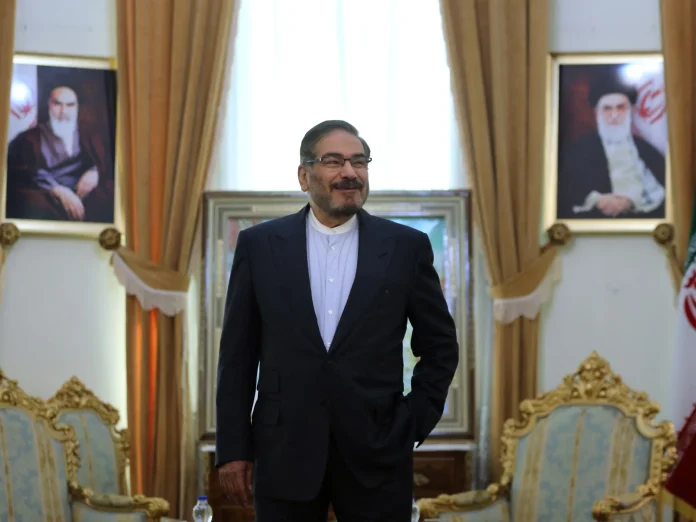
Tehran — Ali Shamkhani, one of Iran’s most powerful security figures and the official leading its nuclear negotiations with Washington, has been killed in a joint strike carried out by Israel and the United States, an Israeli military spokesperson confirmed Saturday. Shamkhani was 70 years old.
The strike eliminated a man who had spent decades at the centre of Iranian military and political power — a commander who survived a previous Israeli airstrike in June 2025 only to be pulled from the rubble of his Tehran home with severe injuries. He did not survive this second attempt.
Shamkhani’s death carries particular weight given its timing. The latest round of US-Iran nuclear negotiations had concluded just the day before, on Friday, and on Thursday Shamkhani himself had publicly declared that an immediate agreement was within reach. His role as the principal Iranian interlocutor in those talks now leaves a significant vacuum at a critical diplomatic juncture.
An Israeli military spokesperson confirmed that Shamkhani was among several senior Iranian officials killed in Saturday’s operation, though further details on the scope of the strike were not immediately disclosed.
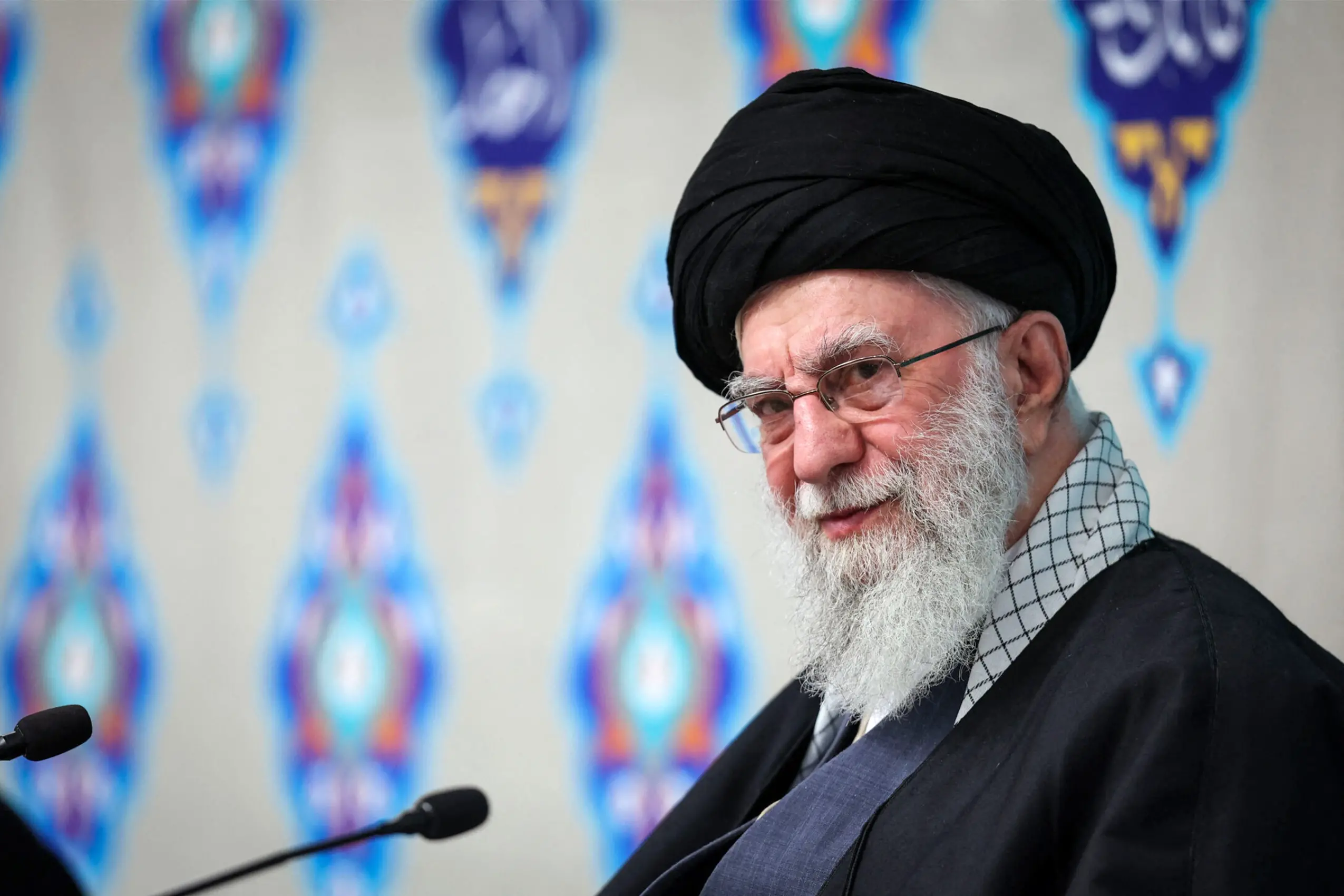
As secretary of Iran’s Defence Council — a body established in the aftermath of the 12-day Iran-Israel war of June 2025 specifically to coordinate national defence and security policy — Shamkhani held a position of extraordinary institutional authority. He was also widely regarded as one of Supreme Leader Ayatollah Ali Khamenei‘s most trusted political advisers. Khamenei himself has also been reported killed, a development that has sent shockwaves across the region.
Born on September 29, 1955, in Ahvaz, in Iran’s southwestern Khuzestan province, Shamkhani’s life traced an unlikely arc. After finishing school, he and his family relocated to Los Angeles, before he returned to Iran to study engineering. The 1979 revolution and the subsequent Iran-Iraq war reshaped his trajectory entirely. He rose rapidly through the ranks of the Islamic Revolutionary Guard Corps (IRGC) during the 1980s conflict, and by 1982 had become IRGC commander-in-chief under Mohsen Rezaei. Six years later, he was appointed minister of the Revolutionary Guards.
His institutional ascent continued steadily. He commanded both the IRGC Navy and the conventional Iranian Navy before serving as Minister of Defence and Armed Forces Logistics from August 1997 to August 2005 under President Mohammad Khatami — a tenure that made him the first Iranian defence official to visit Saudi Arabia since the Islamic Revolution. He ran for the presidency in 2001, finishing third, then returned to the defence portfolio.
From 2013 to 2023, Shamkhani led the Supreme National Security Council (SNSC) for a full decade, making him the second-longest-serving security chief in Iran’s post-revolutionary history, behind only Hassan Rouhani, who held the position for nearly 16 years.
His warnings had been stark. In January, Shamkhani cautioned that any US military action against Iran would trigger a response he described as immediate, all-out, and unprecedented. The joint Israeli-American strike suggests those warnings were ultimately disregarded.
The regional fallout from the strikes and Khamenei’s reported death has been immediate. In Pakistan, protests erupted against the killings, with demonstrators targeting the US Consulate in Karachi. Police opened fire on the crowds, killing eight people and wounding 30 others. In Srinagar, in Indian-administered Jammu and Kashmir, Shia Muslims took to the streets carrying black flags and portraits of Khamenei in mourning.
Separately, a massive explosion at an explosives factory in Katol, in Maharashtra’s Nagpur district, killed 15 people and injured 18 others, though authorities have not publicly linked the incident to the broader regional crisis.
In a significant institutional development, Brigadier General Ahmad Vahidi has been appointed as the new IRGC Commander-in-Chief, succeeding Mohammad Pakpour — a sign that Iran’s military establishment is moving quickly to reconstitute its command structure amid the upheaval.
Shamkhani’s death removes a figure who was simultaneously a hardened military commander, a seasoned diplomatic operator, and an irreplaceable link between Iran’s security apparatus and its supreme leadership. Whether his elimination accelerates or permanently derails the nuclear negotiations he was steering remains the defining question for the days ahead.