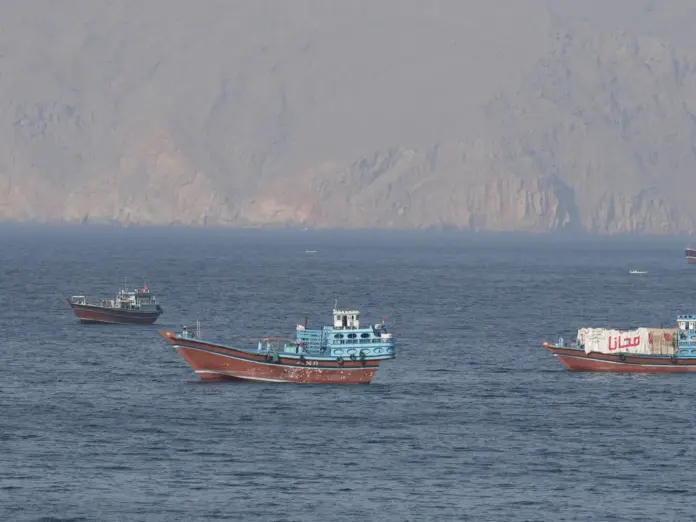
A two-week ceasefire between Iran and the United States is hurtling toward expiration on Wednesday with no extension in sight, as Tehran reimposed restrictions on the Strait of Hormuz less than 24 hours after briefly reopening it — a move that drew sharp warnings from Washington and sent diplomatic efforts into disarray.
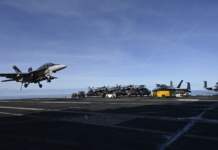
The Islamic Revolutionary Guard Corps (IRGC) cited the continuing US naval blockade of Iranian ports as justification for reimposing the restrictions, declaring that vessels attempting to transit the strait without permission would be targeted. Iranian armed forces have already turned back two tankers that attempted passage after warnings were issued. Since imposing its naval blockade, the US military said it forced 23 ships to reverse course near the strait, with US Central Command confirming its forces remain actively enforcing the blockade against all shipping entering or exiting Iranian ports and coastal areas.
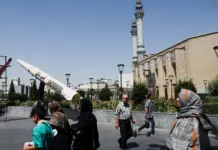
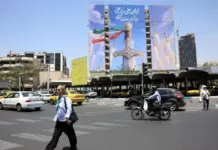
The strait, through which roughly 20 percent of globally traded oil normally flows, has become the central flashpoint in a standoff that has already rattled energy markets, with oil prices falling below $91 after weeks of elevated tension. Tehran declared it would keep the waterway closed until Washington lifts its port blockade — a condition the Trump administration has so far refused to meet.
![A woman walks past a giant billboard reading 'The Strait of Hormuz remains closed' at the Revolution Square in Tehran [Atta Kenare/AFP]](https://world-tension.s3.us-east-2.amazonaws.com/articles/482/7dc4f9ed2ba8467e8eac817a0bb1376c.webp)
President Donald Trump struck a combative tone on Saturday, accusing Iran of getting "a little cute" with its manoeuvres around the strait and warning Tehran it would not be able to "blackmail" Washington. He simultaneously struck a more optimistic note, saying US and Iranian officials remained in contact and that negotiations were "working out really well." However, Trump made clear that if no deal was reached by Wednesday, the US would "have to start dropping bombs again."
High-level diplomatic talks held in Pakistan failed to produce a breakthrough. A first round of negotiations concluded in Islamabad on April 12 with no agreement, and the White House indicated a second round would likely return to the same venue. Iran’s deputy foreign minister said no date could be set for further talks until both sides agree on a "framework of understanding," accusing Washington of maintaining a "maximalist" stance that has stalled progress.
Mohammad Bagher Ghalibaf, speaker of the Iranian parliament, offered a cautious assessment in a nationally televised address on Saturday night, acknowledging that some progress had been made with Washington while stressing that many gaps remain and that a final agreement was still far away. He labelled the US blockade "ignorant" and "foolish," and said Iranian forces are "fully prepared" for the possibility that the US could resume hostilities at any moment.
Iranian President Masoud Pezeshkian added to the defiant tone on Sunday, stating that Trump has no justification to deprive Iran of its nuclear rights — a reference to the future of Tehran’s nuclear programme, which alongside the Strait of Hormuz remains one of the core sticking points in negotiations. Deputy Foreign Minister Saeed Khatibzadeh dismissed Trump’s claims over uranium enrichment as unfounded.
Supreme Leader Mojtaba Khamenei struck a martial note on Saturday, declaring that Iran’s navy stands ready to inflict defeats on its enemies. Meanwhile, Majid Mousavi, commander of the IRGC’s Aerospace Force, said Iran is replenishing its missile and drone launchers at a faster rate than before the war began — a signal that Tehran is rebuilding its deterrent capacity even as talks continue.
Regional mediators have been working intensively to prevent a collapse of the ceasefire. Turkey’s Foreign Minister Hakan Fidan said on Sunday that both sides retain the will to continue negotiations. Egypt’s Foreign Minister Badr Abdelatty expressed hope that a final agreement could be secured within days. Pakistani Prime Minister Shehbaz Sharif returned to Islamabad on Saturday after a diplomatic circuit that included stops in Saudi Arabia, Qatar, and Turkey — all countries with a stake in regional stability.
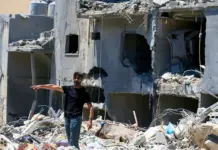
The human cost of the conflict has also come into sharper focus. Iran’s Ministry of Science announced that 180 members of the academic community were killed during the war, among them 18 female students and one female university professor. In Tel Aviv, the city’s mayor disclosed that more than 1,000 homes have been rendered uninhabitable by the recent fighting with Iran.
The conflict’s spillover into Lebanon continued to claim lives. The Israeli military announced the death of another soldier in combat in southern Lebanon — the second fatality reported in less than 12 hours — as Israeli forces consolidated a so-called yellow line in the south of the country. United Nations Secretary-General Antonio Guterres condemned a Saturday attack that killed a French soldier serving with the UN peacekeeping force UNIFIL. Hezbollah chief Naim Kassem dismissed a US State Department document describing a ceasefire arrangement between Lebanon and Israel as meaningless at the practical level.
Iran announced it would resume international flights from Mashhad airport in the country’s northeast beginning Monday — a modest signal of normalisation even as the broader standoff remains unresolved. Analysts warn, however, that with no framework agreement in place and the Wednesday deadline approaching, the risk of a return to open hostilities remains acute. Abbas Aslani of the Centre for Middle East Strategic Studies in Tehran described Iran as navigating a "dual track" of simultaneous negotiations and mounting US pressure — a precarious balance that could break in either direction before the week is out.