The Islamic Republic of Iran is pressing forward with a constitutional succession process following the assassination of Supreme Leader Ali Khamenei, defying expectations from Israel and the United States that his death would trigger a mass popular uprising against the government in Tehran.
Israeli and American officials had anticipated that Khamenei’s killing would fracture the Islamic Republic from within, prompting Iranians to seize the moment and dismantle the clerical establishment. That calculation has not borne out. The streets of Iran have not produced the insurrection both governments publicly called for, and the regime’s institutional machinery continues to function. A formal process to elect a new supreme leader is now underway, signalling that the Islamic Republic intends to outlast the military pressure being applied against it.
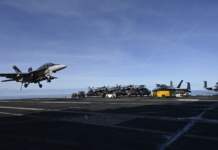
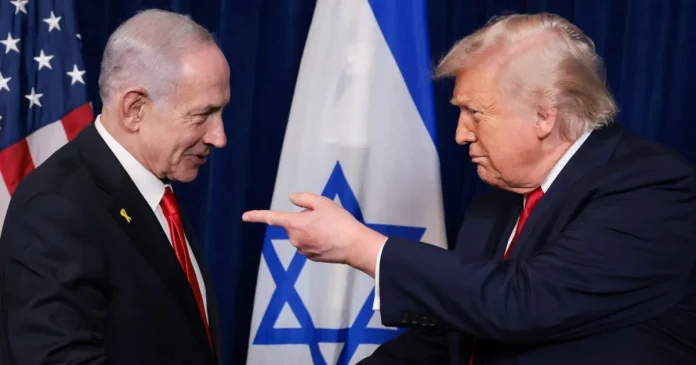
Israel and the United States are conducting sustained air and sea operations against Iranian targets. Prime Minister Benjamin Netanyahu has declared that Israel is committed to the campaign ‘for as long as it takes,’ while senior Israeli officials have characterised the offensive as a ‘historic operation’ expected to last longer than the June war. No Israeli ground forces have been deployed inside Iran, and President Donald Trump lacks the political and logistical capacity to commit American troops to a ground campaign.
Trump has sent direct messages to the Iranian people encouraging them to take control of their country, echoing a regime-change posture that mirrors his administration’s parallel efforts in Venezuela. Yet the domestic political environment surrounding the Iran operation is increasingly turbulent. Trump committed to his political base that he would not entangle the United States in foreign wars, and he has not sought congressional approval for the military campaign — an omission that is generating significant criticism from lawmakers across party lines.
The constitutional questions surrounding the conflict’s authorisation are compounding other pressures on the Trump administration. Trump’s name has surfaced in the recently disclosed Epstein files, adding an unwelcome domestic distraction at a moment when the White House is managing a major military operation abroad without a clear legislative mandate.
Netanyahu, meanwhile, is navigating his own set of compounding crises. Israel is losing effective control over Gaza, and its position in the West Bank remains deeply contested. Efforts by Israeli officials to exclude Turkey and Qatar from any role in Gaza’s future governance have failed, leaving both regional powers with continued influence over the territory’s trajectory. Tensions between the Israeli military’s high command and the civilian government over the events of October 7, 2023 remain unresolved, and the military is now pressing for a substantial budget increase — a demand that will strain an economy already bearing the costs of a multi-front conflict.
The international response to the campaign has been notably muted. The European Union has issued statements widely characterised as weak, offering little substantive pressure on either side. Major Asian powers have been conspicuously absent from diplomatic engagement, leaving a vacuum in the international community’s response that neither Washington nor Jerusalem has moved to fill.
The absence of a popular Iranian uprising represents a significant strategic miscalculation by both governments. Regime-change operations premised on internal collapse require a population ready to act; the Iranian public, whatever its grievances with the clerical establishment, has not provided that opening. The Islamic Republic’s decision to immediately activate its constitutional succession mechanism rather than enter a period of visible disarray suggests the government anticipated the assassination and prepared accordingly.
The conflict’s trajectory remains deeply uncertain. Israel has signalled a long campaign with no defined endpoint, while the United States is prosecuting a war without congressional backing, without ground forces, and without a coherent international coalition. The Islamic Republic, for its part, has lost its most powerful figure but retains its governmental structure, its military apparatus, and, critically, the absence of the mass domestic revolt its adversaries were counting on.
How long the Islamic Republic can absorb sustained air and sea strikes while managing a leadership transition will define the next phase of a conflict that has already reshaped the strategic landscape of the Middle East.