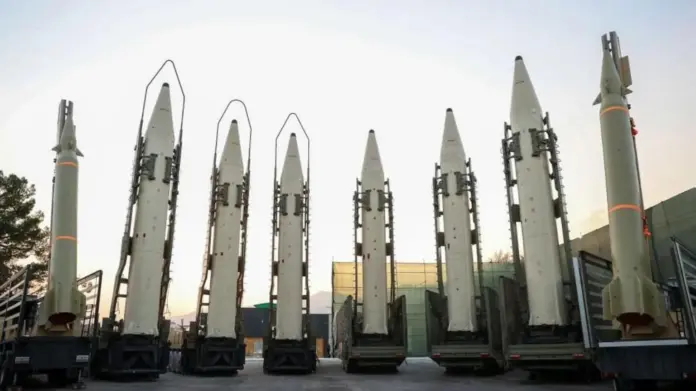
Iran fired two medium-range ballistic missiles at the joint American-British military base on Diego Garcia, a remote atoll in the Indian Ocean nearly 4,000 kilometres from Iranian territory, in an attack that exposed the full extent of Tehran’s long-range strike capabilities and sent alarm signals to European capitals. One missile failed during flight, travelling approximately 3,000 kilometres before falling short of its target. The other was intercepted and destroyed.
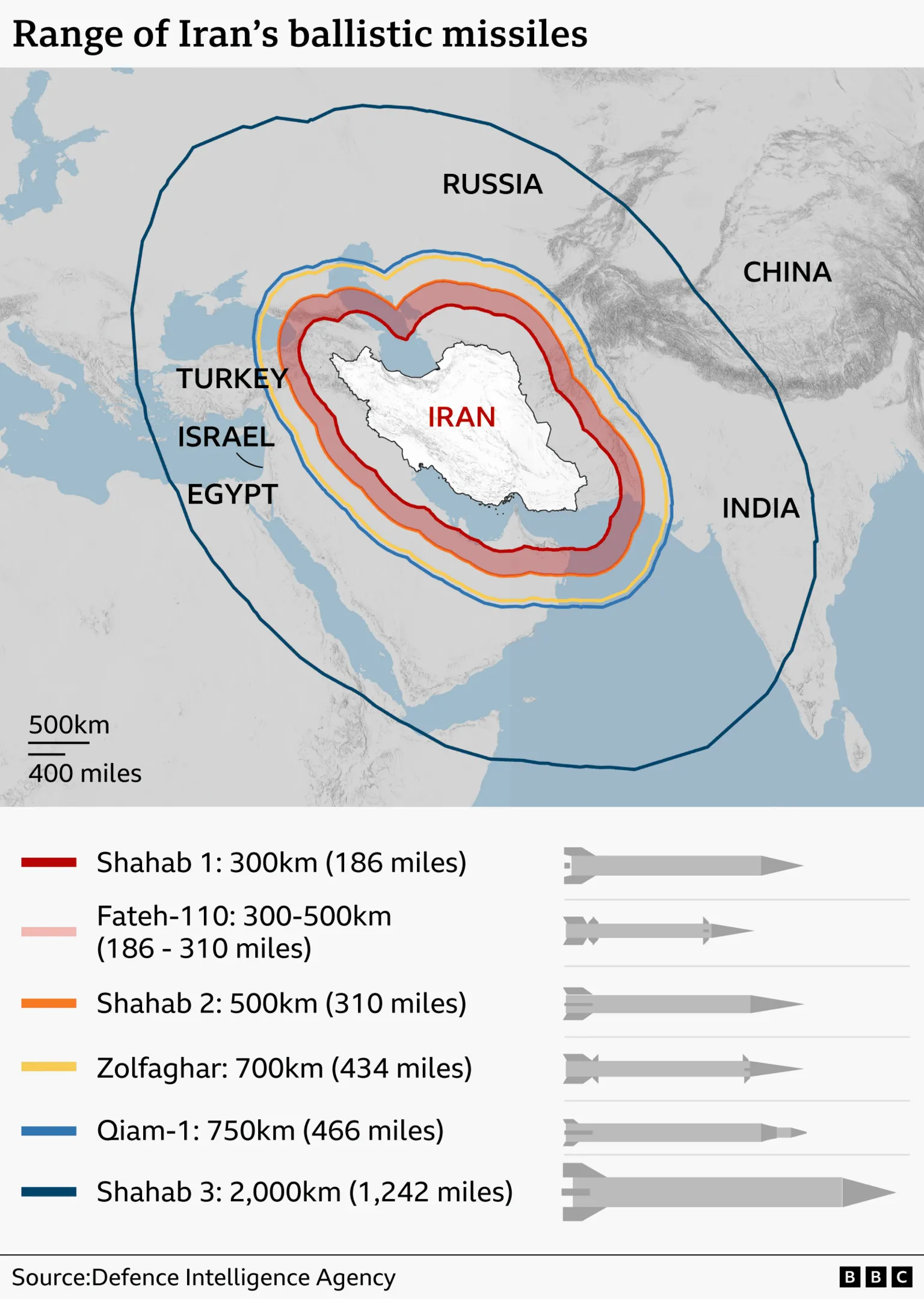
UK Defence Secretary John Healey confirmed the details of the interception, describing the outcome as a demonstration of allied air defence effectiveness. The attack nonetheless marked a watershed moment: the Israeli Defence Forces stated it was the first confirmed instance of Iran launching a missile with a range of approximately 4,000 kilometres, a figure that doubles Tehran’s own publicly stated self-imposed limit of 2,000 kilometres.
The distance to Diego Garcia is roughly equivalent to the distance between Iran and London or Paris — a geographic parallel that has not been lost on Western intelligence analysts. Western intelligence sources have expressed concern that Iranian ballistic missiles now possess the theoretical capability to reach major European cities, a scenario that until recently was largely dismissed as an outer boundary of Iranian ambition rather than operational reality.
Danny Tsytrynovich of the Tel Aviv Institute for National Security Studies described the launches as evidence that the Iranian regime possesses ballistic capabilities that are, in his assessment, unprecedented. Analysts at Sibylline, an intelligence consultancy, and the CNA Corporation, a Washington-based non-profit research organisation, have similarly flagged the strikes as a significant escalation in Iran’s demonstrated reach.
Iran’s ballistic missile arsenal has long been a subject of intense scrutiny. Before the current conflict, Tehran was believed to hold stockpiles of more than 2,000 short-range ballistic missiles, with a maximum range of 3,000 kilometres. Its intermediate-range ballistic missile programme — covering distances between 3,000 and 5,500 kilometres — has been developing for years, though Iran’s willingness to deploy such weapons at their full range had never been confirmed in combat conditions. The Khorramshah missile, based on a single-stage North Korean design, carries a 1.5-tonne warhead and has a range exceeding 2,000 kilometres. Iran has also demonstrated space-launch capability through rockets such as the Qaem 100, underlining the technical foundation underpinning its longer-range ambitions.
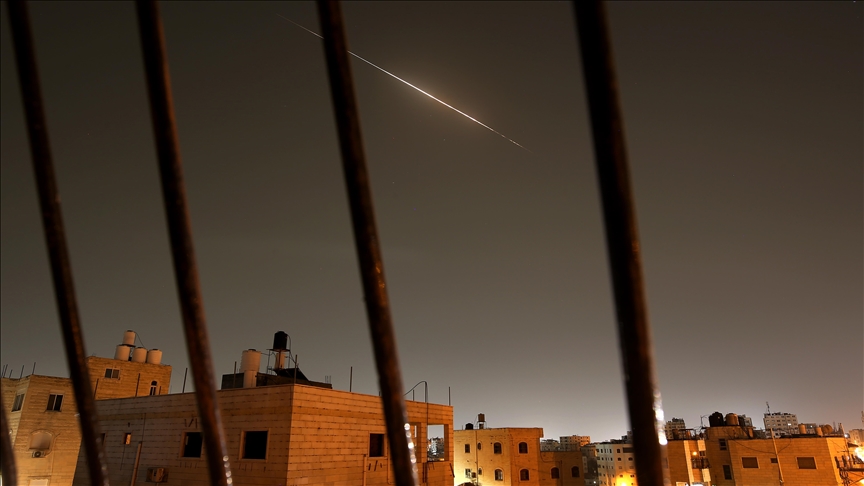
The Diego Garcia strikes did not occur in isolation. Iran has been firing short-range ballistic missiles at Israel and neighbouring Gulf states with increasing frequency over the past three weeks, part of a sustained retaliatory campaign following US and Israeli strikes on Iranian territory that commenced on February 28. Iranian missiles struck Dimona and surrounding areas in southern Israel — home to the Negev Nuclear Research Center — injuring 47 people in what was described as the seventh missile barrage targeting the area since Friday midnight local time. Of those injured, 31 sustained minor physical wounds and 23 suffered panic attacks. Israeli ambulance services evacuated the wounded to hospital.

Iran has persistently denied pursuing nuclear weapons despite sustained Western pressure, and has framed its missile strikes as defensive retaliation. The fact that only two missiles were directed at Diego Garcia, however, has led analysts to conclude that Iran’s long-range strike inventory remains limited. Firing just two missiles at a target nearly 4,000 kilometres away suggests Tehran is husbanding a capability that is not yet mature enough for sustained long-range operations.
Tracking the launches fell to a network of allied surveillance infrastructure. Buckley Space Force Base in Colorado, home to US Space Force assets capable of detecting every missile launched from Iranian territory, would have provided early warning. RAF Fylingdales in North Yorkshire, equipped with powerful phased-array radars capable of tracking ballistic missiles from launch to impact, forms a critical node in the broader NATO detection architecture.
That architecture, however, has significant gaps when it comes to active defence. The United Kingdom’s own Strategic Defence Review acknowledged that Britain possesses very little in the way of ballistic missile defence capability. By contrast, the United States has deployed Aegis Ashore systems in Poland and Romania — established under President Barack Obama as part of a NATO air defence umbrella — which fire the same interceptor missiles used by the US Navy to engage Iranian ballistic missiles at sea.
Sidharth Kaushal, a senior fellow at the Royal United Services Institute in London, and other defence analysts have noted that the combination of Iran’s expanding range and Western intelligence concerns about the unpredictability of Iranian leadership decision-making creates a volatile environment. The absence of robust checks and balances within the Iranian command structure, Western officials warn, raises the risk of further miscalculation as hostilities continue to escalate across the region.
US and Israeli operations targeted Iran’s ballistic missile programme alongside its nuclear infrastructure, seeking to degrade both capabilities simultaneously. Whether those strikes succeeded in meaningfully curtailing Tehran’s long-range reach remains an open question — one that the Diego Garcia attack has made considerably more urgent.