Iran’s Islamic Revolutionary Guard Corps declared the Strait of Hormuz closed to all shipping on Monday, threatening to set ablaze any vessel attempting to transit the world’s most critical oil export route, as the Middle East lurched toward full-scale economic warfare following the deaths of Supreme Leader Ayatollah Ali Khamenei and other senior Iranian officials in a joint Israeli-US bombing campaign launched Saturday.
Ebrahim Jabari, a senior adviser to the IRGC’s commander-in-chief, announced the closure in a post on the Revolutionary Guard’s official Telegram channel, later quoted by the Tasnim news agency. ‘The Revolutionary Guards and the regular navy will set ships ablaze if they attempt to pass through the strait,’ Jabari warned, adding that Iran would attack oil pipelines as part of its broader retaliation and that ‘not a single drop of oil will be allowed to leave the region.’ He predicted crude prices would reach $200 per barrel within days.
The declaration sent immediate shockwaves through global energy markets. Natural gas prices in Europe surged by almost 50 percent on Monday, while Asian markets recorded a rise of nearly 40 percent. The convulsions reflected not only the closure announcement but concrete damage already inflicted on regional energy infrastructure.
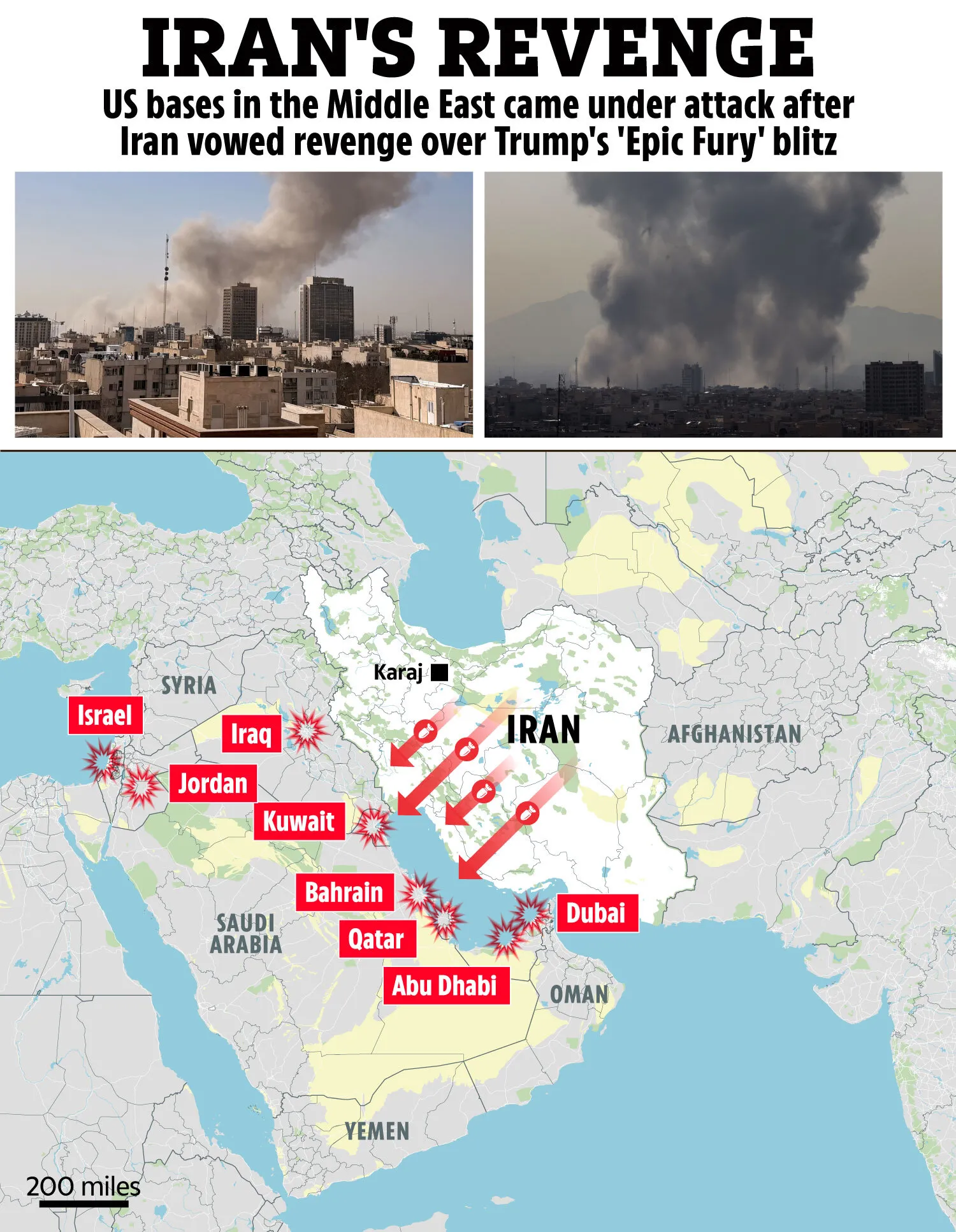
QatarEnergy halted liquefied natural gas production after its LNG facilities came under attack, removing a critical source of supply from markets that had already been tightening. In Saudi Arabia, drones targeted the Ras Tanura oil refinery — one of the largest crude processing facilities on earth, with a daily capacity exceeding half a million barrels — though the installation’s air defences intercepted the incoming aircraft before significant damage was sustained.
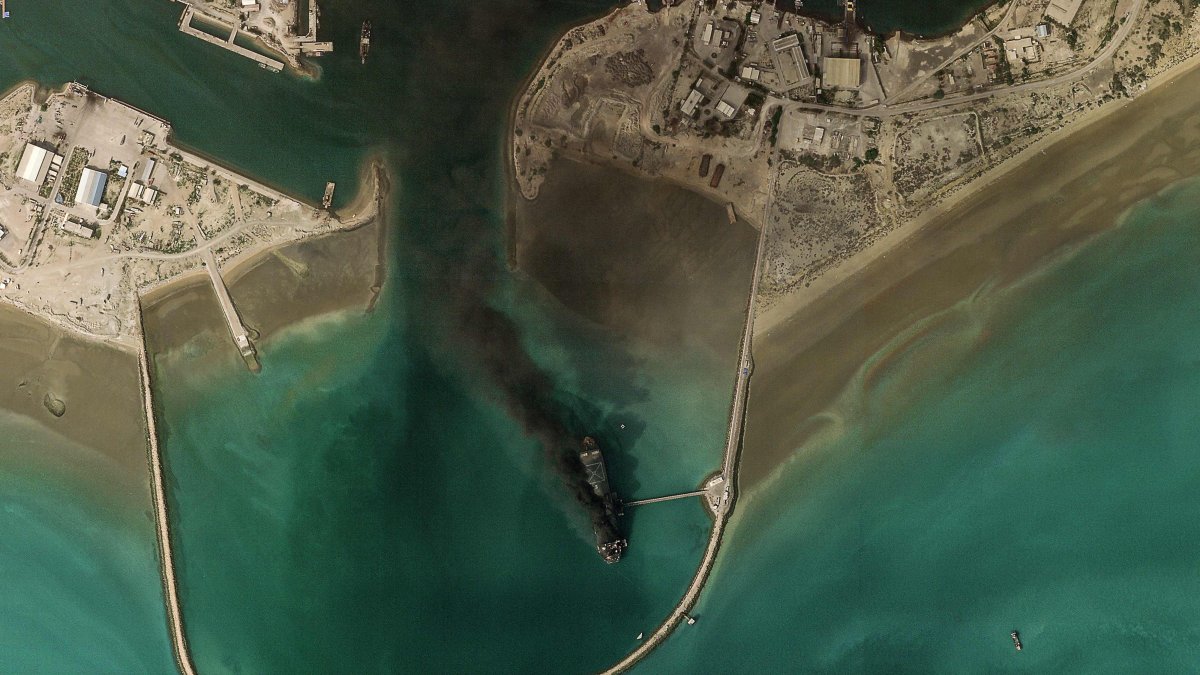
Evidence that Iran’s threat was more than rhetorical emerged from the strait itself. The Athe Nova, a 96-metre Honduran-flagged fuel tanker, was struck by two drones and left burning in the Strait of Hormuz. The Revolutionary Guards identified the vessel as operating ‘in unison with America,’ with Iranian media alleging it had been supplying fuel to US Navy ships. Vessel-tracking data confirmed the tanker’s position in the strait area shortly before the attack. An Iranian military spokesman addressed the incident during a state television broadcast covering Guards’ operations across the Gulf.
The Strait of Hormuz — approximately 33 kilometres wide at its narrowest point — forms the mouth of the Persian Gulf, connecting it to the Gulf of Oman and the broader Arabian Sea. Roughly one-fifth of all global oil exports pass through this chokepoint, carried from the fields of Saudi Arabia, Kuwait, Iraq, Qatar, Bahrain, the United Arab Emirates, and Iran itself to markets worldwide, with Asia the primary destination. Both Iran and Oman hold territorial waters within the strait, though it is internationally recognised as a waterway open to all nations under freedom of navigation principles.
The closure declaration represents one of the most consequential threats to global energy security in decades. Any sustained interruption to tanker traffic would affect not only crude oil flows but also liquefied natural gas shipments from Qatar, a dominant global supplier. Alternative routes exist — Saudi Arabia operates the East-West Pipeline to Red Sea terminals, and the UAE has a pipeline bypassing the strait — but their combined capacity falls far short of replacing Hormuz volumes.
US Secretary of State Marco Rubio acknowledged the severity of the energy market disruption, stating Washington would take action to mitigate rising prices, with measures expected to begin Tuesday. He offered no specifics on what those steps would entail.

The crisis was triggered by Saturday’s bombing campaign, in which Israeli and US forces struck targets inside Iran, killing Khamenei along with other senior officials. The operation marked a dramatic escalation of the long-running confrontation between Israel and Iran, and Tehran’s response has moved swiftly from military to economic terrain — targeting the infrastructure that underpins global energy supply chains and threatening to weaponise the geography of the Persian Gulf itself.
With a tanker already burning in the strait, energy facilities across the Gulf under attack, and Iran’s naval forces on a declared war footing, the coming hours will test whether international shipping companies and their insurers are willing to risk transiting a waterway that Tehran has now formally declared a free-fire zone.